


The 2025 U.S. Open at Oakmont Country Club continues to test the world’s top golfers with its demanding setup, where only a few players remain under par after two grueling rounds. JJ Spaun leads narrowly at four under par, while Scottie Scheffler and Viktor Hovland stand well off the pace, fighting just to make the cut. However, the spotlight has shifted from scores to the pace at which these players are completing their rounds, sparking a slow play controversy that has gripped fans and analysts alike.
Scheffler and Hovland’s group, playing together in Round 2, became subject to intense scrutiny when it was revealed they took 44 minutes to play just three holes late Friday morning. This unusually slow pace has drawn significant online criticism amid already long rounds and difficult playing conditions.
Factors Behind the Delays in Scheffler and Hovland’s Group
Observations suggest that a major cause of the delays is the bottleneck forming at the par-3 12th hole, where long waits on the tee amplified the group’s slower-than-usual progress. Golf analyst Jamie Kennedy highlighted on social media that it took the group 71 minutes to get from the 11th to the 12th hole.
“They’ve played 3 holes. In 71 minutes.”
—Jamie Kennedy, Golf Analyst
This revelation ignited a widespread debate among fans and commentators about whether slow play is primarily the fault of the players or the course setup itself. Oakmont’s notoriously punishing conditions, with thick five-inch rough, narrow fairways, and extremely fast greens, are delaying shots and forcing long searches for misplaced balls.
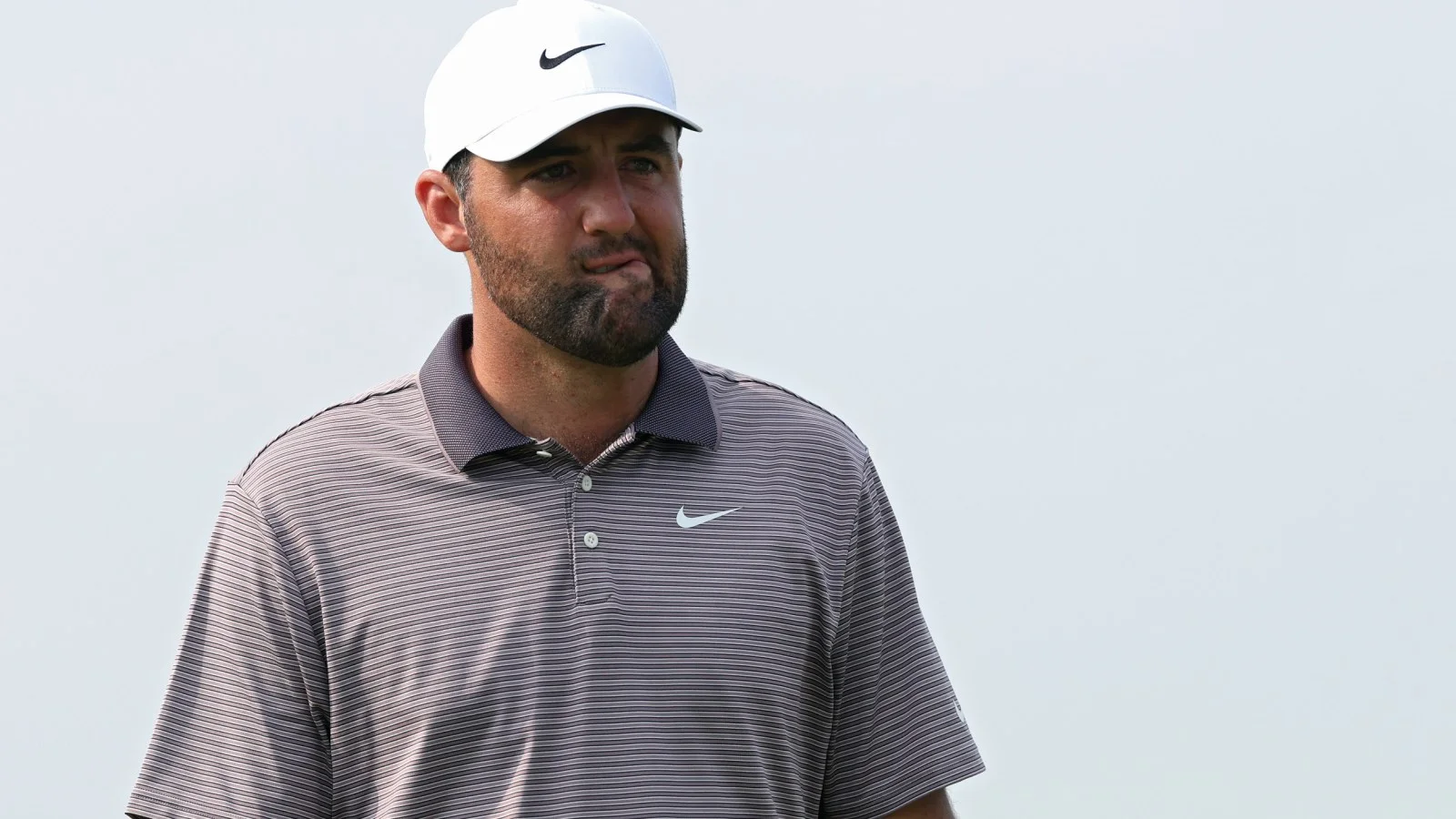
Some emphasize that the prolonged waits are due in large part to congestion caused by the course’s layout rather than player behavior. One fan remarked on the waiting time at the 12th tee:
“They were waiting on the 12th tee for like 10–15 mins. Huge backup on that hole.”
—Fan Comment
This view considers the impact of the USGA’s design choices, which have created strategic pin placements and difficult lies, increasing the time required per shot and contributing to cascading delays across the field.
Intense Backlash From Fans Over Slow Round Times
Despite explanations about course difficulty causing backups, frustration among spectators and players has boiled over. Social media users demanded penalties for the slow pace, expressing exhaustion at rounds that stretch beyond five hours, damaging the fans’ experience and players’ flow. One user voiced their anger succinctly:
“Penalize them!!!!”
—Fan Comment
Ex-professional Michael Kim also weighed in on the mounting time concerns by highlighting how the difficulty at Oakmont extends the game far beyond typical durations:
“Yeah, Michael Kim said yesterday it took just over 3 hours to play the front 9. That’s insane.”
—Fan Comment
Though Kim did not single out Scheffler or Hovland, his point underscores widespread concern about the slow pace permeating elite tournaments and disrupting players’ mental and physical rhythms.
Another fan captured the damaging effect the delays have on competitors’ performance:
“Sad there is such slow play. It throws you off your rhythm.”
—Fan Comment
At a venue like Oakmont, where every shot demands focus and precision, waiting excessively between shots can break concentration and lead to mistakes that directly impact scores.
Criticism Targets the USGA’s Course Setup as Root Cause
Following the mounting complaints, many critics have diverted their ire toward the USGA, blaming the organization’s harsh course setup for creating the slow play predicament. The tournament features narrow fairways, three types of thick rough, and greens rolled to a Stimpmeter speed of 14—among the fastest in the sport. Combined, these factors make Oakmont a toughness test but also a slow-motion challenge that frustrates both players and fans.
Comments labeling the event a “dumpster fire” and the setup “ridiculous” reflect the widespread dissatisfaction with the tournament’s organization:
“Dumpster fire tournament all around.”
—Fan Comment
“Ridiculous setup.”
—Fan Comment
“That’s on the USGA.”
—Fan Comment
The consensus suggests that while Scheffler and Hovland have become the faces of the slow play issue due to their prominent status and position in the same group, they are more victims of the course’s punishing design and resultant backups than villains intentionally dragging the pace.
The Challenge Ahead for Players and Organizers as Tensions Rise
Neither Scottie Scheffler nor Viktor Hovland has a history of slow play, making their struggle in this event a symptom of Oakmont’s grueling conditions rather than a pattern of behavior. Yet, as the U.S. Open advances toward the weekend, patience is wearing thin among players who must maintain focus and stamina despite disrupted rhythms, as well as fans expecting a faster, more engaging spectacle.
This slow play controversy highlights the delicate balance the USGA must strike between preserving course difficulty and ensuring timely play. How organizers will respond remains uncertain, but if the grumbling continues, rule enforcement or course adjustments may arise to address the growing frustration for all involved.