
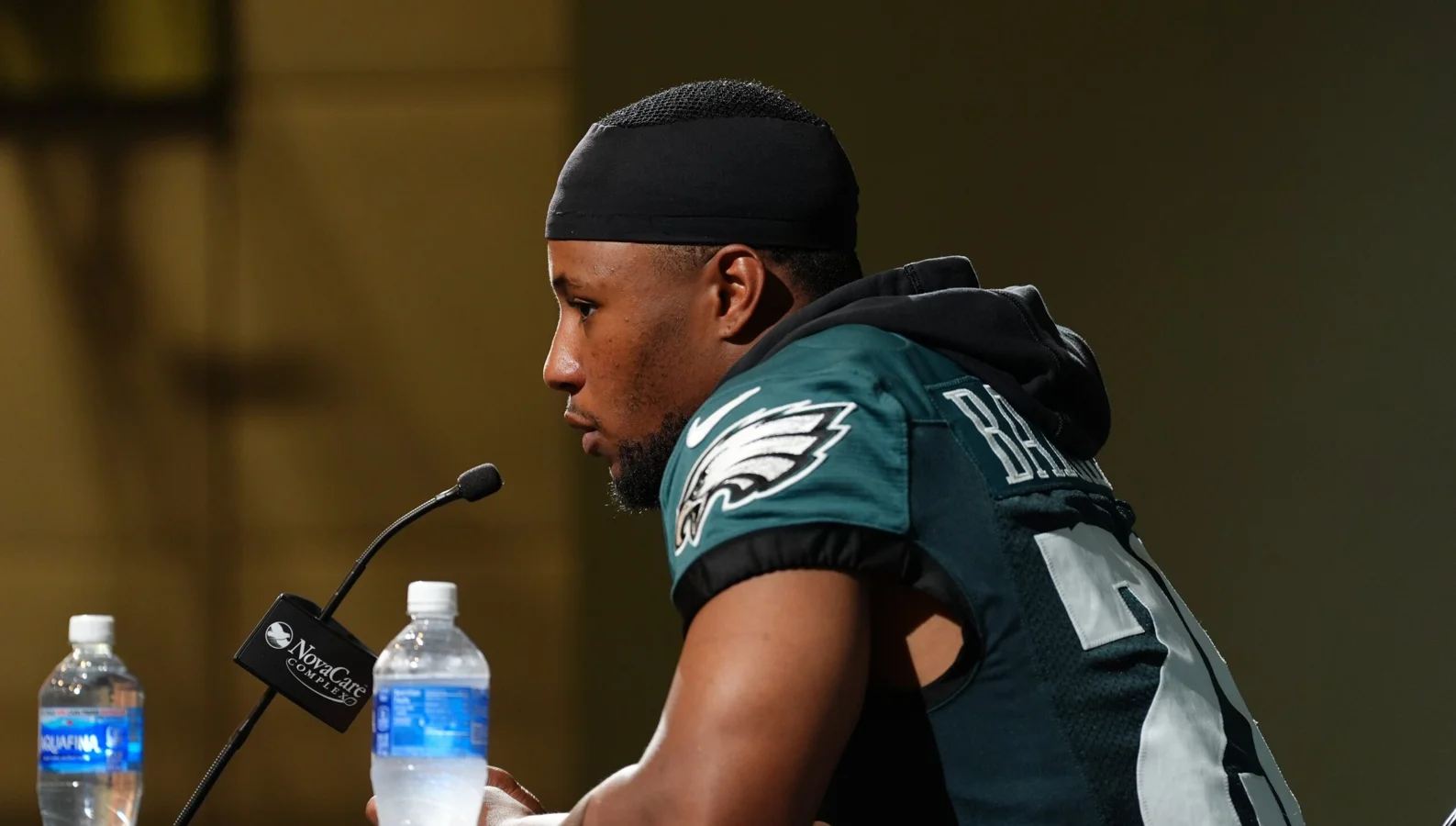

Following the excitement of Super Bowl LIX, Saquon Barkley reached a pivotal moment in his career that many running backs face after heavy usage. With 436 total carries between regular season and playoffs, Barkley crossed a critical threshold historically linked to declining performance and injury risk, yet he is charting a different path for running back longevity in the NFL.
Typical statistical trends show that running backs who exceed around 370 carries often experience sharp drops in productivity and durability. For instance, players with 370 to 389 carries recorded a 27 percent decrease in total yards and a 10 percent reduction in yards per carry the following year. Those surpassing 390 carries, a category Barkley now falls into, faced even steeper declines averaging a 33 percent decrease in total yards and an 11 percent drop in yards per carry. Despite this historical context, Barkley’s upcoming season outlook offers cautious optimism based on his innovative approach to recovery and training.
Saquon Barkley’s Strategy Defies Conventional Running Back Wear and Tear
Where many running backs have historically relied on grueling offseason workouts aimed at building brute strength, Barkley has taken a different approach, emphasizing strategic recovery with guidance from trusted experts. His support team includes Eagles head coach Nick Sirianni, running backs coach Jemal Singleton, and Hall of Famers Marshall Faulk and Edgerrin James, all advocating for smarter workload management rather than nonstop physical hammering.
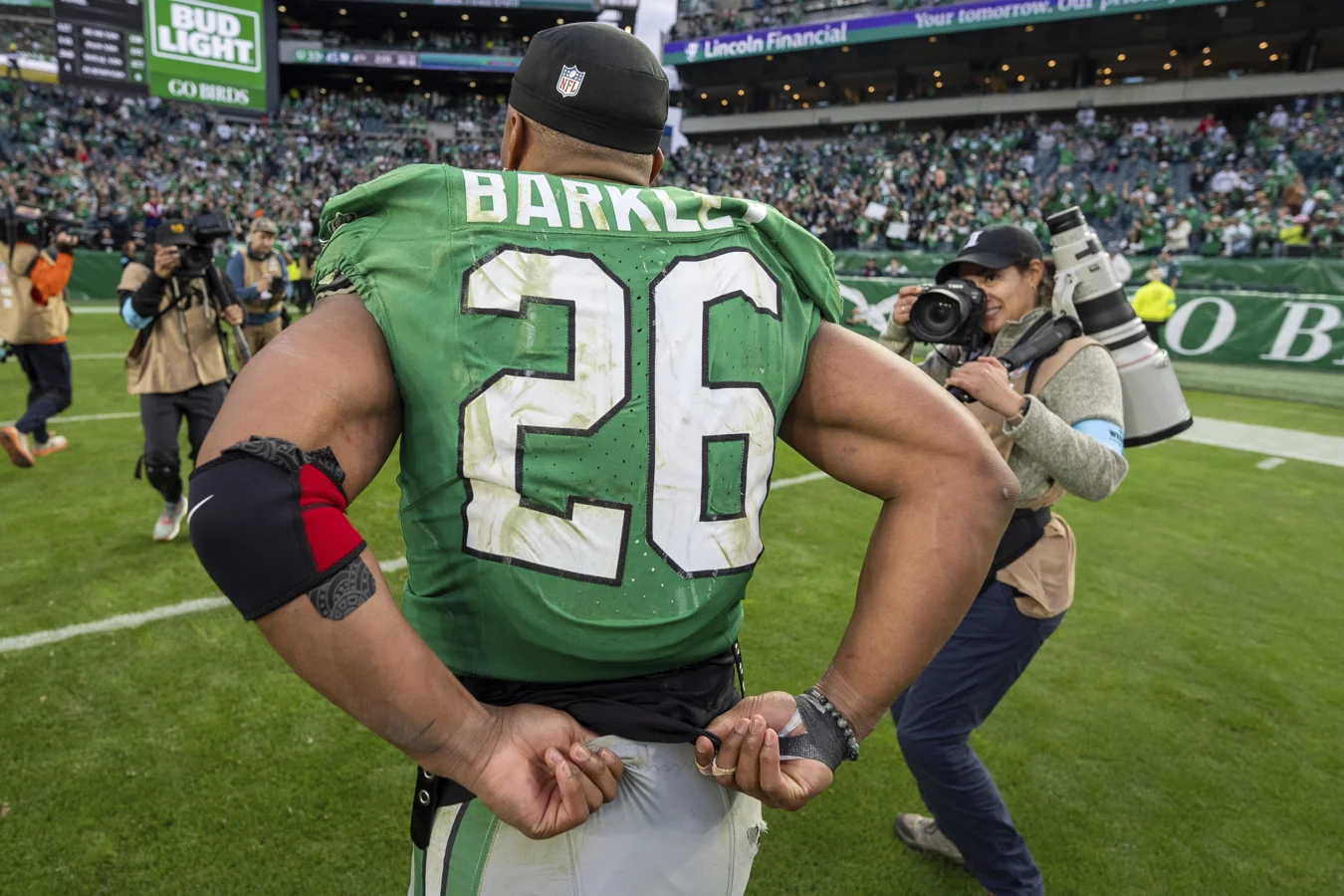
“It wasn’t hard because everyone I trust told me basically to sit my ass down for a little bit,”
Barkley revealed.
“You’ve just got to be smarter, right? You have your moments where you go in there and you grind, you push it, but the majority of those days is just mobility, conditioning, doing all the things to get your body in shape to perform at a high level. It was a lot of workload, but my body feels great, so that’s the most important thing.”
This philosophy marks a notable shift in Barkley’s mindset. Despite his relentless drive during the 2024 season—when he earned NFL Offensive Player of the Year and led the Philadelphia Eagles to a Super Bowl championship—his offseason routine has become less about pushing limits and more about intelligent body maintenance. Through focusing on mobility and conditioning, Barkley aims to preserve his explosiveness and avoid the physical breakdowns that have plagued high-carry running backs in the past.
Evidence of Efficiency Amid Heavy Usage
Remarkably, Barkley’s workload last season did not come at the cost of efficiency. He posted a career-best average of 5.8 yards per carry, along with a career-high rushing success rate of 52.5 percent. Such numbers suggest that the combination of workload and smart recovery could enable Barkley to break free from the traditional decline curve that has felled many before him.
At 28 years old and heading into his eighth NFL season, Barkley believes he is “entering my prime,” a stance that contrasts with the usual trajectory of running backs who typically decline by this age due to accumulated wear. Unlike past backs who wore down amid struggling offensive units, Barkley plays behind the Eagles’ elite offensive line and electric passing game, factors that have helped improve his yards per carry from 3.9 with the New York Giants to 5.8 in Philadelphia.
Long-Term Vision Focused on Sustainable Excellence
Rather than chasing historic single-season totals again, Barkley is adopting a mindset oriented toward longevity and incremental improvement. He stressed that his motivation remains unchanged since childhood, aiming to be
“the best running back to ever play, or at least one of the best running backs to ever play.”
“The beauty of it is you have an opportunity to do it again,”
Barkley explained.
“That’s what the mindset kind of shifts to is learn from it, and even though you had a great year, there are so many plays and so many things I can continue to improve on.”
Barkley emphasized his philosophy of focusing on smaller steps rather than chasing numbers outright.
“I didn’t go into last year with the mindset of rushing for 2,000 yards,”
he said.
I just try to focus on the little things first, and everything else will take care of itself.”
Eagles’ Support Enhances Barkley’s Path Forward
The Eagles organization backs Barkley’s tailored approach, offering individualized training plans designed for long-term health and sustained performance. While Barkley is expected to carry a heavy workload again in 2025, the challenge will be balancing this volume with adequate recovery to maintain his offensive efficiency.
Historically, running backs who surpass 345 carries in a season have faced near-inevitable physical decline. Barkley’s revolutionized recovery methods, expert-backed training, and the superior Eagles infrastructure position him uniquely to disrupt this pattern and potentially rewrite expectations for running back durability in the modern NFL.
“It was a lot of workload [last year], but my body feels great, so that’s the most important thing,”
Barkley said.
While the heavy-carry curse is well documented, Barkley’s mindset and innovative strategies provide a hopeful and intense counterpoint as the NFL prepares for his next campaign.