
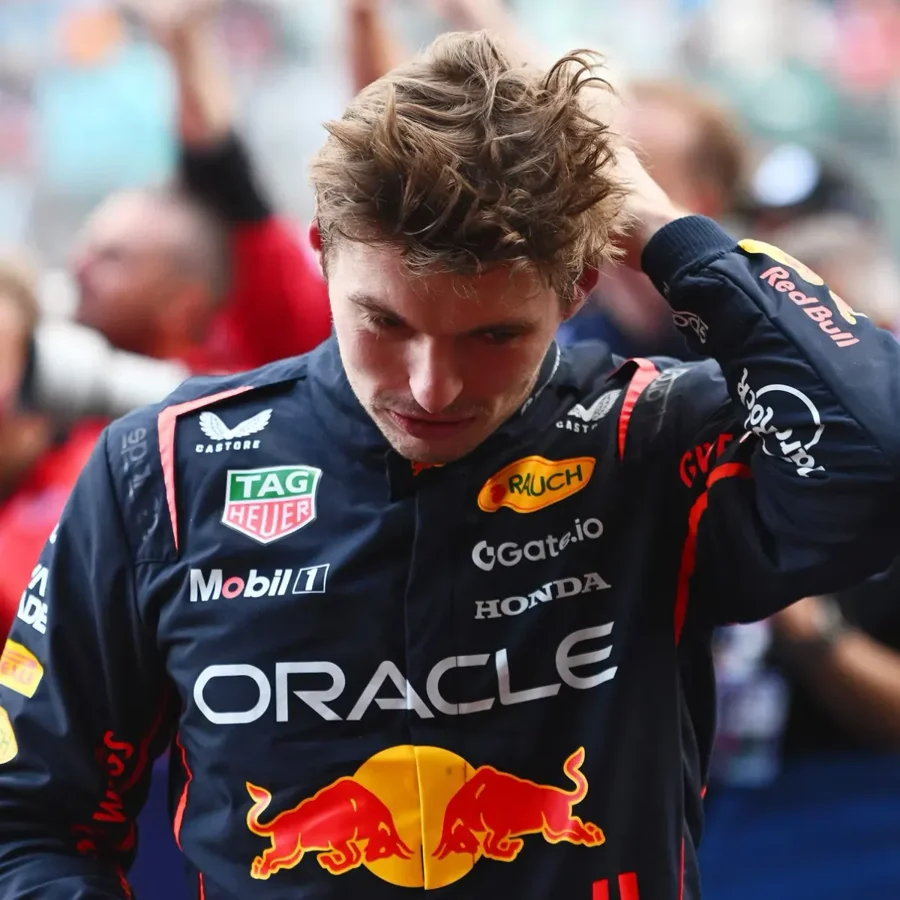

This weekend’s Austrian Grand Prix places Formula 1 world champion Max Verstappen in a precarious position as he approaches the limit of penalty points allowed on his super licence. After accumulating 11 points over the past year, Verstappen is now just one penalty point away from an automatic one-race suspension according to F1 regulations.
The Dutch driver’s penalty risk intensified following his collision with George Russell at the recent Spanish Grand Prix, which not only compromised his championship ambitions but also added three penalty points to his total. With these points ticking towards the 12-point suspension threshold, Verstappen must carefully navigate his racing conduct during the upcoming Austrian race and the British Grand Prix to avoid missing a race.
Overview of Verstappen’s recent penalty point accumulation
Verstappen’s tally of 11 penalty points has been built up gradually over several incidents during the 12-month rolling period. The first points were awarded for causing a collision with Lando Norris at the Austrian GP last year, with additional points from events such as Mexico City, São Paulo, Qatar, Abu Dhabi, and the pivotal collision with George Russell in Spain. Most notably, Verstappen’s three points from the Spanish GP incident are the most severe he has received in a single case in recent seasons.

The penalty points remain on a driver’s super licence for twelve months before expiring. Verstappen’s earliest points from the Austrian GP will drop off after this upcoming weekend, but many others remain, keeping him dangerously close to the ban threshold through much of the season.
Understanding how F1’s penalty points system works
The penalty points system was introduced in 2014 as a way to reinforce disciplinary measures beyond immediate race sanctions. Drivers found responsible for infractions during races or qualifying sessions can receive one to three penalty points depending on the severity of the violation. These points are recorded on the driver’s super licence, which is mandatory for all Grand Prix participants.
If a driver accumulates 12 points within a 12-month period, their super licence is suspended for the next race, automatically sidelining them. Following such a suspension, 12 points are cleared from the driver’s tally. The intent behind this system is to deter reckless or repeated rule violations on track and ensure safer racing conditions.
Penalty points will remain on a driver’s Super Licence for a period of twelve (12) months after which they will be respectively removed on the twelve (12) month anniversary of their imposition.
—FIA Sporting Regulations
Detailed breakdown of Verstappen’s penalty points over the past year
Verstappen’s 11 penalty points include:
- June 30, 2024: 2 points for colliding with Lando Norris during the Austrian Grand Prix.
- October 27, 2024: 2 points for forcing Lando Norris off track at the Mexico City Grand Prix.
- November 2, 2024: 1 point for exceeding speed limits under the Virtual Safety Car during the São Paulo Sprint.
- November 30, 2024: 1 point for driving unnecessarily slowly and impeding George Russell in Qatar GP qualifying.
- December 8, 2024: 2 points for causing a collision with Oscar Piastri at the Abu Dhabi Grand Prix.
- June 1, 2025: 3 points for the collision with George Russell during the Spanish Grand Prix.
While the initial two points from Austria will expire following this weekend’s race, the remaining points will keep Verstappen at a high-risk total for several more races. Notably, the points from Mexico City are not due to expire until late October, meaning Verstappen will carry most of his penalty burden through the majority of the 2025 season.
Insights into penalties for common racing infractions
Race stewards have a range of options when addressing rule breaches, from time and grid penalties to drive-throughs and disqualifications. Penalty points serve as an additional layer of deterrence by impacting a driver’s super licence status.
According to recently released FIA guidelines—though not binding—they recommend appropriate penalty point values for around 100 types of infringements. Lesser offences typically attract one penalty point, while more serious or reckless behaviour can be assigned two or three points.
Some examples similar to Verstappen’s single-point infractions include driving too fast under the Virtual Safety Car or impeding another driver unnecessarily, as happened to Verstappen in the São Paulo Sprint and Qatar respectively. Other drivers, such as George Russell at Qatar, and Lance Stroll at the Monaco GP, have received single penalty points for incidents during practice or competition.
Historical context: penalty points reaching race bans in F1
Since the penalty points system began in 2014, only a handful of F1 drivers have reached the threshold that triggers a race suspension. Last season, Kevin Magnussen became the first to reach 12 points and serve a ban after his collision with Pierre Gasly in the Italian Grand Prix, missing the subsequent race in Azerbaijan.
Before this formal system, driver suspensions were rarer but not unheard of. Romain Grosjean was banned following a major first-corner crash at the 2012 Belgian Grand Prix. Other notable bans were issued in 1994 to Michael Schumacher, Eddie Irvine, and Mika Hakkinen, while Nigel Mansell was barred from the 1989 Spanish Grand Prix for various violations.
Potential implications if Verstappen faces suspension
Red Bull Racing is optimistic that Verstappen will avoid any further penalties during the critical Austrian and British Grands Prix. Team principal Christian Horner emphasized the importance of “keeping his nose clean” to prevent the points tally from triggering a ban.
He’s just got to keep his nose clean…then the first points come off at the end of June.
—Christian Horner, Red Bull Team Principal
However, should Verstappen be suspended, Red Bull would need to prepare a replacement driver urgently. The most likely candidates are their junior drivers Isack Hadjar or Liam Lawson, who drive for the affiliated Racing Bulls team alongside Yuki Tsunoda. This substitution would cause a ripple effect, opening an opportunity in the junior team for another driver.
Experienced backup driver Ayumu Iwasa from Japan has been involved in Friday practice sessions for both teams and could be called upon. Additionally, British driver Arvid Lindblad, who recently received a super licence exemption, is now eligible to compete in F1 races despite not yet turning 18.
Austrian Grand Prix weekend schedule and outlook
The Austrian Grand Prix weekend runs from June 27 to June 29, featuring Formula 3, Formula 2, and Formula 1 sessions streamed live on Sky Sports and NOW. Key sessions include Friday’s practice runs, Saturday’s F1 Qualifying, and Sunday’s Grand Prix race, that will test Verstappen’s composure under intense pressure.
With the penalty points risk looming, Verstappen’s performance in Spielberg is not just about points on the championship table, but also about staying eligible to compete in upcoming rounds. The Austrian and subsequent British races will prove critical in determining whether the four-time world champion can maintain his lead without interruption.
Looking ahead: What Verstappen’s penalty status means for the season
The Max Verstappen penalty points risk creates a tense atmosphere around two of the season’s pivotal races. Beyond the immediate threat of a suspension, Verstappen’s actions will be heavily scrutinized by stewards and rival teams. Red Bull’s title hopes could suffer immensely if their star driver is forced to sit out a race, creating an opening for other contenders such as George Russell and emerging challengers.
Successful navigation of this penalty threshold would not only preserve Verstappen’s championship defense but also serve to reaffirm his status as a composed competitor despite recent setbacks. Conversely, a suspension would instantly alter the competitive landscape, reinforcing the stakes behind every racing decision Verstappen makes in the coming weeks.