
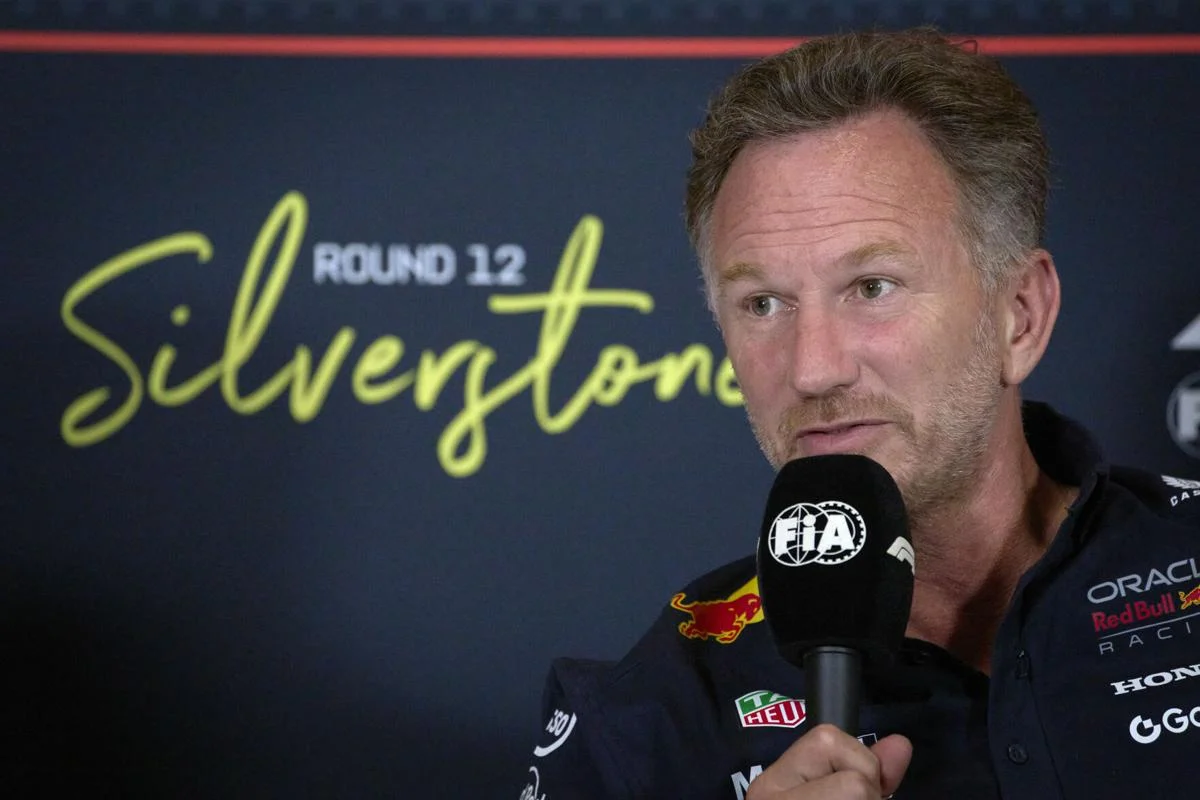

Red Bull recently announced that Christian Horner, its team principal for two decades, has stepped down from his leadership role with the reigning Constructors’ Champions. Laurent Mekies is set to take over Horner’s responsibilities. This marks a significant change on the Formula 1 grid, prompting a closer look at the current team principals and how their roles have transformed over time. This F1 team principals roles overview explores who leads today’s teams and what their critical responsibilities involve.
The Role and Evolution of a Formula 1 Team Principal
In Formula 1, a team principal acts as the chief executive of a racing team, primarily accountable for the day-to-day operations and overall team performance. Traditionally, the role was more extensive; the earliest team bosses often founded their own constructors. Icons such as Bruce McLaren and Frank Williams not only established teams but also took hands-on roles for decades. Frank Williams led his team for an impressive 43 years, a tenure rarely matched today.
Modern team principals, however, usually serve as top managers rather than hands-on engineers or drivers. They may hold shares but typically function as hired executives, reflecting the integration of teams into larger commercial and industrial organizations. Ferrari is a classic example of a historic, internally integrated team, while Red Bull represents a team run by an external parent company rooted outside traditional motorsport.
The increasing complexity and scale of Formula 1 demand that team principals focus on leadership, strategy, and diplomacy, reporting to owners or corporate entities who expect strong returns on investment through race wins, championships, and brand exposure.
Key Responsibilities Held by Team Principals in Formula 1
Every team principal serves as the public face of their team, regularly dealing with the media through interviews during race weekends and throughout the season. They also play a pivotal role representing their teams in political and sporting discussions—attending meetings with the FIA, race stewards, and rival teams. Success in this domain requires a blend of diplomatic skill and business acumen.
Another crucial element of the role is the management of personnel and culture. A team principal needs to cultivate a high-performing environment, integrating engineers, strategists, mechanics, and other specialists, who often possess deeper technical expertise in their domains. The principal’s challenge lies in trusting these experts while steering the team’s overall course.
Leadership styles vary—some team principals adopt more hands-on involvement, particularly if their background supports it, while others focus on delegation and broad oversight. A successful principal knows when to intervene and when to empower their team.
Profiles of the Current Formula 1 Team Principals
Laurent Mekies: New Leader at Red Bull Racing
Laurent Mekies assumed the role of Red Bull Racing team principal starting in 2025, becoming only the team’s second ever team boss. A French aerodynamics expert, Mekies has accumulated over 25 years of motorsport experience, beginning in Formula 3 and progressing through various Formula 1 teams. His early engineering roles included stints at Arrows and Minardi, where he worked as a race engineer with drivers such as Mark Webber, Justin Wilson, and Zsolt Baumgartner.
He rose to chief engineer at Toro Rosso (Red Bull’s junior team) but left in 2014 to serve with the FIA as safety director and deputy race director. Mekies returned to the grid as Ferrari’s head of track operations and sporting director between 2018 and 2023, eventually becoming deputy team principal before moving back to Red Bull’s junior team in 2024. With Christian Horner’s departure, Mekies stepped up to lead Red Bull’s senior squad.
Alan Permane at Racing Bulls: Bridging Experience and Leadership
Alan Permane took the helm of Racing Bulls in 2025, succeeding Laurent Mekies. Permane has enjoyed a long Formula 1 career dating back to 1989 when he joined the Benetton team. He started in electronics before becoming a race engineer for several drivers including Jean Alesi, Giancarlo Fisichella, and Jarno Trulli. By 2011, he was chief race engineer at Renault and later served as sporting director from 2016 until 2023.
Following his move to Racing Bulls, Permane expressed pride upon becoming team principal. His deep roots in Formula 1’s technical and operational areas position him well to guide the team in a competitive direction.
“honoured to take on the role as team principal”
—Alan Permane, Racing Bulls Team Principal
Steve Nielsen’s Leadership Takes Charge at Alpine
Steve Nielsen, a veteran of Formula 1, became Alpine’s managing director and team principal in 2025 following Oliver Oakes’ unexpected exit after the Miami Grand Prix. Nielsen’s F1 career began in 1986 as a truck driver for a catering company before advancing through roles at Lotus, Tyrrell, Honda, and Arrows. He is particularly known for his tenure with Benetton, working closely with Alpine advisor Flavio Briatore.
Nielsen played a crucial role during Renault’s championship-winning years in 2005 and 2006, serving as sporting director. His leadership tenure includes guiding teams such as Toro Rosso and Williams, illustrating his extensive experience managing teams through various challenges.
Jonathan Wheatley Heads Sauber with an Eye on Audi Transition
From 2025, Jonathan Wheatley assumed the position of team principal at Sauber, arriving after an 18-year affiliation with Red Bull. Wheatley joined Red Bull in 2006 as team manager and later sporting director, helping develop a pit crew renowned for record-breaking stop times. He started his motorsport career with Benetton during the 1990s and was also chief mechanic for Renault.
Wheatley takes charge as Sauber gears up to become the Audi works team from 2026, marking a new chapter in the squad’s history with an eye on elevated competitiveness.
Andy Cowell Steps Up as Aston Martin’s New Team Leader
Andy Cowell became Aston Martin’s team principal in 2025, succeeding Mike Krack. Cowell initially joined Aston Martin in July 2024 as group CEO, replacing Martin Whitmarsh. Before joining Aston Martin, Cowell brought a wealth of experience from his time with Mercedes’ High Performance Powertrains between 2013 and 2020, contributing to championship-winning efforts.
As Aston Martin’s new leader, Cowell leverages his engineering background and motorsport expertise, including engineering roles at BMW and Cosworth, to strengthen the organization’s competitive edge.
Ayao Komatsu: Breaking Ground at Haas
Ayao Komatsu took over the Haas team principal role in 2024 following the departure of Gunther Steiner after a disappointing 2023 season. Komatsu became the first Japanese team principal of a European-based F1 team. His career started in 2003 as a tyre engineer with British American Racing, progressing through roles at Renault and Lotus before joining Haas as trackside engineering director in 2016. He partnered with drivers such as Vitaly Petrov and Romain Grosjean and served in engineering leadership positions before stepping up as team principal.
Fred Vasseur’s Italian Chapter with Ferrari
Fred Vasseur has been Ferrari’s team principal since 2023. A French engineer with aeronautical studies, Vasseur founded his own teams in junior formulas, achieving notable success with drivers such as Lewis Hamilton and others in Formula 3 and GP2. His first F1 team principal role was with Renault in 2016, lasting only a year.
He later joined Sauber/Alfa Romeo before his appointment at Ferrari in late 2022, replacing Mattia Binotto. Under Vasseur, Ferrari improved their performance, securing second place in the 2024 Constructors’ Championship.
Andrea Stella’s Internal Promotion Takes McLaren Forward
Andrea Stella was promoted internally to McLaren’s team principal in January 2023 following Andreas Seidl’s departure. An engineer with extensive hands-on experience, Stella worked with prominent drivers such as Michael Schumacher, Kimi Räikkönen, and Fernando Alonso before joining McLaren in 2015. His first season as leader saw McLaren finish fourth in the championship, achieving nine podiums and a sprint race victory, followed by McLaren clinching the Constructors’ title in 2024—their first in 26 years.
James Vowles Revitalizes Williams Racing
James Vowles began his tenure as Williams team principal in 2023. Previously Mercedes’ motorsport strategy director, Vowles brought over two decades of Formula 1 expertise, having worked with teams including British American Racing, Honda, and Brawn before the Mercedes rebranding. At only 44 years old, he is among the younger leaders in the paddock.
In his first season, Vowles elevated Williams from the bottom of the standings to seventh place. He holds a motorsport degree from Cranfield University and has actively competed as a racing driver, participating in the Asian Le Mans Series in 2022.
Toto Wolff: Veteran Leader and Stakeholder at Mercedes
Toto Wolff has served as Mercedes’ team principal since 2013, also owning a 33% stake in the company. He oversees all Mercedes-Benz motorsport activities. Wolff’s racing career began in Austria and Germany in the early 1990s, with experience in Formula Ford and sportscar racing.
His legacy in motorsport is primarily managerial, notably his partnership with Niki Lauda, driving the team’s successes with drivers like Lewis Hamilton and Nico Rosberg. Wolff is married to Susie Wolff, a former race driver and current managing director of the all-female F1 Academy, emphasizing the family’s continued influence in the sport.
Significance and Future Outlook of Team Principals in Formula 1
The changing landscape of Formula 1 demands that team principals balance intense technical, political, and managerial challenges. The recent turnover in leadership roles, including the replacement of long-tenured figures like Christian Horner, highlights the sport’s increasing competitiveness and business focus.
With leaders now emerging from diverse backgrounds—ranging from engineering and strategy to operational management—team principals are pivotal in orchestrating the efforts of specialists and driving teams toward success on and off the track. As Formula 1 continues to evolve, these figures will play an essential role in shaping racing strategies, navigating regulatory environments, and fostering winning cultures.
The season ahead will be a test of how these new and established leaders cement their legacies, manage their organizations under greater pressure, and continue pushing the envelope in one of motorsport’s most demanding roles.
Our Reader’s Queries
Q. Why is 17 banned in F1?
A. The number 17 is the only driver number in Formula 1 that has been officially retired. This move honors the memory of Jules Bianchi, a French driver. Bianchi was using number 17 when he had a severe accident at the 2014 Japanese Grand Prix.
Q. Which F1 driver has ADHD?
A. Lewis Hamilton, born in 1985, is a British Formula One driver for Mercedes and has also raced for McLaren. He openly talks about living with ADHD and shares his wide range of interests and passions.
Q. Why is number 17 banned in F1?
A. In 2015, the number 17 was retired to honor Jules Bianchi. He passed away from injuries he got during a crash in the 2014 Japanese Grand Prix, where he wore this number.
Q. Is number 69 allowed in F1?
A. Drivers can pick their own personal numbers between 0 and 99, but not 1. Only the World Champion can use number 1, and it’s optional for them.