
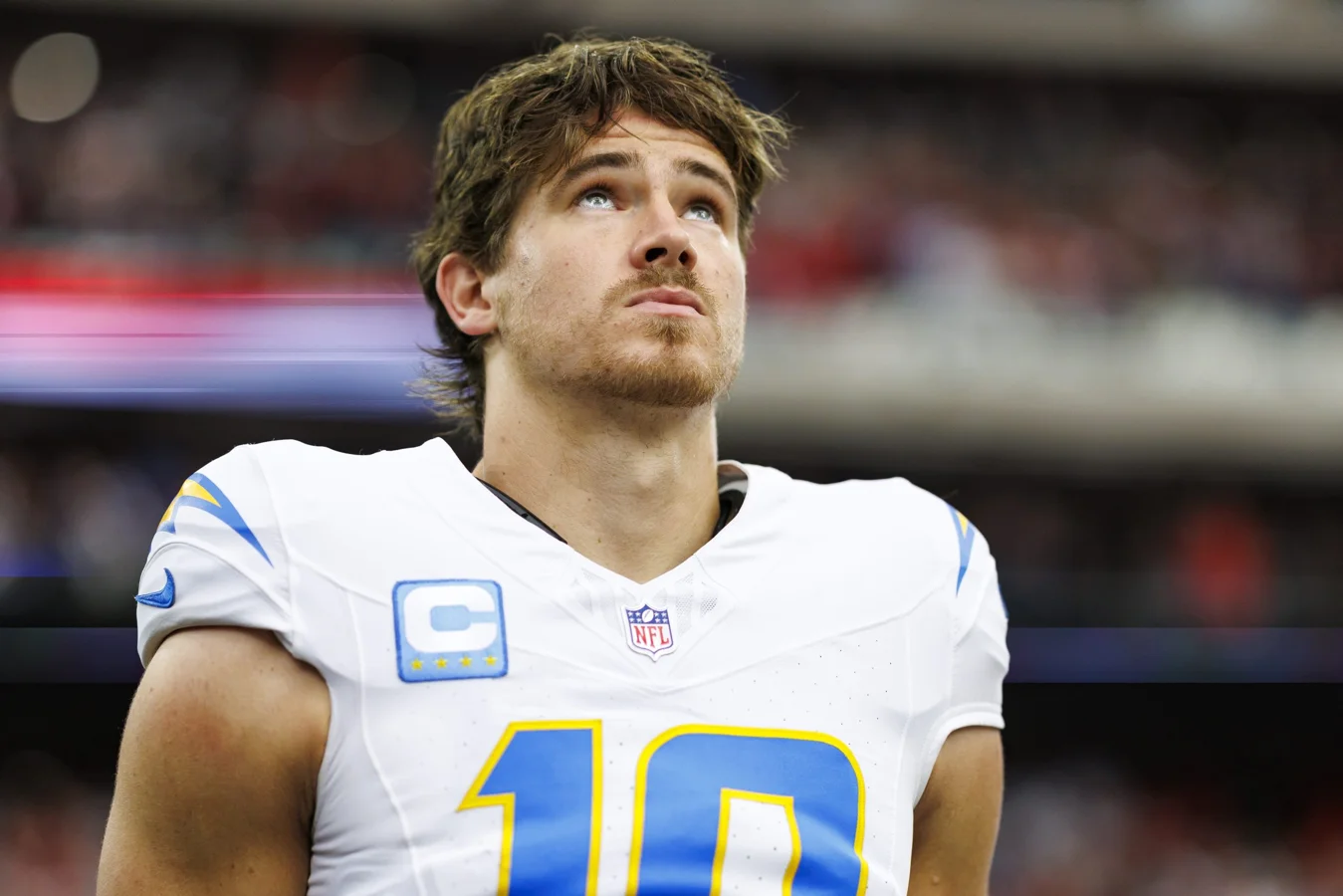

Justin Herbert’s quest for playoff success remains a pressing storyline for the 2025 NFL season. Despite his stellar performances across five regular seasons with the Los Angeles Chargers, Herbert’s postseason record has yet to reflect his regular-season dominance. Having reached the playoffs twice, both trips ended in disappointing fashion, underscoring the critical need for Justin Herbert playoff success needed to solidify his legacy. This ongoing gap between his elite regular season production and playoff outcomes keeps the spotlight sharply on the Chargers quarterback.
Exceptional Early Career Milestones Highlight Herbert’s Talent
Herbert’s career achievements through his first five seasons place him among NFL greats. He surpassed Peyton Manning’s longstanding record by amassing 21,093 passing yards, the most ever in that timeframe. Manning was the first quarterback to exceed 20,000 yards during his initial five seasons, with that record holding strong for over two decades before Herbert eclipsed it.
Moreover, Herbert joined Peyton Manning and Russell Wilson as the only quarterbacks in NFL history to record at least 3,000 passing yards and 20 touchdowns in each of their first five seasons. Such consistency in performance positions Herbert in elite quarterback company, demonstrating his remarkable talent and production.
Despite Elite Production, Herbert’s Status Among Top Quarterbacks Remains Complex
While Herbert’s statistics are undeniably elite, many evaluators and analysts contend he has not yet reached the highest tier of NFL quarterbacks. Jeremy Fowler of ESPN, citing surveys of league executives, coaches, and scouts, ranked Herbert as the No. 7 quarterback in the league for 2025—but clarified this ranking was based strictly on current ability, not lifetime achievement.
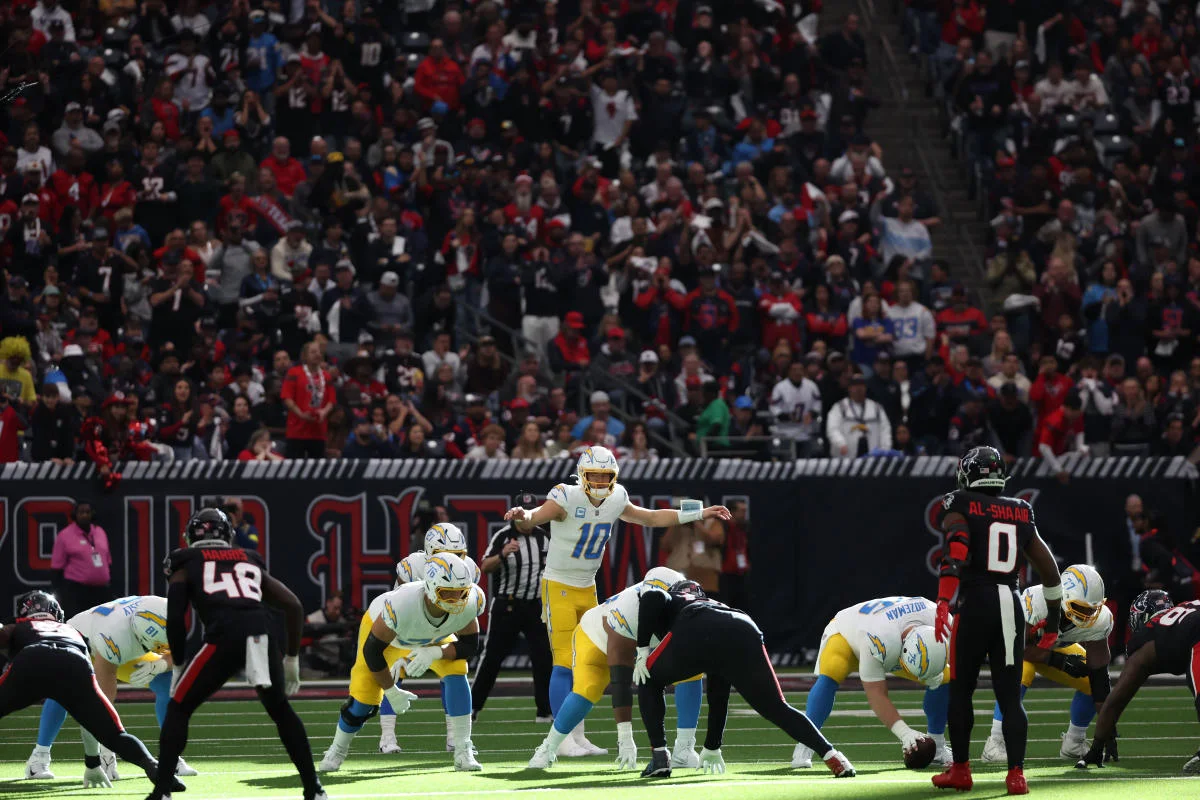
“The objective was to identify the best players for 2025,”
Fowler explained.
“This was not a five-year projection or a career achievement award.”
Still, many involved in the evaluation process view Herbert as an excellent franchise quarterback. Fowler also shared an <a href=”https://www.buzzineintl.com/category/football/nfl/afc/”>AFC executive’s perspective that Herbert is frequently underrated despite being highly dependable and athletic.
“If starting the league from scratch and drafting quarterbacks, Herbert is still getting picked very high,”
Fowler noted. The AFC executive added,
“He’s always been a top-5-8 QB — accurate to all levels, athletic, sound decision-maker,”
and further stated,
“It’s almost like he’s underrated now, in my opinion.”
Herbert’s Efficiency and Ball Control Stand Out Among Peers
Last season, under offensive coordinator Greg Roman’s run-focused scheme, Herbert was asked to sacrifice some passing yardage to prioritize ball control. Despite playing four more games than the previous year, he threw only 48 more passes, which helped reduce turnovers significantly.
“Sticking to the ball-control plan, Herbert’s three interceptions on 504 attempts marked the lowest interception rate (0.6%) by any qualified quarterback since Tom Brady in 2016,”
Fowler highlighted, illustrating Herbert’s improved decision-making and efficiency.
Late-Game Success Contrasts With Playoff Struggles
Justin Herbert leads his 2020 draft class with 16 game-winning drives, showcasing his ability to perform under pressure during the regular season. He holds a notable lead over contemporaries such as Jalen Hurts and Joe Burrow. However, the playoffs reveal a contrasting story.
Jalen Hurts boasts a 6-3 playoff record and recently earned a Super Bowl MVP after a deep postseason run, while Joe Burrow has led the Cincinnati Bengals to a Super Bowl appearance and holds a 5-2 record in the playoffs. In contrast, Herbert’s playoff results remain underwhelming, lagging behind his peers.
A veteran NFC personnel evaluator expressed optimism about Herbert’s future, saying
“Justin can get there.”
He added,
“He has the ability, so it should come in time.”
Criticism of the Chargers’ Role in Herbert’s Playoff Challenges
Some analysts argue that the Los Angeles Chargers’ organizational decisions have not sufficiently supported Herbert in his quest for postseason success. This perspective emphasizes that while Herbert’s individual talent is evident, the team has at times failed to provide the circumstances necessary to elevate his playoff performances.
The 2025 season will be critical not only for Herbert to validate his elite status but also for the Chargers to optimize their strategy around their franchise quarterback, aiming to convert regular-season excellence into meaningful playoff victories.