
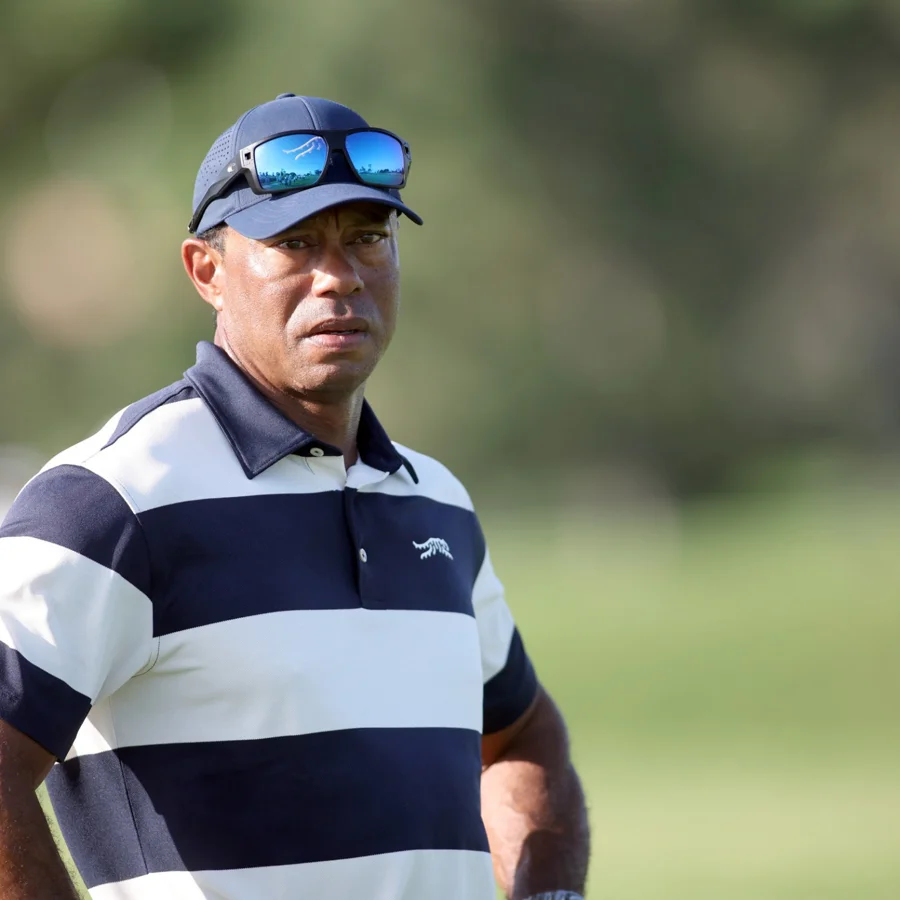

At the U.S. Junior Amateur Championship held at Daniel Island Club, 16-year-old Charlie Woods competed under intense scrutiny, with his father Tiger Woods observing quietly from behind the ropes. Despite demonstrating moments of skill, Charlie did not advance past the initial stroke-play rounds, falling short of the cut line after two challenging days.
The Struggles and Resilience Across Two Rounds
The first round proved difficult for Charlie Woods, as he managed three birdies but was offset by nine bogeys, finishing 11-over-par and far behind the projected qualifying score for match play. The pressure of playing in the shadow of his father and the surrounding attention weighed heavily during this opening performance.
However, Charlie responded well in the second round, improving significantly by shooting 3-over-par, which was seven strokes better than his opening day. This comeback effort highlighted his determination and technical potential, despite it being insufficient to recover the overall standing.
“He showed real maturity today,” one PGA observer noted. “You can see the foundation is there — it’s just going to take time.” —PGA Observer
Early Elimination Marks a Learning Stage in a Promising Career
Charlie finished with a total score of +14, which meant he did not proceed to the match-play segment of the tournament. Nonetheless, as his first appearance at the U.S. Junior Amateur, the experience adds to his growing exposure to elite-level competition. The championship has a rich history, with Tiger Woods himself winning it three consecutive years from 1991 to 1993, underscoring the event’s significance in developing top golf talent.
Focus Remains on Growth and Future Success
Although his journey in this tournament ended earlier than hoped, many see Charlie Woods as having considerable potential for improvement. His technical skills, including his swing and short game, along with improving strategic course management, suggest that stronger performances lie ahead. Being mentored by Tiger Woods provides him a unique advantage as he gains more competitive experience.
“It’s not about this week,” one junior golf coach said. “It’s about where Charlie is two years from now.” —Junior Golf Coach
The media attention linked to his family name adds scrutiny, but Charlie’s development will ultimately depend on his skill growth and perseverance. The U.S. Junior Amateur experience was a crucial milestone rather than a defining moment, with many expecting his breakthrough performance to come in future tournaments.