
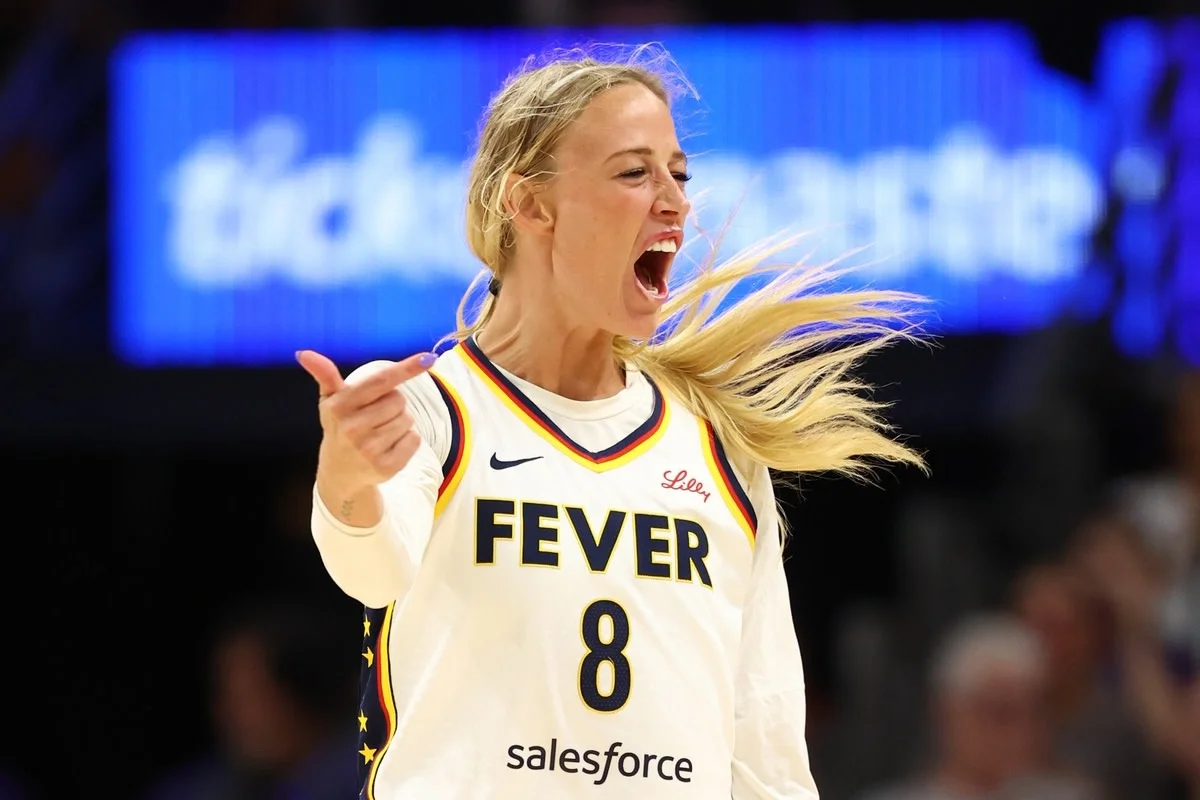

The Indiana Fever brought Sophie Cunningham on board to provide veteran leadership for their youthful core, which includes standout players like Caitlin Clark, Aliyah Boston, and Lexie Hull. Cunningham, a seasoned Missouri player, was expected to leverage her playoff experience to guide the team toward deeper postseason success. Last season‘s early exit, largely attributed to a lack of playoff savvy, fueled the team’s motivation to add Clemency to their roster in hopes of changing that narrative.
Cunningham has embraced her role as an energizing veteran presence off the bench, directly contributing to several victories for the Fever. One of her most notable impacts came during a tense contest against the Connecticut Sun when her tough defense on guard Jacy Sheldon shifted momentum. The physicality escalated after Sheldon accidentally poked Clark in the eye, igniting heated exchanges on the court. Near the game’s end, Cunningham’s forceful response—knocking Sheldon down and grabbing her neck—served as a clear message of protection for Clark and assertiveness that resonated across the league.
Riley Gaines Applauds Sophie Cunningham’s Loyalty and Courage
Former college swimmer and activist Riley Gaines publicly praised Cunningham for her outspoken defense of Caitlin Clark, calling Cunningham a “real one” and a genuine friend. Gaines highlighted Cunningham’s willingness to openly support Clark in a league where such candid backing is rare among professional players.
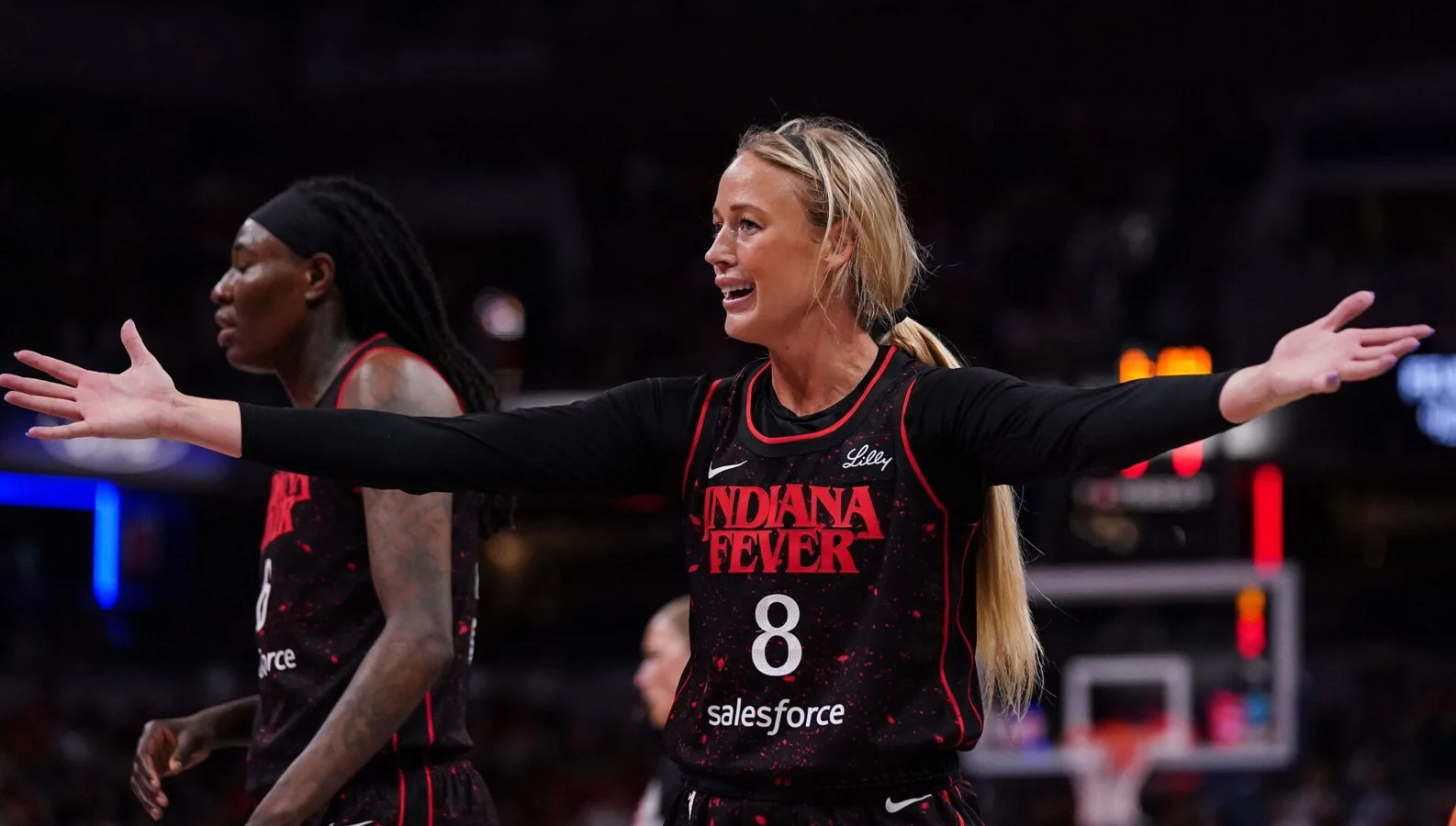
“Sophie Cunningham has been Caitlin Clark’s biggest cheerleader and defender. She is the first WNBA player I have seen to openly say this, out loud, and publicly, and not be ashamed of declaring it. She just feels like a real one, such a good friend.” —Riley Gaines, Activist and Former Athlete
This praise stemmed from Cunningham’s own podcast remarks where she expressed frustration that some WNBA players and staff have failed to recognize Clark as the “Face of the League.” Cunningham’s vocal support not only strengthens team unity but also reflects a commitment to elevating the profile of key athletes within the sport.
Jealousy and Support: Riley Gaines on Dynamics within Women’s Sports
Gaines discussed the challenges elite women athletes often face, particularly the rivalry and jealousy common within competitive environments. She emphasized that Cunningham’s role in protecting and championing Clark amid this climate reveals her character and loyalty.
“I think, especially with women, especially elite level athletes, there’s a lot of people, women, who will kind of stab you in the back. There’s a lot of jealousy, a lot of resentment, especially when you’re good. Sophie just seems like such a girl’s girl. I really, really like her.” —Riley Gaines
Gaines, at 25 years old, likely draws from personal experience in acknowledging these dynamics. The WNBA community has witnessed numerous instances of envy directed toward Clark’s rapid rise, compelling Fever fans and analysts alike to call for the team to secure an enforcer role. Cunningham’s defense of Clark has clearly fulfilled that need, earning her significant fan support and an increase in social media popularity following the incident with Sheldon.
Sophie Cunningham’s Rising Influence and Commercial Appeal
Cunningham’s assertive play and public stature have catapulted her social media following past one million across Instagram and TikTok. This surge in popularity has attracted interest from brands eager to partner with her. Riley Gaines suggested that either Cunningham or Clark would be ideal candidates for high-profile campaigns, notably naming the American Eagle brand as an appropriate fit.
“Maybe Caitlin Clark should do the next American Eagle campaign or Cunningham.” —Riley Gaines
The recent American Eagle ad featuring Sydney Sweeney sparked widespread attention and cultural debate, making the brand’s next campaign a coveted platform. Gaines’ recommendation hints at a potential political subtext, given Cunningham’s outspoken right-wing views compared to Clark’s more left-leaning stance. While Clark’s involvement in such a campaign appears unlikely, Cunningham’s escalating prominence could draw interest from major brands in the near future.
Significance of Cunningham’s Stance for the WNBA and Future Prospects
Cunningham’s determination to defend her teammate Caitlin Clark amid rising tensions exemplifies the changing landscape of the WNBA, where player solidarity and personality can drive both on-court success and off-court influence. Her actions challenge norms within the league and signal a willingness among players to confront physical and social challenges head-on. Riley Gaines’ recognition underscores how Cunningham’s stance resonates beyond basketball, touching on broader themes of loyalty, strength, and the complexities of competition in women’s sports.
As Cunningham continues to rise in popularity and social impact, both her and Clark’s presence will likely influence future marketing campaigns and the league’s cultural conversation. Their contrasting political identities may spark further discourse, but collectively they represent a new generation of athletes who define the WNBA’s evolving identity and fan engagement.