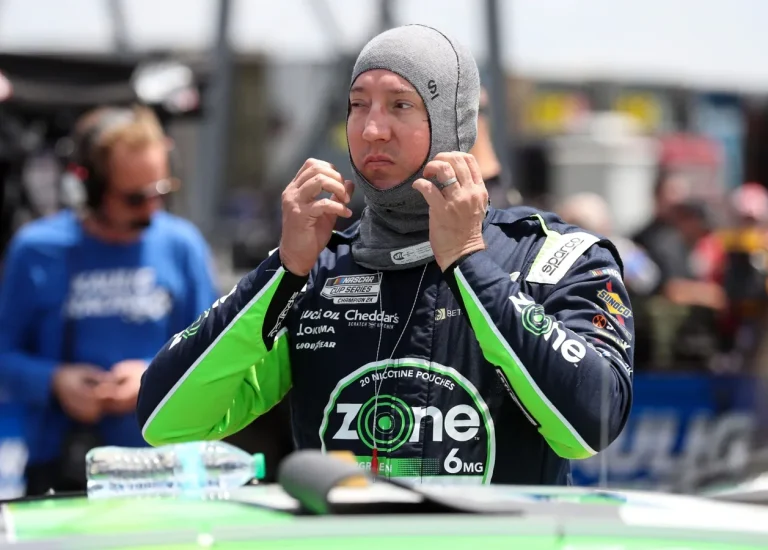
Two-time NASCAR Cup Series champion Kyle Busch has voiced strong concerns about the current race schedule at Las Vegas Motor Speedway, urging NASCAR to reduce the number of events held at his hometown track from two to one. Busch’s critique comes amidst ongoing schedule adjustments aimed at enhancing fan turnout and overall spectator engagement across NASCAR venues. Speaking candidly, Busch emphasized that having multiple races at the same track is unjustified unless the stands are consistently full, highlighting the importance of maintaining packed grandstands to energize the sport.
Expressing his views on social media platform X in an interview with Frontstretch, Busch stated,
“As much as I love Vegas, and Vegas is my hometown, I don’t think Vegas needs two dates,”
—Kyle Busch, NASCAR Driver. He believes reallocating one of these dates to venues with higher attendance could spark fresh excitement and better serve the wider NASCAR audience. Busch’s stance reflects his balancing act between hometown loyalty and the broader health of the sport, advocating for a schedule that rewards fan engagement over tradition.
Fan Attendance and Track Popularity Fuel Busch’s Argument
Busch’s call to reduce race dates in Las Vegas is supported by recent attendance figures that illustrate fluctuating fan interest. Historically, the Las Vegas Motor Speedway once hosted up to 140,000 spectators, but capacity was scaled down to about 80,000 in 2017, with further reductions in the years that followed. For example, the 2023 South Point 400 reportedly filled just over half the available seats, with estimates placing attendance between 40,000 and 48,000 fans—a significant drop from mid-100,000s that Las Vegas enjoyed previously. These numbers underline Busch’s concern that two race weekends are an inefficient use of the track’s potential and NASCAR’s schedule resources.
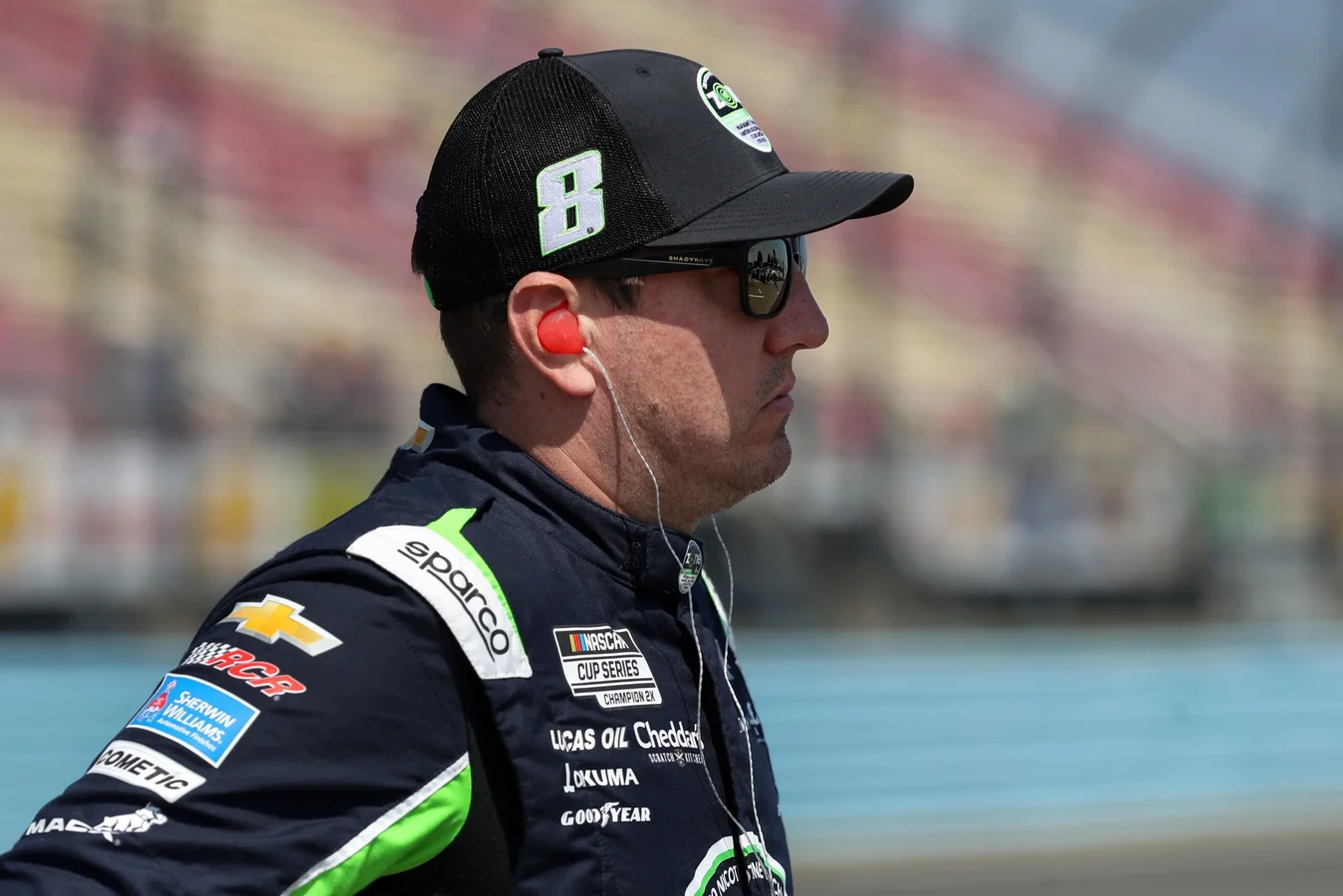
Busch elaborated on this point, affirming that race dates should be allocated to ensure every event attracts a crowd sufficient to energize the experience. He said,
“If you’re not packing the grandstands and selling out every single time, then you only need one date.”
—Kyle Busch, NASCAR Driver. For Busch, a competitive schedule should pivot towards venues that guarantee vibrant atmospheres, making a compelling case for NASCAR to rethink how it distributes race dates across the calendar.
Kyle Busch’s History and Performance at Las Vegas Motor Speedway
Kyle Busch’s relationship with Las Vegas Motor Speedway is deeply rooted in his racing journey, marked by fond memories and notable achievements. His first NASCAR Cup Series victory came in Las Vegas in 2009, a dramatic win that saw him climb from the back of the field to seize the checkered flag in a moment etched in NASCAR lore. Though that remains Busch’s sole Cup Series win at the 1.5-mile desert oval, he has maintained competitive finishes, securing three top-six results in the last seven races, including a near-podium in the 2022 spring event disrupted by a late caution.
This blend of personal accomplishment and persistent competitiveness gives weight to Busch’s critiques, positioning him as a knowledgeable insider weighing the racing quality alongside fan experience. Despite his reverence for the track, he contends the quality of racing has tapered off, especially when compared to other tracks where overtakes and driver skill are more prominently displayed.
Busch Highlights Racing Challenges at Las Vegas Compared to Other Tracks
Kyle Busch has been vocal about the racing dynamics at Las Vegas Motor Speedway, which he describes as overly dependent on aerodynamics and constrained by limited racing lines. This combination, he argues, greatly reduces opportunities for dramatic passing and on-track battles, diluting the excitement for fans. Reflecting on alternatives, Busch remarked,
“dramatic passes are all but eliminated”
—Kyle Busch, NASCAR Driver.
When considering tracks that might replace a second Las Vegas date, Busch mentioned Bristol, albeit with reservations, stating,
“I would say maybe, I don’t know, maybe another Bristol, but honestly, people would say that Dover’s another Bristol, and that hasn’t lended itself to the best of racing over the years. It’s just so aero-dependent there, and the fastest way is always the bottom.”
—Kyle Busch, NASCAR Driver. His viewpoint reveals a preference for venues with multi-groove racing, such as Richmond, Bristol, Darlington, or Loudon, where driver skill and racecraft are the key determinants of success rather than aerodynamic package advantages.
Busch’s perspective underscores a broader debate within NASCAR about how track selection and scheduling influence not only the spectacle but the sport’s long-term appeal and sustainability.
Recent NASCAR Practice and Qualifying Highlights Involving Kyle Busch and Peers
Amid scheduling debates, Kyle Busch showcased competitive speed during practice at Richmond Raceway, setting the fastest average speeds across multiple stint lengths. However, he faced setbacks in qualifying, starting 28th despite strong practice times, highlighting the unpredictable nature of racing weekends. Meanwhile, Ryan Preece claimed the Busch Light Pole Award at Richmond with a lap of 22.244 seconds and a speed of 121.381 mph, marking a milestone in his 2025 campaign with Stewart-Haas Racing.
Preece shared his emotional edge to competition in response to recent performances, stating,
“I hate losing — it eats at me,”
—Ryan Preece, NASCAR Driver. His focus and drive position him as a rising threat in the sport, closing in on playoff qualification points.
The contrasting fortunes of Busch and Preece illustrate the intense competitiveness of NASCAR’s current season, adding urgency to discussions about the best venues and schedule arrangements for maximizing fan interest and sporting quality.
Implications of Busch’s Critique for NASCAR’s Future Schedule Planning
Kyle Busch’s forthright critique alerts NASCAR and its stakeholders to the pressing need for ongoing evaluation of the race calendar in terms of both fan attendance and racing quality. His call for trimming the Las Vegas schedule aims to rejuvenate the sport by favoring venues that consistently engage fans through compelling action, even if that means sacrificing sentimental ties to hometown tracks. Given NASCAR’s ongoing quest to maintain relevance and grow its audience, Busch’s observations could influence future strategies around race allocations and calendar reshuffling.
While it remains to be seen whether NASCAR will adjust the Las Vegas Motor Speedway race dates in response, Busch’s bold voice adds fuel to a vital conversation about optimizing the sport’s schedule for sustainability and excitement. His views highlight the tension between tradition and market demand—a balancing act NASCAR must navigate carefully as it prepares for the upcoming seasons.