
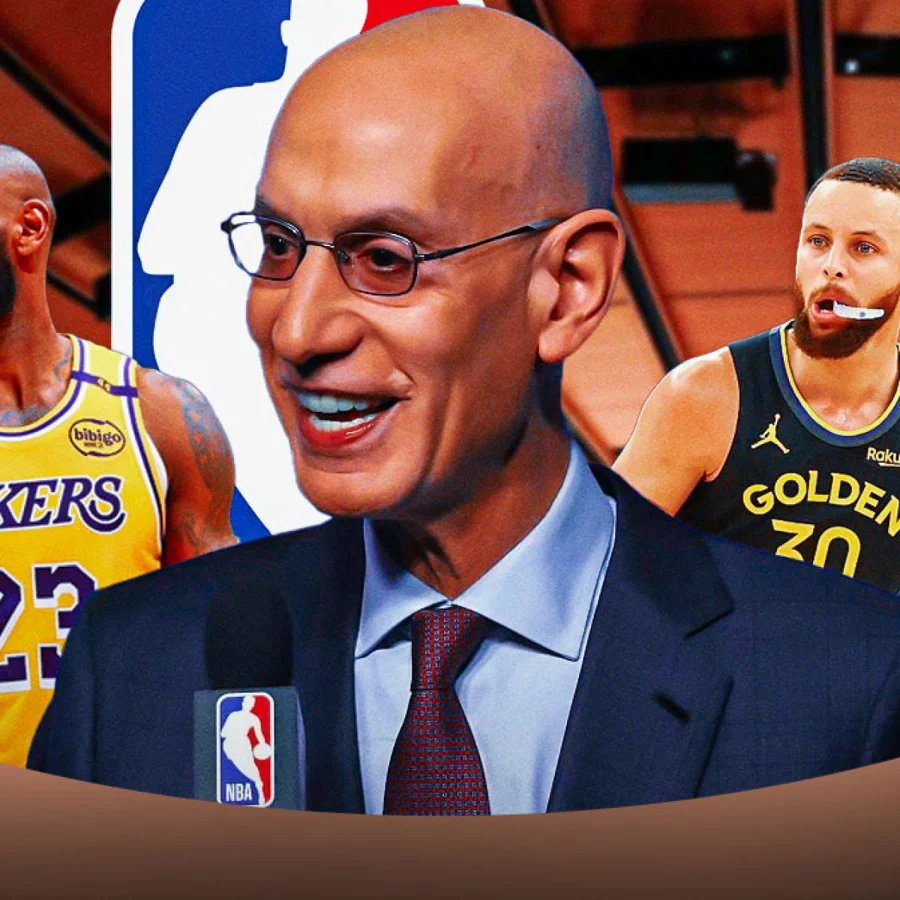

LeBron James has dominated the discussion surrounding the greatest NBA players of the 21st century, claiming top honors across multiple categories in a comprehensive evaluation conducted by CBS Sports NBA staff. Announced recently, the awards span all major NBA recognitions from January 1, 2000, onward, highlighting James’s unparalleled impact on the game while also sparking debates over notable omissions, especially in defensive honors.
The evaluation considered not only regular-season performance but also playoff achievements, offering a 25-year perspective that reduces the distortions caused by shorter award cycles and narratives. Amid this broader context, LeBron James emerged overwhelmingly as the Most Valuable Player and Clutch Player of the Century, cementing his legacy in NBA history.
LeBron James Confirmed as Most Valuable Player of the 21st Century
LeBron James secured the title of Most Valuable Player (MVP) of the century, a recognition strongly supported by his statistical dominance and championship pedigree. Leading the century in points scored and MVP awards won, James also ranks second in assists, third in triple-doubles, and fourth in rebounds. His four NBA championships further bolster his claim as arguably the best player to grace the sport during this period.
The consensus among the voters was clear, with Stephen Curry and Tim Duncan completing the top three for the MVP ranking. Duncan, a two-time MVP with four championships, and Curry, also a two-time MVP with four titles, represent the few players with multiple MVPs and championships this century. Despite the presence of other stars like Kobe Bryant, Shaquille O’Neal, Kevin Durant, and Nikola Jokić, none made the final MVP ballot, underscoring the overwhelming agreement on LeBron, Curry, and Duncan’s status.

Stephen Curry’s influence as the key figure in the three-point revolution was acknowledged, positioning him as potentially the offensive player of the century had such a category existed. Meanwhile, Duncan’s defensive prowess earned him distinction in another major award, as voters favored his comprehensive contributions both offensively and defensively.
Defensive Player of the Century Award Stirs Controversy
Despite multiple Defensive Player of the Year trophies awarded to players like Ben Wallace, Dwight Howard, Kawhi Leonard, and Rudy Gobert over the century, the Defensive Player of the Century award went to Tim Duncan—an unusual choice, given he never won the annual award in real time. Other defensive standouts such as Dikembe Mutombo, Alonzo Mourning, Draymond Green, and Kevin Garnett were also absent from the top three, with Green and Garnett each having won the Defensive Player of the Year once.
This outcome highlights the inherent difficulties in measuring defensive impact. Defensive performance is nuanced and often goes beyond traditional metrics like blocks or team defensive rankings. Factors such as team defensive schemes and the contributions of players from various positions make it challenging to assign awards accurately. Furthermore, these awards traditionally consider only regular-season play, but Duncan and Green rose to prominence with their elite defense in postseason contexts.
The voting was extremely close between Duncan, Green, and Garnett. Duncan edged out the others as the cornerstone of a Spurs dynasty known for defensive excellence. Green narrowly surpassed Garnett, who is often regarded as having the best combination of size, athleticism, and basketball IQ among the three. This vote underscored how external circumstances—such as team context and era—can influence recognition for defensive greatness.
Rookie of the Century Vote Was Exceptionally Close
The Rookie of the Century distinction was highly contested, with LeBron James narrowly prevailing over Victor Wembanyama by just two voting points. Luka Dončić and Blake Griffin were also considered strong contenders. James led with 1.6 steals per game but only topped one major statistical category among the candidates. Griffin dominated in points, rebounds, and field goal percentage while playing a full 82-game season and earning an All-Star selection.
Wembanyama excelled in advanced metrics and received All-Defensive honors, though his team did not improve its record significantly in his rookie campaign. The balance of all-around production worked in James’s favor, especially considering he debuted under tougher defensive rules with hand-checking still allowed. James’s impact was evident as he transformed the Cleveland Cavaliers from a 17-win team to one with 35 victories without major roster changes. This remarkable contribution contrasted with the lesser team improvements seen for Griffin, Dončić, and Wembanyama.
A notable omission from all Rookie of the Century voting was Chris Paul. Despite leading all rookies in Value Over Replacement Player (VORP) and Win Shares and tying for the best Box Plus-Minus score, Paul did not receive recognition, even though he played for a team severely affected by Hurricane Katrina. This exclusion highlights how some legendary careers began with underappreciated rookie seasons.
Gregg Popovich Cited as Coach of the Century
Coach of the Century honors were unanimously awarded to Gregg Popovich, whose long tenure and unparalleled success with the San Antonio Spurs included four championships and a reputation for talent development. Although Phil Jackson claimed more championships during the 21st century, Popovich’s sustained excellence with less star power and his longevity were decisive factors.
Popovich’s coaching philosophy, including the evolution of an internationally inspired motion offense introduced later in Tim Duncan’s career, has endured in the modern NBA, while Jackson’s signature triangle offense has largely fallen out of use. Jackson’s legacy has been reevaluated over time, especially as many teams failed when attempting to replicate the triangle system without star players.
Other coaches such as Steve Kerr, Erik Spoelstra, and Rick Carlisle were also considered but ultimately ranked lower. Kerr, despite four championships with Golden State, ranked behind Spoelstra, who won two titles with multiple roster configurations. Carlisle, while effective, lacked the star talent of the others. Mike D’Antoni, celebrated for his offensive innovations, surprisingly missed the cutoff entirely due to a lack of championship success.
Sixth Man of the Century Chosen for Versatility Over Scoring
The Sixth Man of the Year award often reflects the role of a high-scoring offensive spark off the bench, a mantle historically held by players such as Lou Williams and Jamal Crawford, both three-time winners. However, neither player topped this century’s list, with Williams finishing third and Crawford not making the final cut.
Instead, the top finishers were Manu Ginobili and Andre Iguodala, both valued for their well-rounded impact. Ginobili combined prolific scoring with playmaking and defense, becoming a Hall of Famer and a vital component of the Spurs. His risk-taking style often challenged Gregg Popovich, but Ginobili was regarded as San Antonio’s secret weapon during the playoffs.
Andre Iguodala defied the typical sixth man profile. Though he never won the Sixth Man of the Year award, Iguodala’s defense, secondary playmaking, and clutch shooting were crucial in Golden State’s championship runs. Notably, he earned Finals MVP while starting only half the games in a series, exemplifying his willingness to adapt roles for the team’s success. While Iguodala might not match Williams or Crawford in one-on-one scoring, his overall contributions to winning set him apart.
Front Office Excellence Recognized in Executive of the Century Awards
The Executive of the Century voting revealed a fascinating insight: the Spurs’ dynastic success was built in large part by two figures who shared credit for major draft decisions. RC Buford, who managed the Spurs’ front office for many years, and Sam Presti, who initially contributed to key Spurs drafts before constructing the Oklahoma City Thunder’s emerging dynasty, both earned high praise.
Buford’s expert handling of the roster, including the pivotal 2011 draft night trade that brought Kawhi Leonard to San Antonio, helped sustain the Spurs’ championship contention. Even after moving up to team president, Buford remains influential in developing the team around rising star Victor Wembanyama. Both executives operated under the authority of Gregg Popovich, whose leadership defined the franchise’s culture and longevity.
Pat Riley finished a distant third, surprising some given his role in acquiring stars such as LeBron James and Chris Bosh during Miami’s “Big Three” era. Riley’s ability to assemble talent, including drafting Dwyane Wade, Bam Adebayo, and Tyler Herro, and his knack for unheralded contributors like Gabe Vincent, Max Strus, and Caleb Martin, remains impressive. Other executives like Danny Ainge and Bob Myers, pivotal in Boston’s title runs and Golden State’s dynasty, also received votes.
LeBron Named Clutch Player of the Century, Despite Debate Over Other Contenders
LeBron James was the unequivocal choice for Clutch Player of the Century, bolstered by nearly 8,300 playoff points—the best this century by a wide margin—and memorable late-game heroics, including four playoff buzzer-beaters. His defensive chase-down block on Andre Iguodala during Game 7 of the 2016 NBA Finals is widely regarded as one of the greatest clutch defensive plays in history.
Beyond James, the field was fragmented, with seven other candidates receiving votes: Dirk Nowitzki, Kobe Bryant, Damian Lillard, Stephen Curry, Nikola Jokić, and Klay Thompson. Each player has notable strengths but also significant limitations. Nowitzki famously fell short in his first-round exit as a No. 1 seed, and Bryant’s end-of-game statistics are frequently criticized despite his reputation. Lillard has yet to reach the Finals, Curry needed multiple attempts to earn a Finals MVP, while Jokić and Thompson have defensive and role-related limitations respectively.
The underlying conclusion is that consistent clutch success at the highest level is elusive, and even the greatest players experience high-pressure failures. James’s imperfect Finals record, particularly in 2011 and his later Lakers years, serves as a reminder that clutch performance is a complex and often inconsistent phenomenon.
Kobe Bryant and Dirk Nowitzki tied for second place, both widely regarded as reliable closers in critical moments. Stephen Curry stands out among the group for his multiple Finals appearances and successes, while others like Lillard have memorable moments but lack sustained postseason achievements. Nikola Jokić continues to build his clutch legacy, and Klay Thompson’s Game 6 heroics are well-known, though not reflective of overall primary ball-handling responsibilities.
This comprehensive review of NBA awards in the 21st century highlights LeBron James’s extraordinary career milestones and the evolving nature of how greatness is measured, especially in areas like defense and clutch performance. It sets a foundation for future debate as new generations of players rise and challenge the established pantheon.