
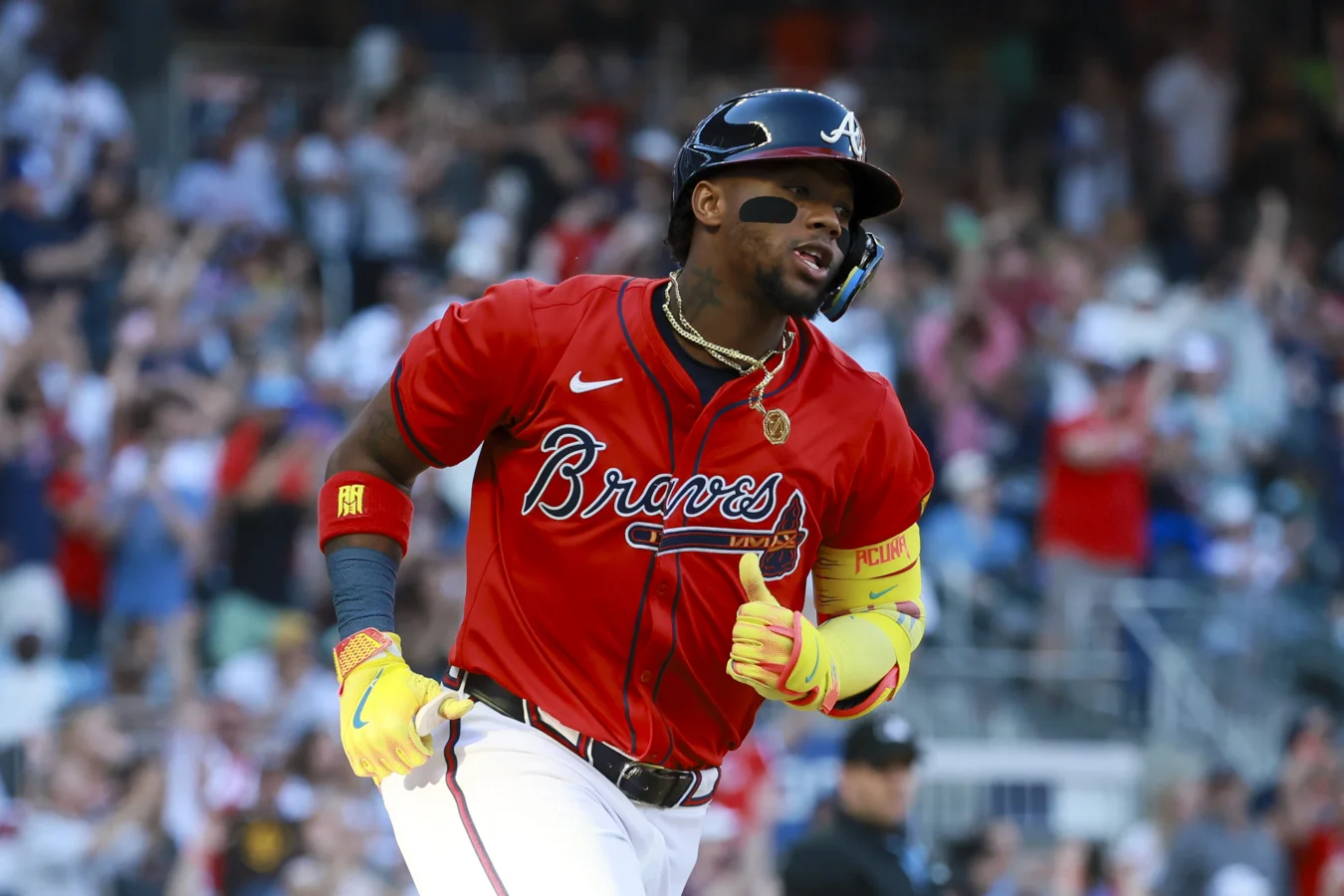

Eli White has demonstrated notable defensive skills and speed, which have generated optimism for his potential impact with the Atlanta Braves. Although his offensive numbers in 2022 offered limited power, with a batting line of .200/.274/.305 over 117 plate appearances (PA) and a 0.6 Wins Above Replacement (WAR), his defensive prowess showed promise early this season. His ability to cover ground in the outfield, combined with his speed, suggests value beyond just hitting.
Defensive Highlights and Reliable Speed Confirm Value in Outfield
White’s defense has been on display with impressive plays, such as robbing Mickey Moniak in Denver and running down challenging balls against the Cincinnati Reds. His Outs Above Average (OAA) metric in right field stood at +2 for most of the 2023 season, illustrating above-average fielding. Although a difficult play in Washington impacted his numbers and his overall defensive value briefly dipped to zero, variability is expected with limited sample sizes. White’s sprint speed remains elite, ranking in the 99th percentile, confirming he has not lost any of the range and quickness that make him a strong defensive asset.
Rising Offensive Impact Alongside Defensive Strength
In addition to his reliable defense in the corner outfield positions, White has added value on the basepaths with five stolen bases. His combination of speed and developing power could allow him to serve effectively as a starter while Jurickson Profar is sidelined. So far this year, White has matched his 0.6 WAR from 2022 but with a slightly higher 126 plate appearances. Scaling this to a full season indicates that maintaining his current pace could produce near-average production for a regular position player.
Shifts in Plate Discipline Promise Offensive Breakthrough
Historically, Eli White has struggled offensively, featuring a high strikeout rate of 31.7% prior to 2023. While his speed is an asset, his offensive approach has not simply relied on contact and speed but has shown a tendency to swing for extra bases, aligning with the Braves’ power-oriented philosophy. This season, White has lowered his strikeout rate to approximately 22-23%, which translates to a considerable improvement in offensive performance.
Maintaining a strikeout rate in this range could boost White’s on-base plus slugging (OPS) by roughly 80 to 120 points, increasing his chances of securing consistent playing time, rather than languishing at Triple-A Gwinnett. While strikeouts do not always signal problems, for White they reflect a key challenge: making more frequent and effective contact with the baseball.
Marked Gains in Contact Quality Support Offensive Growth
Comparing White’s career plate discipline to his recent performance reveals a significant rise in contact efficiency. His overall contact rate and zone-contact (z-contact)—the percentage of swings in the strike zone resulting in contact—have both improved sharply. Prior to this season, White’s z-contact sat at 77.6%, well below the league average of 85.3%. This year, he has elevated it to 88.3%, surpassing the average and highlighting his progress in connecting with strikes.
This increase in contact quality has propelled his expected weighted on-base average (xwOBA) from .263 last year to .319 in 2023, demonstrating not only more contact but also harder, more productive hits. White is not just connecting more often; he is making better quality contact, particularly on good pitches.
Impressive Improvements Within the Power Zone of the Strike Zone
Focusing on the “power cross,” a key area in the strike zone representing the middle of the plate both vertically and horizontally, White has shown remarkable improvement. His batting average (.348), slugging percentage (.591), weighted on-base average (.402), and expected wOBA (.384) within this zone have all increased significantly compared to previous years. For context, his slugging in this area rose nearly 0.200 points from a poor .398 to an encouraging .591.
These gains illustrate that White is now effectively targeting the heart of the strike zone to generate extra-base hits, a vital development for his offensive role in the Braves lineup.
Overcoming Past Challenges Sets Stage for Greater Playing Time
Eli White has addressed the fundamental issue of making better contact and reducing strikeouts, two areas that have previously limited his offensive contributions. This turnaround has warranted him receiving consistent playing time in left field while Jurickson Profar remains out. In contrast, other players like Alex Verdugo, who have shown competence but continue to struggle with certain pitches, have yet to overcome similar obstacles.
White’s adjustments position him well to play a valuable role for the Braves this season, and if he sustains these improvements, he could emerge as a regular contributor in the outfield. His blend of speed, defense, and enhanced offensive skills aligns with the Braves’ needs during Profar’s absence and could influence the team’s lineup decisions going forward.