
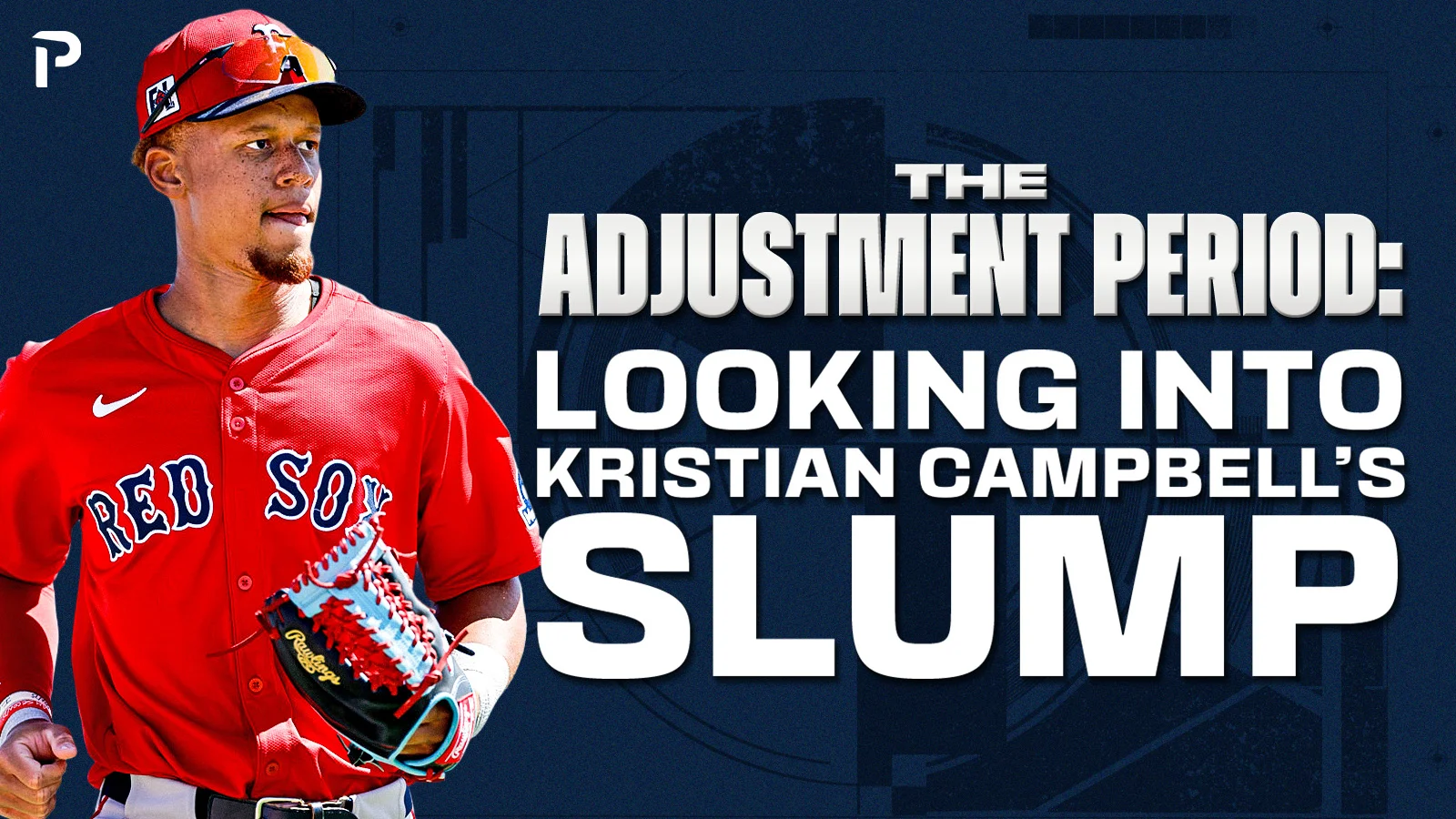

Kristian Campbell’s rookie season adjustment period has been a rollercoaster through his first 42 games, revealing the challenges even top prospects face when transitioning to the major leagues. During March and April, the 22-year-old prospect displayed the potential of a breakout star, producing an impressive .301/.407/.495 slash line with a 153 weighted runs created plus (wRC+) across 123 plate appearances. However, May has brought hardships, with Campbell slumping to a .094/.127/.151 line and a -35 wRC+, emphasizing how demanding the big leagues can be for a young hitter.
Examining the Role of Luck and Performance Metrics
A significant part of Campbell’s downturn can be traced to bad luck, reflected by his drop in batting average on balls in play (BABIP) from a hot .397 in his early months to a strikingly low .118 in May. Despite this, some underlying performance issues are apparent. Campbell recorded the lowest expected weighted on-base average (xwOBA) among hitters with at least 50 plate appearances in May, standing at .202. His strikeout rate has surged above 30%, and he has been hitting 60% of balls on the ground, a combination that hinders offensive production and fantasy value alike.
Shift Toward Aggressiveness and Plate Discipline Changes
One of the most noticeable adjustments Campbell made entering May was increasing his aggressiveness at the plate. His overall swing rate climbed sharply, coinciding with a dramatic decline in walk rate from 15.4% down to 3.8%. Despite swinging more frequently, his pull rate plummeted from 39.4% in April to just 11.4% in May, meaning Campbell was hitting many more ground balls to the opposite field. This pattern of striking out more while walking less and failing to pull the ball consistently has contributed to his offensive struggles.
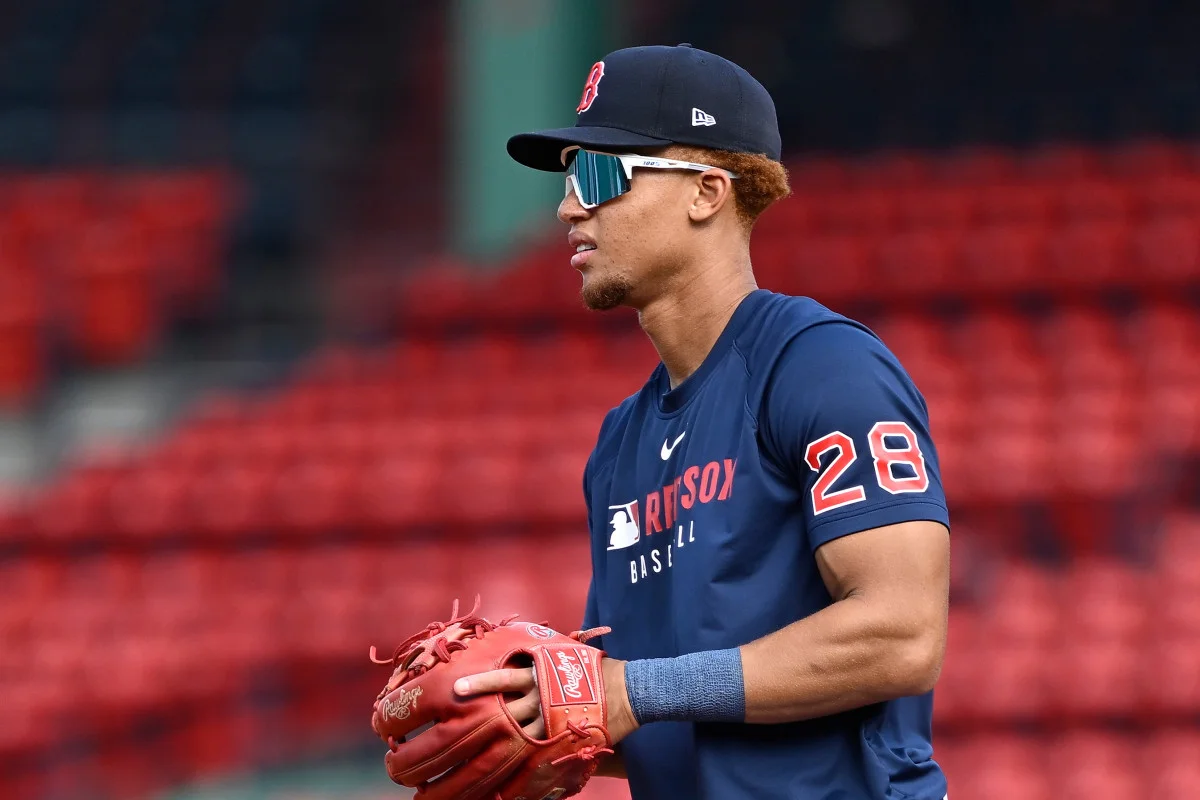
Interestingly, this increased aggression has not come with a reduction in swing speed or power metrics. Campbell’s bat speed remains strong and consistent, as shown during his first major league home run, where his bat speed was measured at 80.4 mph—considered top-tier—resulting in a 112.2 mph exit velocity and a 431-foot home run distance. His rate of barreled balls actually improved, rising from 6.9% to 8.6%, and his hard-hit ball rate stayed near 43% despite the slump.
“Statcast bat tracking for Kristian Campbell’s first MLB home run
80.4 mph bat speed (80+ is top-tier) ➡️ 112.2 mph exit velo / 431 foot distance pic.twitter.com/P2Wn1mtZjl” —David Adler
Adjusting to Higher Pitch Velocities
One significant adjustment Campbell has faced recently involves the velocity of fastballs he sees from opposing pitchers. Early in his career, in March and April, he generally faced some of the slower fastballs in the league, with an average velocity of 92.8 mph, ranking among the lowest in baseball. In May, however, the average velocity against him rose to 95.1 mph, which ranks tied for the 13th highest among hitters. For context, pitchers like Mitchell Parker average fastballs of 92.8 mph while more dominant arms such as Kodai Senga reach velocities around 95.1 mph.
This increase in velocity is notable because league-wide, hitters perform worse against faster fastballs. Against fastballs of 95 mph and above, the whiff rate climbs to 23%, and the weighted on-base average (wOBA) drops to .324, compared to an 18.5% whiff rate and .371 wOBA for fastballs below 93 mph.
Campbell’s own expected wOBA against these pitches has diminished with increased velocity, dropping from .372 in early months to .299 in May. Despite this, he continues to handle high-velocity fastballs fairly well, missing only 13.8% of those swings. It appears that while he adapts to the speed, the locations of pitches, especially breaking balls away from the plate, have been more problematic.
Challenges with Pitch Location and Breaking Balls
Pitchers have consistently attacked Campbell on the inner third of the plate, placing him in the 95th percentile league-wide for pitches thrown inside. Although this aggressive inside pitching strategy limits his offensive threat—often resulting in weak opposite-field contact—Campbell occasionally showcases his talent by driving tough fastballs with authority. A notable example includes a 97 mph sinker down and inside from pitcher Beau Brieske, which Campbell was able to send over the fence.
However, this inside fastball has set the stage for pitchers to exploit weaknesses with breaking balls, mostly sliders away from the plate. Campbell has struggled significantly against breaking pitches both early and late in his rookie season. Even in his strong start, he posted a 37.7% whiff rate against breaking balls with a .319 expected wOBA, but the situation worsened in May, with his whiff rate rising to 43.8% and expected wOBA plummeting to .195.
Outlook: Patience and Potential for Growth
Campbell’s rookie season adjustment period reflects a common experience for newcomers as they face tougher pitching and extensive scouting data. Despite the recent slump, his tools and approach remain well above average for a player of his age. His bat speed, contact skills, and occasional flashes of power indicate the potential for a strong rebound once he adapts more fully to major league pitching.
Development at this stage is rarely linear, and top prospects like Campbell often navigate periods of struggle before achieving sustained success. Patience alongside focused adjustments will be critical as he continues to refine his approach, improve pitch recognition, and adjust to velocity and pitch location challenges. Given his early promise, Kristian Campbell has the ingredients to recover from this slump and potentially become a key contributor as the season progresses.