
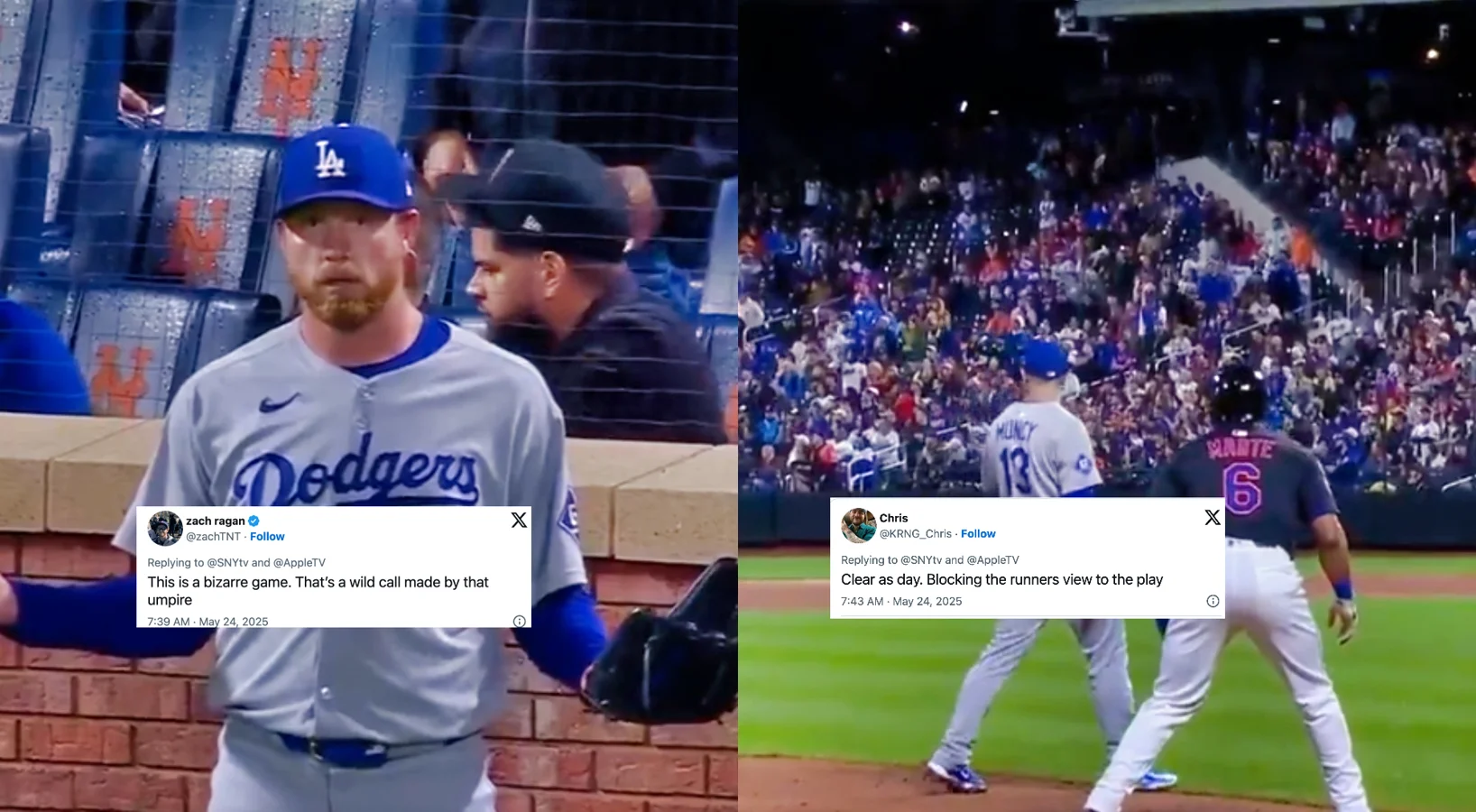

The Los Angeles Dodgers edged the New York Mets in an intense extra-innings game on Friday at Citi Field, a contest marked by a rain delay and two rarely seen umpiring decisions. The game’s most controversial moment involved Max Muncy, who was called for obstruction in a play that sparked debate across baseball circles.
Obstruction Call Against Max Muncy Sparks Confusion
The pivotal play unfolded when Starling Marte reached third base and attempted to score on a sacrifice fly. Teoscar Hernández caught the fly ball and made a precise throw home, which initially seemed to result in Marte being tagged out. However, third base umpire Tripp Gibson called obstruction on Dodgers’ infielder Max Muncy, ruling Marte safe.
Despite no physical contact or direct blocking by Muncy, Gibson judged that Muncy’s positioning obstructed Marte’s view of Hernández’s catch. According to the MLB rulebook, this was a valid application of obstruction, though such rulings are seldom enforced and the call caught many by surprise.
Max Muncy expressed disbelief over the call, acknowledging the rule but clarifying the typical behavior expected from third basemen. In an exclusive to the Southern California News Group’s Bill Plunkett, Muncy said,
“I know the rule. But every third baseman is taught – you kind of just wander over, and as long as you’re not standing right next to the guy, it’s never an issue. You don’t look at him. You don’t make sure you’re lining up your path. You just kind of walk over and you just stand there. I felt like I was far enough away.” —Max Muncy, Dodgers infielder
He added,
“He felt that I wasn’t far enough away. He felt that I was purposely doing it, and he felt that I made a conscious effort to stand in the way. Every third baseman in the league does that. Never seen it called, and it was actually called twice tonight. He called it in the extra innings when (Andy) Pages had the sac fly, he actually called it on their guy, but it didn’t matter because our guy scored. It was called twice tonight. Haven’t seen it called my entire career.” —Max Muncy, Dodgers infielder
The rare enforcement of obstruction against Muncy was one of two similar calls during the game, heightening confusion but underscoring the umpires’ strict interpretation of the rule.
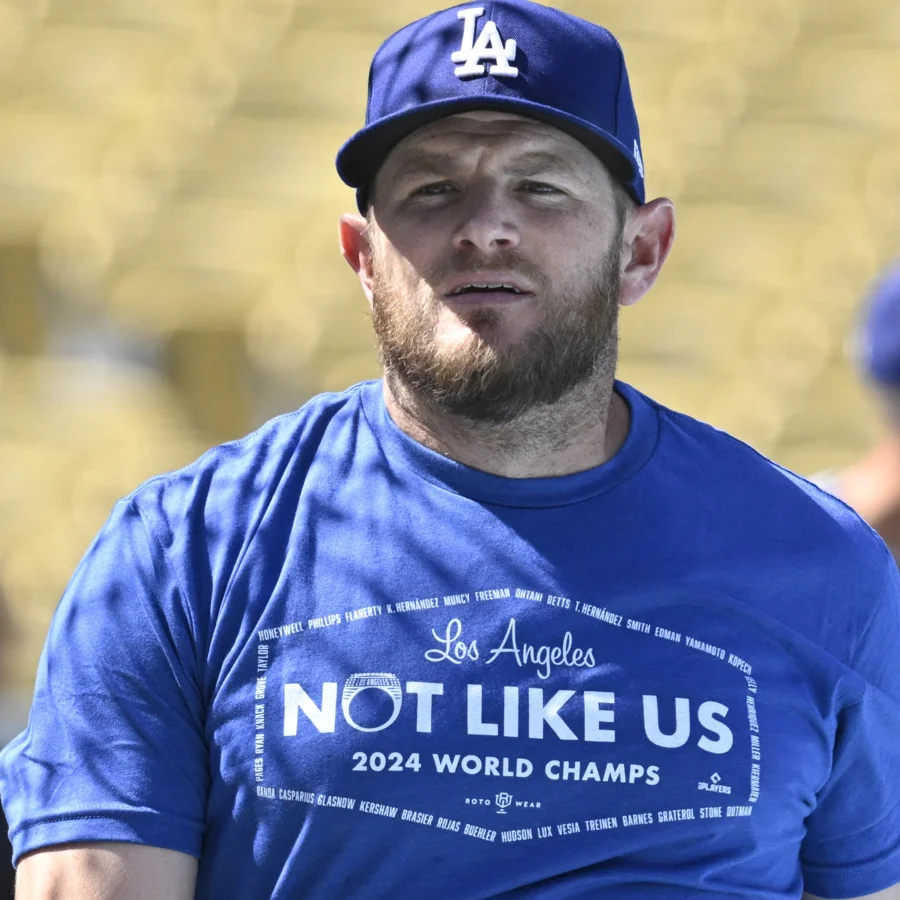
Clarification on Catch-and-Run Tag-Up Rule
Earlier in the contest, another unusual ruling went in favor of the Dodgers on a tag-up play involving Michael Conforto. During a fly ball into the gap, Mets outfielders inadvertently interfered with one another, leading to a bobbled catch. Conforto tagged up and advanced before Tyrone Taylor secured the ball, prompting the Mets to challenge that Conforto left early.
Upon video review, the umpires sided with the Dodgers based on the rule stating a runner can leave the base when the ball touches the fielder’s glove, not necessarily when it is securely caught. This interpretation surprised the Mets, who believed the runner had to wait until the catch was fully completed.
Dodgers’ Resilient Victory Despite Controversial Calls
Neither the obstruction call involving Muncy nor the tag-up decision ultimately changed the outcome, as the Dodgers secured a 7-5 win in the 13th inning. The contentious obstruction ruling, however, may have contributed to extended gameplay and thus placed additional strain on Dodgers’ pitching staff. The Dodgers held a three-run lead entering the ninth inning before Tanner Scott allowed a blown save, pushing the game into extra innings.
Official Scorer’s Decision on Obstruction Impact
Typically, obstruction calls are recorded as errors against the defending player involved. In this case, the official scorer categorized the incident as Type 2 Obstruction, meaning Max Muncy was not charged with an error on the play. Muncy did incur a throwing error elsewhere but contributed offensively with a 1-for-4 performance and an RBI single.
Potential Implications of Obstruction Call Controversy
The Max Muncy obstruction call controversy has reignited conversations about the interpretation and practical enforcement of obstruction rules in Major League Baseball. Such calls are exceedingly rare, and their application here in a high-stakes game drew significant scrutiny from players, coaches, and fans alike.
Given how infrequently the rule is applied, umpires’ increased readiness to enforce it could impact how infielders position themselves during plays near the bases. For the Dodgers, the call played a role in extending a grueling game that taxed their bullpen. As baseball adapts, the league may need to clarify and communicate obstruction rules more explicitly to avoid future confusion.