
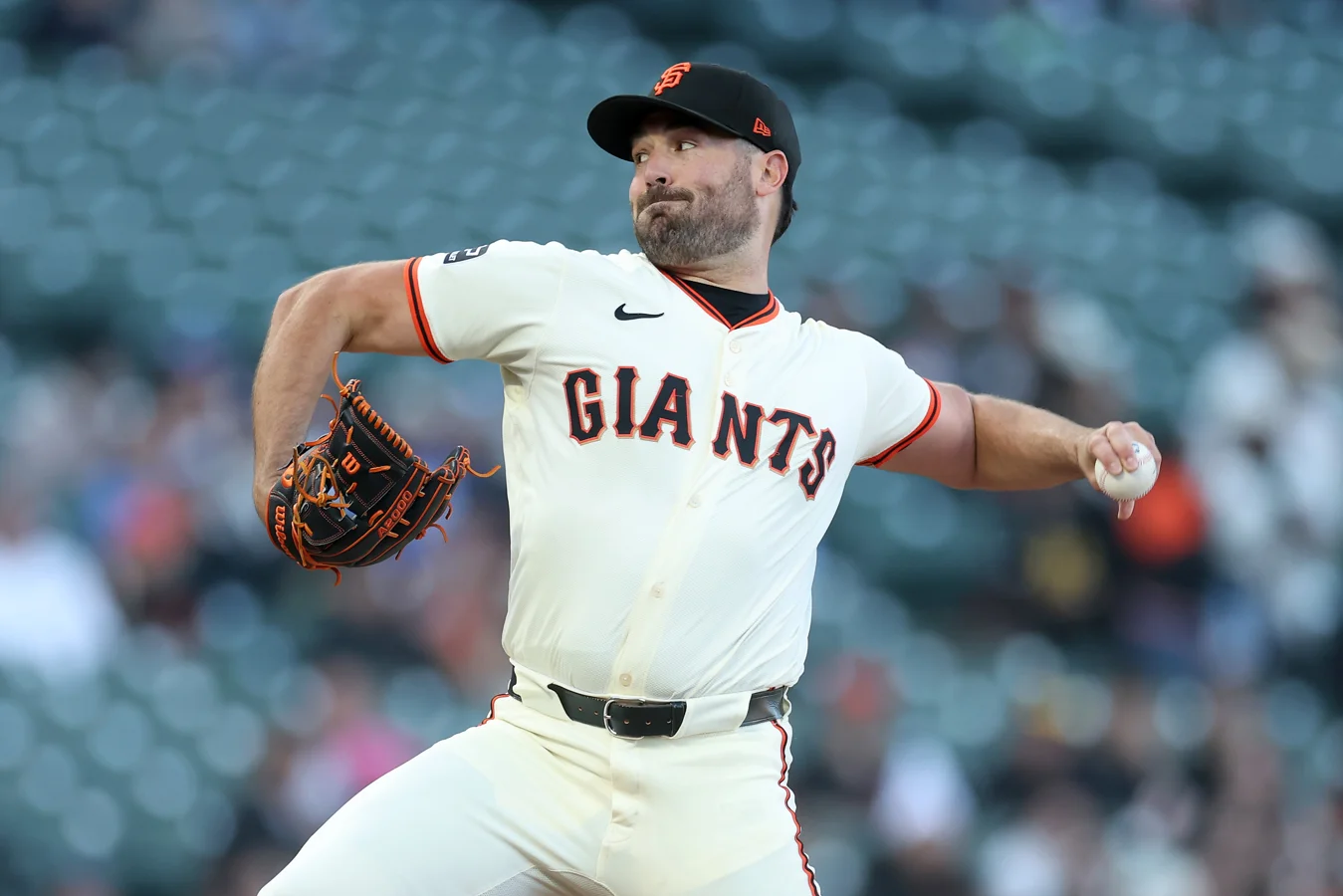

Robbie Ray has become a critical figure for the San Francisco Giants this season, showcasing dominant pitching with a flawless 6-0 record, 62 strikeouts, and a 2.67 ERA through his first 10 starts. His outstanding performances have directly contributed to nine Giants victories, making him the National League starter with the highest team win total so far. This resurgence highlights the growing narrative around the Robbie Ray trade success with San Francisco Giants as a turning point for the franchise in 2025.
Ray’s arrival in San Francisco came during the 2023-24 offseason after a brief and injury-plagued stint with the Seattle Mariners. Despite winning the AL Cy Young Award with Toronto in 2021 and signing a lucrative five-year, $115 million deal with Seattle, his value appeared diminished following Tommy John surgery and inconsistent play. However, the Giants took a chance on Ray by acquiring him in a trade that seemed more like a salary swap than a strategic move at the time.
Details Behind the Trade Between the Giants and Mariners
The Giants and Mariners exchanged players and contracts in a deal that, on the surface, appeared motivated by financial relief for both sides rather than competitive upgrades. Seattle sent Ray plus the final three years of his contract to San Francisco, receiving outfielder Mitch Haniger and pitcher Anthony DeSclafani in return. The 2024 financial terms were mostly balanced, with the Giants covering part of the salary difference between Ray’s $23 million and the combined $29 million for Haniger and DeSclafani. Ultimately, Seattle cleared more than $50 million in salary obligations over two years, while San Francisco moved on from Haniger, whose role diminished after signing Jung Hoo Lee, and replaced DeSclafani with a younger pitcher with higher upside.
This trade initially seemed like a pragmatic exchange of unwanted contracts rather than a strategic baseball decision. Though the Giants recognized some potential in Ray, the Mariners appeared more focused on moving salary than enhancing their rotation, reflecting an uneasy dynamic between both organizations’ priorities heading into the 2024 season.
Seattle Mariners’ Struggles Following the Trade
The Mariners reaped very little competitive benefit from the trade. DeSclafani never pitched for Seattle, as they swiftly flipped him to the Minnesota Twins in a separate trade that brought Jorge Polanco to Seattle. Polanco struggled during the 2024 season, rendering that acquisition less impactful than hoped. Adding to the Mariners’ difficulties, they still covered a majority of DeSclafani’s salary in 2024 despite him never playing for the team that year.
Mitch Haniger fared no better, recording one of the lowest performance levels among American League regulars in 2024. Though he opted into his $17.5 million contract for the final year, the Mariners released him before the 2025 season after a disappointing spring training. Consequently, the Mariners’ primary gain from the trade was shedding Ray’s $25 million salary for 2024 and 2025, offset somewhat by Haniger’s retained salary.
Financially, Seattle saved roughly $32.5 million over two years by giving up Ray. While salary relief can sometimes enable teams to invest in other areas, the Mariners’ subsequent moves have been modest. Their notable signings since the trade—Jorge Polanco ($7 million for one year), Donovan Solano ($3.5 million for one year), and Rowdy Tellez ($1.5 million for one year)—have not transformed their roster significantly. This limited reinvestment into the team suggests the Mariners lost competitive ground in the exchange.
Looking back, trading away Ray while carrying substantial salary obligations for minimal player returns has led to an overall negative assessment of the Mariners’ decision. At the time of the trade, Ray was over 30 and recovering from surgery, with Seattle possessing pitching depth, potentially justifying their hesitation. However, failing to allocate freed-up salary toward meaningful upgrades has intensified frustration among Mariners fans and analysts alike.
Giants’ Gains and Ray’s Emergence as Their Ace Pitcher
In contrast, the Giants appear to have gained a significant asset in Robbie Ray, despite his limited contributions in 2024 due to injury. Though restricted to seven starts that season, those appearances likely provided more value than the combined impact of Haniger and DeSclafani would have. Most notably, Ray rebounded to form in 2025, displaying his full potential and solidifying himself as the team’s top starting pitcher.
The Giants have benefited tremendously from Ray’s performances this year. If the record is considered, the Giants have won 30 games versus 21 losses overall. However, excluding Ray’s starts, the team barely edges over .500 at 21-20, highlighting his outsized influence. Notably, Ray’s only loss came in a brilliant outing against the Kansas City Royals, when he pitched seven scoreless innings but received a no-decision after a late-game lead change.
Ray’s consistency has given the Giants dependable outings: in eight of his 10 starts, he has completed at least five innings while allowing three or fewer runs. His advanced metrics further underscore his dominance, ranking first among Giants pitchers and within the top ten National League starters in both Win Probability Added (1.26 WPA) and Run Expectancy Wins (1.14 REW).
How the Trade Shifted the Giants’ Competitive Outlook
The Giants entered 2025 with some questions surrounding their pitching, notably with Blake Snell’s absence at the rotation’s top. New leadership under president of baseball operations Buster Posey made some offseason moves but failed to land a premier ace beyond Ray. As a result, many experts doubted their chances of contending.
However, Ray’s emergence as a frontline starter has significantly improved San Francisco’s playoff probability, almost doubling their chances since Opening Day. This turnaround symbolizes how a single trade can dramatically alter a team’s trajectory.
Interestingly, the success of the Robbie Ray trade success with San Francisco Giants highlights Farhan Zaidi’s role in shaping the franchise through high-impact transactions. Though Zaidi’s tenure had seen varied outcomes, Ray’s breakthrough suggests the Giants are finally reaping the benefits of strategic trades long in the making.
The Long-Term Implications of the Trade
While the Mariners sought short-term financial relief, the Giants embraced a longer-term investment in Ray’s potential and health recovery. The trade has catalyzed the Giants’ transformation into a surprising contender, shifting league perceptions and setting a new standard for their 2025 campaign. San Francisco’s front office created a winning formula by gambling on Ray’s rebound, which has paid off beyond initial expectations.
As the season progresses, monitoring Ray’s durability and continued dominance will be key to predicting the Giants’ postseason prospects. Meanwhile, Seattle faces lingering questions about its pitching depth and roster strategy, underscoring the contrasting fortunes born from this defining trade.