
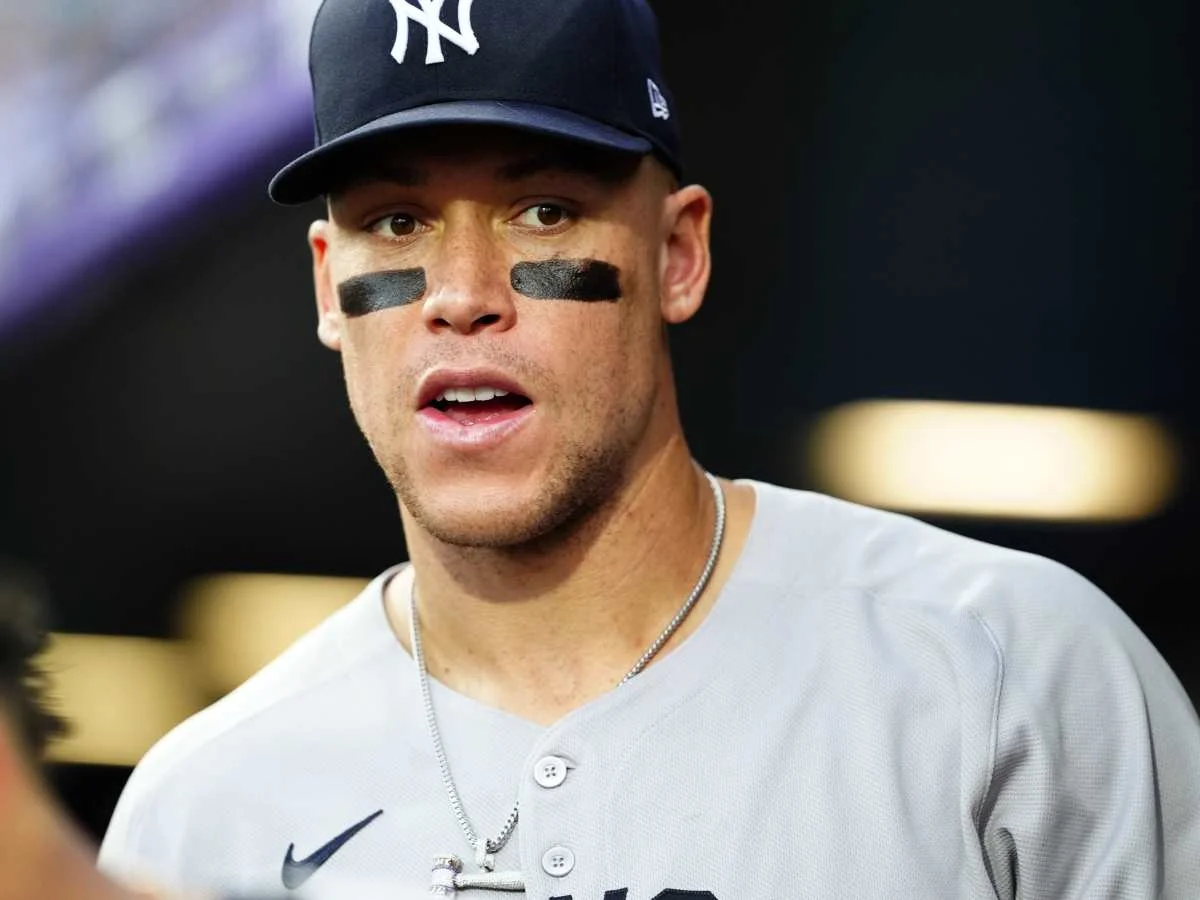

The Chicago Cubs are witnessing a standout season from 23-year-old Pete Crow-Armstrong, an outfielder whose performances have drawn strong comparisons to New York Yankees star Aaron Judge. After turning down a $70 million contract offer earlier this year, Crow-Armstrong’s breakout season suggests his market value could soar, challenging the precedent set by Judge in recent years.
The Rise of a Cubs Star and the Impact of a Contract Rejection
Pete Crow-Armstrong has emerged as a central figure in the Cubs’ resurgence during the current MLB season. He recently delivered a spectacular game against the Cincinnati Reds, hitting two home runs including his first career grand slam and recording six RBIs for the second time this year. These milestones position him as a pivotal player for Chicago and highlight his increasing influence on the team’s success.
Earlier in spring training, Crow-Armstrong declined a long-term deal believed to be around $70 million, signaling his confidence in his ability to boost his value. Baseball analyst Preston Miklich of Fuzzy comments on the situation, stating,
“They’re actively trying to raise the initial offer because Pete said no to that. Shout-out to Pete Crow-Armstrong. You can bet on yourself and win, just like he’s doing right now, or like Aaron Judge did before popping off for 60-plus home runs. He rejected an extension and won himself a lot more money.”
—Preston Miklich, Analyst
This approach mirrors Aaron Judge’s path in 2022 when he refused a seven-year, $213.5 million contract from the Yankees. After his record-breaking 62-home-run season, Judge secured an even more lucrative nine-year, $360 million contract. Crow-Armstrong’s current statistics make it realistic for him to follow a similar trajectory, although risks remain, as evidenced by Jarred Kelenic’s case, who declined a substantial extension with the Mariners in 2020 but failed to quickly establish himself at the major league level.
Chicago Cubs’ Leadership Endorses Crow-Armstrong’s Superstar Potential
Cubs President of Baseball Operations Jed Hoyer has publicly expressed high admiration for Crow-Armstrong’s talent and impact, emphasizing that every contest brings Chicago closer to championship contention. On the Mully & Haugh Show, Hoyer compared him to former Cubs standout Javier Báez, saying,
“We think the world of him. He’s beating you in so many different ways. When Javy was at his prime in 2018 or so, there were a lot of ways he could help you win a game on a given night.”
—Jed Hoyer, Cubs President of Baseball Operations
This comparison underscores the multifaceted skill set Crow-Armstrong brings to the field. Hoyer’s remarks reflect the organization’s belief that Crow-Armstrong has the ability to influence games at multiple levels, reminiscent of Báez’s prime years.
Chaotic but Promising Numbers Reflect a Player on the Rise
Statistically, Crow-Armstrong is performing at an elite level. His .908 OPS complemented by a .287 batting average, .319 on-base percentage, and .589 slugging percentage place him among the National League’s top hitters. With 14 home runs and 14 stolen bases, along with 30 runs scored in just 202 at-bats, he leads the league with a 3.3 bWAR, trailing only legendary talents like Aaron Judge across Major League Baseball.
His recent feats created history for the Cubs—he is the first player since RBIs became an official stat in 1920 to record two games in a single season with at least six RBIs. These accomplishments attest to both his power and consistency, highlighting why the Cubs see him as essential for their future success.
What Crow-Armstrong’s Success Means for the Cubs and MLB Contracts
The Cubs face a pivotal moment in determining how to manage Crow-Armstrong’s rising stardom. Previous cautiousness based on contracts signed by other young players like Lawrence Butler and Ezequiel Tovar no longer fits, as Crow-Armstrong’s level of production demands recognition and investment. His continued success could drive a reevaluation of contract offers, not just by Chicago but across the league for emerging talents willing to bet on themselves.
Drawing parallels to Aaron Judge’s journey, Crow-Armstrong’s story embodies a new wave of players seeking to maximize their market value through confident performance rather than early contract security. If he maintains this form, both the Cubs and Crow-Armstrong could set an influential precedent for future contract negotiations in Major League Baseball.