
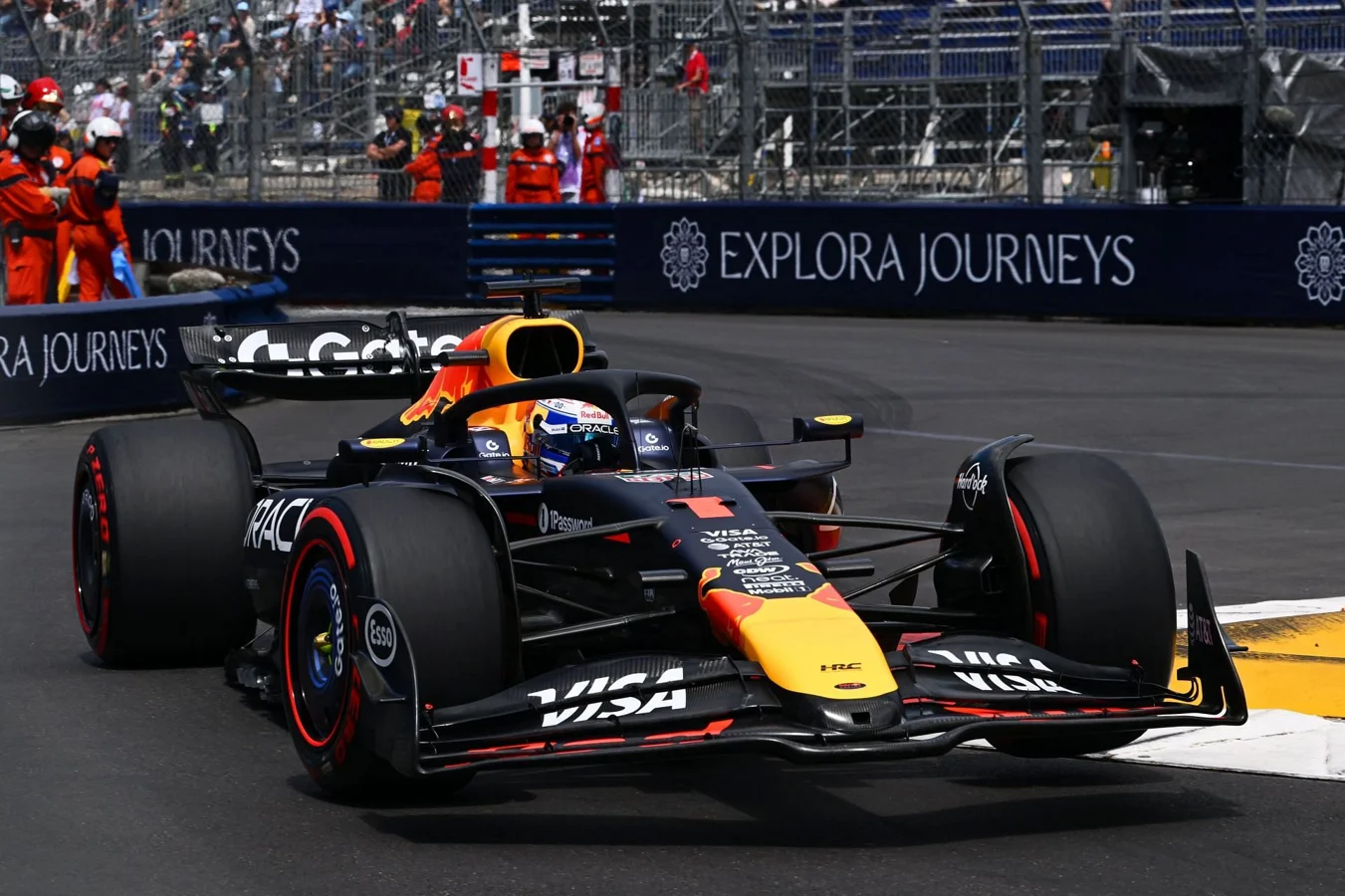

Max Verstappen, four-time Formula 1 world champion, openly expressed frustration with the 2025 Monaco Grand Prix through a sharply sarcastic remark after enduring a largely uneventful race. Despite the lack of overtaking and limited on-track excitement, Verstappen’s sarcastic reaction drew attention, with former champion Damon Hill quickly recognizing the tone behind his comments.
The Dutch driver began the Monaco race from fourth position on May 25 and spent most of the event locked in a static battle. Verstappen completed his first mandatory pit stop on lap 29 and managed to lead the race for a period, but his strategy to delay the second stop until the final lap did not pay off.
Hoping for a safety car or some form of disruption, Verstappen stayed out longer than usual, only to lose the lead in the closing moments and ultimately finish the race where he started—fourth place. His post-race remarks encapsulated his disappointment with an ironic twist.
“Very exciting. I was on the edge of my seat every lap; it was fantastic,” Verstappen told The Race.
Damon Hill acknowledged Verstappen’s sarcasm in a social media post, writing, “I think he’s being sarcastic.”
In his interview after the race, Verstappen criticized the current regulations, particularly the two-pitstop rule, which he feels fails to improve the spectacle at Monaco. He underscored that the narrow layout of the circuit inherently restricts overtaking opportunities, regardless of pit strategies or race length.

Verstappen explained that although he led during the latter stages, his front tires had degraded significantly, yet no competitor could challenge him on track. He humorously suggested that to increase difficulty, the FIA might as well introduce an unpredictable element like a slippery banana peel on the circuit.
The rationale behind Verstappen’s delayed pit stop at Monaco
Verstappen’s unusual choice to postpone his second mandatory pit stop until the race’s final lap was a strategic gamble aimed at gaining an advantage from potential safety car interventions. This plan, however, failed to materialize during the race.
Speaking to Autosport, Verstappen defended his tactics by emphasizing he was in a position with minimal risk and limited options. He stated,
“Yeah, there was nothing to lose, right? I had a big gap behind. It was still the same position for me, but that’s Monaco for you. Qualifying is super important. Normally, when nothing bad happens, you don’t really move forward. And if you just do normal pit stops, you just keep your position, and that’s exactly what happened today.”
The Red Bull driver also conceded he lacked the pace to challenge the McLaren competitors in his vicinity, branding the gamble on pit stops his best chance to alter his race outcome.
This strategic approach reflected the broader difficulties drivers face at Monaco, where overtaking is notoriously difficult, and race positions tend to remain static unless exceptional circumstances occur.
Implications of the Monaco race for future F1 strategies and regulations
Max Verstappen’s pointed comments highlight ongoing concerns with race dynamics and regulations, especially on tight, historic circuits like Monaco. His sarcastic take resonates with wider critiques about how current rules may not deliver compelling racing, regardless of the number of pit stops enforced.
Given Verstappen’s status and candidness, his feedback could influence how teams approach race strategies and how governing bodies consider rule adjustments aimed at increasing competitiveness and spectacle. Fans and stakeholders await further developments, hoping for a more engaging Monaco Grand Prix in the future.