

On May 26, Chris Young, the Texas Rangers president of baseball operations, clarified that despite rumors, Kumar Rocker is not being considered for a closer position upon his return. Young acknowledged that while Rocker might pitch in relief under certain circumstances, this is not the team‘s intended plan. Rocker’s role remains focused on starting in the major leagues both short- and long-term, Young emphasized.
We see him as an MLB starter in the short- and long-term,
—Chris Young, Texas Rangers president of baseball operations
Is there a way we need him in some capacity in the bullpen? Perhaps, but that is neither the focus nor the plan. We’ve not talked about it.
—Chris Young, Texas Rangers president of baseball operations
Speculation Arises Over Rocker’s Potential Bullpen Role Amid Injury Rehab
Just a day prior, on May 25, reports surfaced suggesting the Rangers were considering utilizing Kumar Rocker as a closer once he came off the injured list. Rocker is rehabbing a right shoulder impingement that has sidelined him for over a month, though he is already on a rehab assignment and expected to rejoin the team soon. This possibility comes amid discussions from team management about ways to strengthen late-game pitching.
Implications of Assigning Rocker to Relief Duties
Designating Rocker, a consensus top-50 pitching prospect, to a bullpen role represents a notable shift given he has started all eight of his major league appearances to date. The move would be bold but understandable for the Rangers, who are battling to gain traction in a tough AL playoff race with a 26-28 record. The offense has struggled despite featuring major names such as Corey Seager, Marcus Semien, Wyatt Langford, and Joc Pederson, putting pressure on pitching to carry more weight.
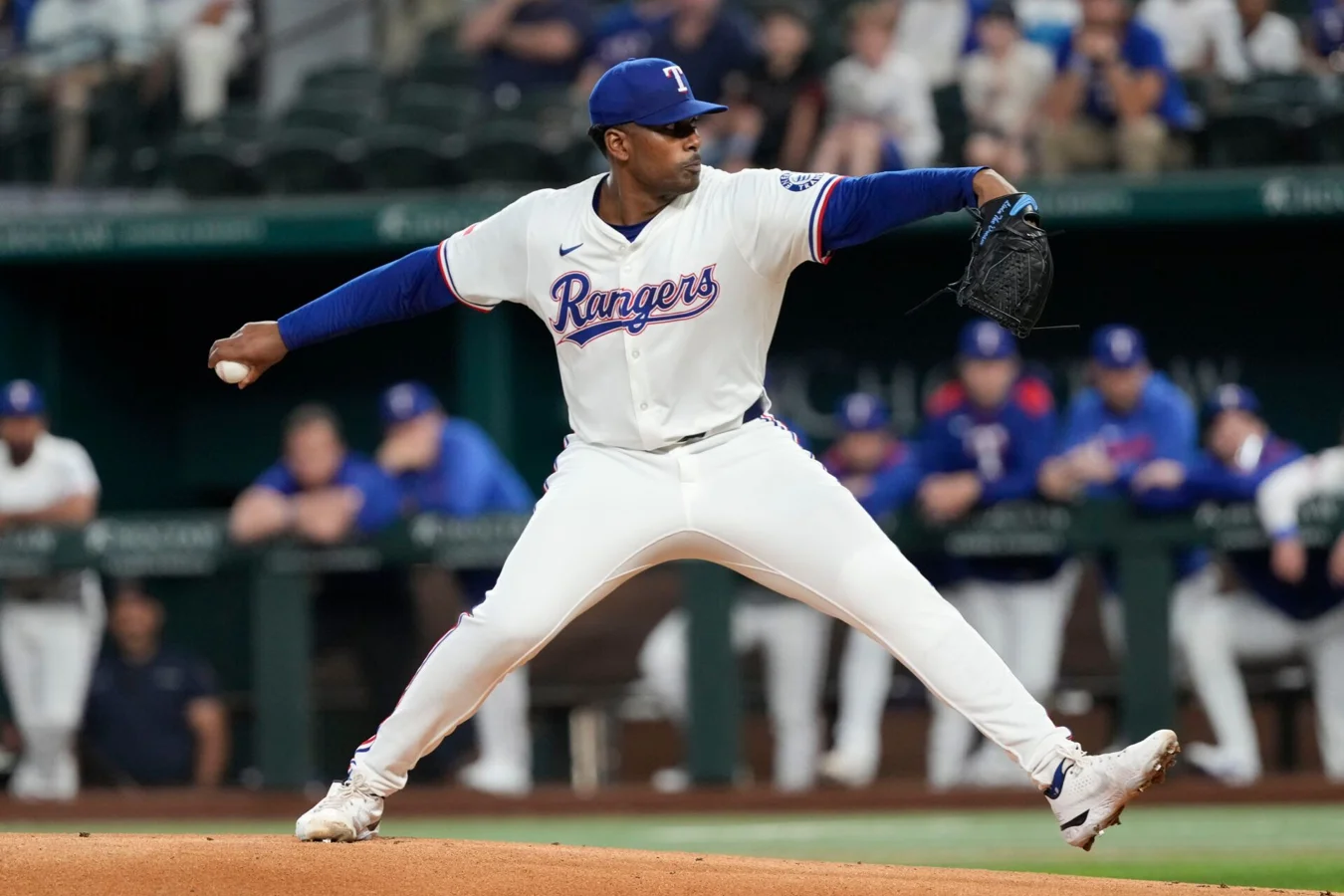
Currently tied for the third-fewest runs scored in the majors, the Rangers could bolster their standing if their pitching units delivered at peak efficiency. Kansas City, which holds the final AL Wild Card spot with a 29-25 record, benefits from a team ERA of 3.07, the second-best in MLB. Texas’s pitching performance is respectable with a 3.38 ERA, ranking sixth, primarily due to strong starts from veterans like Jacob deGrom, Nathan Eovaldi, and Tyler Mahle.
However, Rocker himself has struggled, registering an 8.10 ERA in five starts this season despite showing solid underlying metrics. His inconsistency contrasts sharply with the rotation’s overall success, highlighting the challenge of utilizing him effectively.
Rocker’s Potential Impact in the Rangers’ Bullpen
The Rangers’ bullpen has historically been inconsistent, even after a substantial offseason overhaul, posting a 4.20 ERA – 19th in MLB. With Chris Martin, their veteran relief ace, sidelined indefinitely with shoulder fatigue, Texas faces a notable void in late-inning pitching. Adding Rocker’s dynamic arm to the bullpen could provide the team with a needed edge, offering the opportunity to preserve leads more effectively.
Transitioning Rocker to relief appearances might enable him to unleash his maximum effort each outing without the stamina demands of starting roles. This approach may also allow him to adjust to major league competition more fluidly, supplying the Rangers with a high-leverage weapon where they currently lack reliability.
Historical Context of Pitchers Transitioning Between Start and Relief Roles
While uncommon, starting a highly regarded pitching prospect in the bullpen is not without precedent. Chris Sale, now established as an ace, began his MLB career out of the bullpen before returning to a starting role. Other pitchers such as Garrett Crochet, Jeff Samardzija, and Texas native C.J. Wilson followed similar paths. Conversely, some pitchers like Seth Lugo and Clay Holmes have moved from relief roles into starting rotations later in their careers, underscoring flexibility in pitcher utilization.
Nonetheless, converting Rocker carries risks. The transition to bullpen pitching demands adaptation, and there is no assurance he would thrive immediately in shorter stints. Furthermore, employing Rocker in relief reduces the Rangers’ depth in starting pitching, potentially limiting rotation options as the season progresses.
What This Means for the Rangers Moving Forward
Despite rumors and strategic considerations surrounding Kumar Rocker’s role, the Rangers remain focused on developing him as a starter. His rehab from shoulder impingement and his performance upon return will be critical in determining if a bullpen role becomes a realistic path. For a team striving to improve their playoff chances, effectively harnessing Rocker’s talent could provide a significant boost, whether as a starter or reliever.
As the season continues, the Rangers must balance immediate pitching needs with long-term development goals, carefully managing Rocker’s workload and assignments to maximize both his potential and team success.