
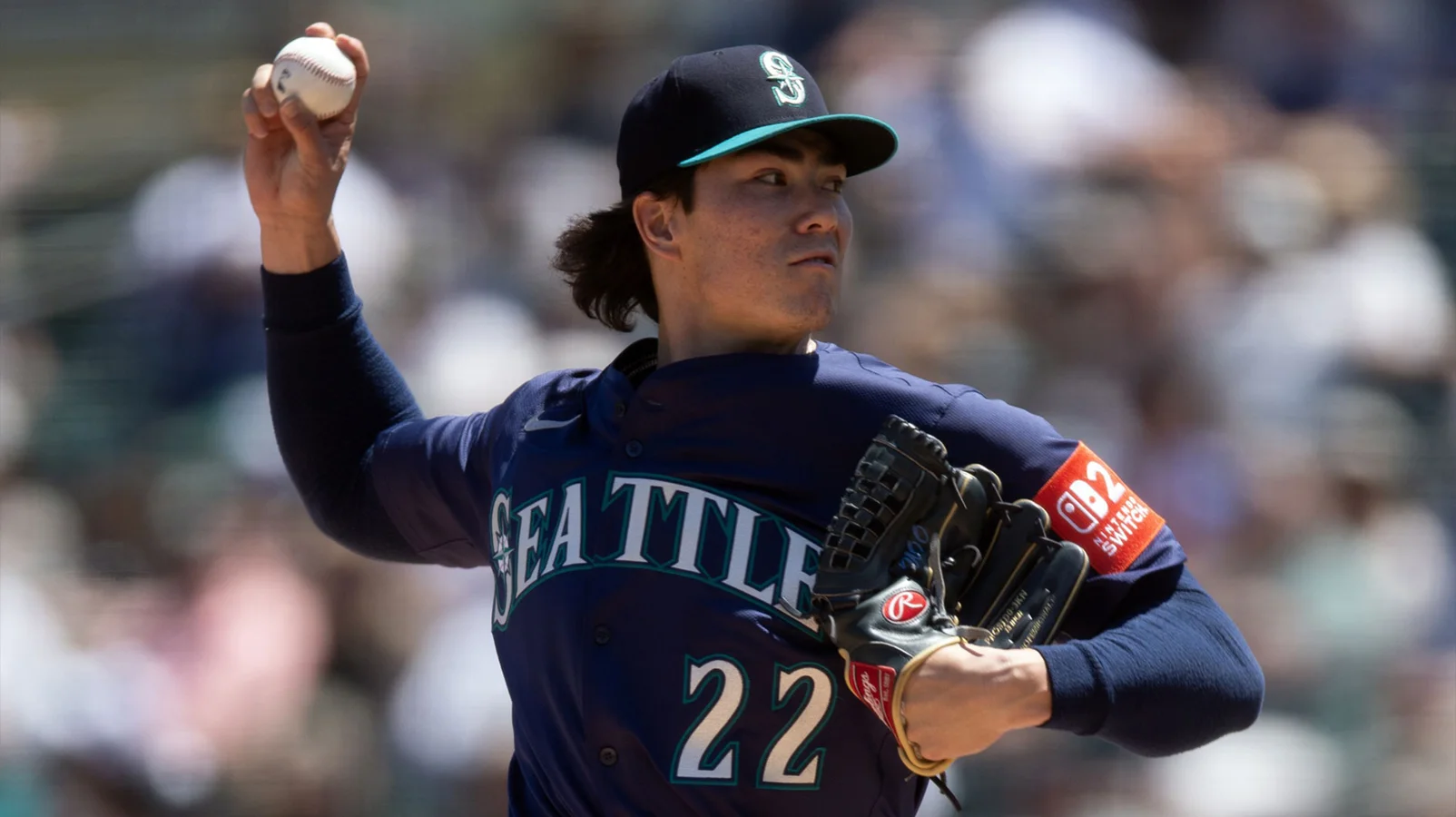

At the two-month mark of the Major League Baseball regular season, Bryan Woo stands out as one of the game’s best starting pitchers, anchoring the first-place Seattle Mariners’ rotation. Despite being selected as the 174th pick in the 2021 draft, Woo has emerged alongside Phillies ace Zack Wheeler as the only starters to log at least 10 outings with six or more innings pitched by early season. His rapid ascent highlights his crucial role in Seattle’s success and his rising reputation among MLB’s elite arms.
Exceptional Early Season Performance Measures Bryan Woo’s Elite Status
At just 25 years old, Bryan Woo ranks among the top starting pitchers in baseball, evidenced by his 12th-place standing in ERA+ (135) for pitchers delivering at least 150 innings since last Opening Day. This metric places him ahead of notable names such as Garrett Crochet, Corbin Burnes, Hunter Brown, and Spencer Schwellenbach. Woo’s 7.67 strikeout-to-walk ratio is the best in that group, surpassing even Seattle teammate George Kirby and Tarik Skubal, further underlining his dominance on the mound. His progression from a relatively overlooked draft pick to a frontline starter is all the more remarkable given his earlier challenges with elbow injuries and Tommy John surgery, which postponed his major league debut until June 2022.
Since then, Woo has solidified his position as the Mariners’ leading pitcher, topping the team in innings pitched, strikeouts, and strikeout-to-walk ratio. While his ERA+ ranks second on the squad behind Logan Gilbert, Woo’s workload is double that of the staff leader, emphasizing Seattle’s reliance on his durability and consistency.
A Closer Look at Woo’s Fastball Effectiveness
One of Woo’s key strengths lies in his fastball, which, while averaging 95.5 mph—slower than some of his peers like Paul Skenes or Hunter Brown—ranks ninth in whiff rate among qualified pitchers. This success is partly due to the unique relationship between his release point and his pitch’s movement. Pitchers’ release heights can greatly influence the perception and movement of their pitches, and Woo’s is notably low, around 5-foot-1, the ninth shortest among pitchers throwing at least 200 four-seam fastballs. This low release point, combined with over 15 inches of vertical break on his fastball, makes his pitch difficult for hitters to track and connect with, resulting in a whiff rate of 30.4%.
Interestingly, only two pitchers with similar release heights, Ben Lively and Logan Allen of the Cleveland Guardians, produce more carry on their fastballs; however, Lively is currently out for the season following Tommy John surgery. Despite an increase in fastball velocity this season, Woo has deliberately reduced the frequency of his heater from 48.1% to 42%, allowing complementary pitches more opportunities within his repertoire.
Addressing Platoon Disadvantages to Strengthen Performance
While Woo’s lower arm angle has worked well, it traditionally presents challenges against left-handed hitters, a phenomenon known as the platoon tax. A 2015 Hardball Times study indicated that right-handed pitchers with arm angles between 20 and 40 degrees, similar to Woo’s 27 degrees, typically experience a decline in strikeouts and worsened performance metrics against lefties. Early in his career, Woo exhibited one of the most pronounced platoon splits in the majors, holding right-handed batters to a .494 OPS but surrendering a .928 OPS to lefties in 2023.
Since then, Woo has made significant adjustments. Heading into his next start, he has successfully lowered his OPS allowed to lefties to below .600, closing the gap considerably. This improvement did not involve a major overhaul of his pitch selection or location; he consistently threw his four-seam fastball over 50% of the time against left-handers across seasons, with minor fluctuations in his secondary pitches.
The key to Woo’s improved effectiveness against lefties appears to be a strategic shift in pitch utilization during two-strike counts. In 2023, he relied heavily on his four-seamer and slider, but by 2025, he increased the use of his sinker and changeup from a combined 17.9% share to 33.8%. These subtle but thoughtful adaptations have enhanced his repertoire’s versatility without drastic changes in mechanics or approach, allowing Woo to mitigate previous platoon disadvantages.
From Draft Underdog to Seattle Mariners’ Pillar
Woo’s journey underscores the unpredictable nature of player development in professional baseball. After enduring a difficult college ERA of 6.11 and undergoing major elbow surgery, he overcame adversity to reach the majors quickly and excel once he debuted. His progression has been marked not just by raw numbers but by refined pitching mechanics and strategic adjustments that have made him a formidable presence on the mound.
As the Mariners continue to seek success in a competitive league, Woo’s emergence as an ace is a critical asset. His ability to sustain high innings, generate strikeouts, and adjust to hitters’ tendencies indicates a promising trajectory for the rest of the season. With his skill set continually evolving, Bryan Woo remains a key figure in Seattle’s quest for playoff contention and one of the most intriguing young pitchers in Major League Baseball.