
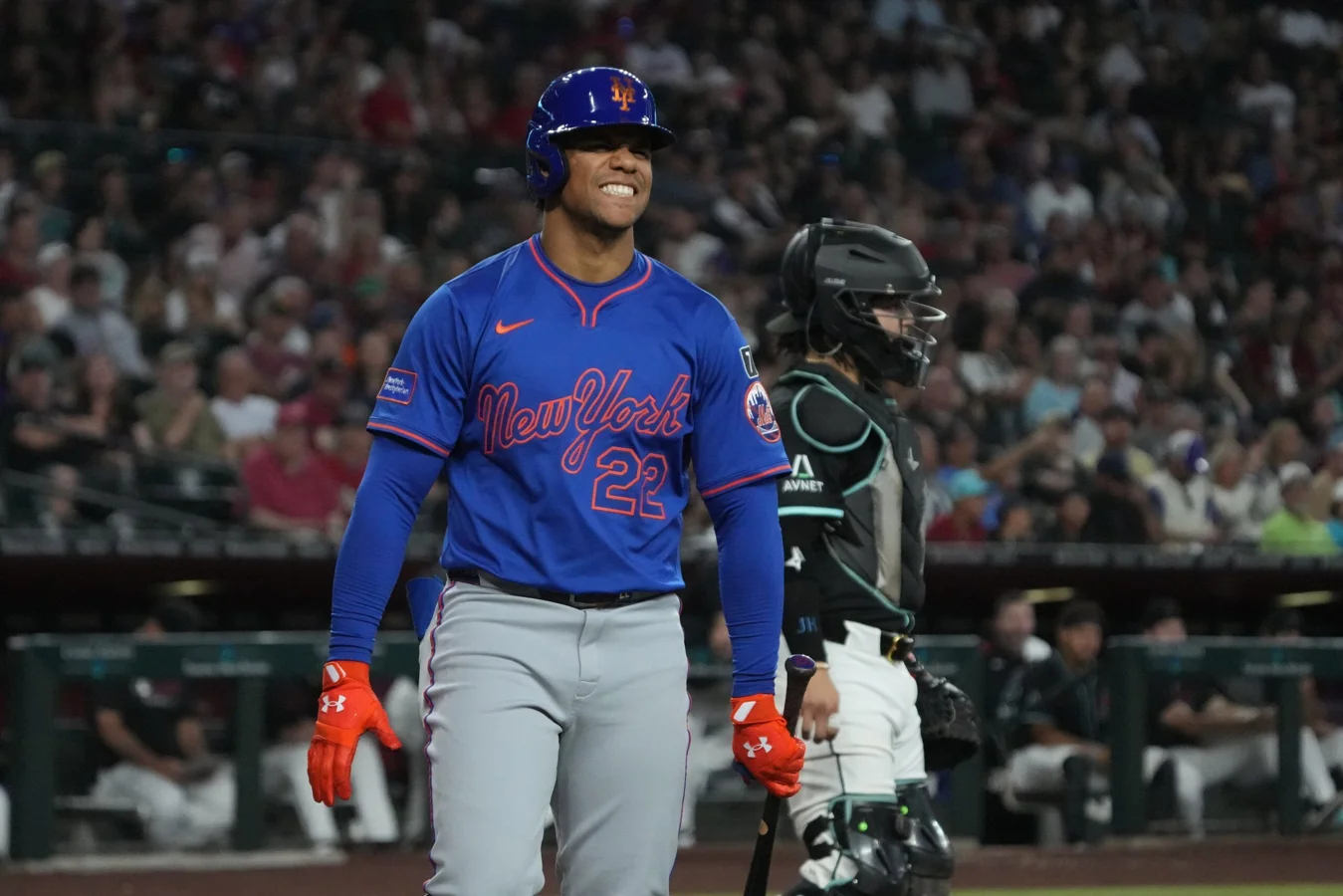

Juan Soto agreed to the largest contract ever in professional baseball during the recent offseason, committing 15 years and $765 million guaranteed with the New York Mets. This blockbuster deal could rise above $800 million if certain incentives are met, setting immense expectations for the young star’s performance.
However, one-third into the 2025 season, Soto’s output has plummeted far below what Mets supporters and analysts anticipated given the magnitude of his contract. This raises an urgent question: how soon should Mets fans grow concerned about their highest-paid player arguably struggling to meet his potential?
Underwhelming Performance So Far in Queens
Juan Soto’s early 2025 statistics through 53 games tell a starkly different story compared to his last season playing for the New York Yankees. In 2024, while with the Bronx-based team, Soto smashed 41 home runs and produced a spectacular .288/.419/.569 batting line with a weighted runs created plus (wRC+) of 180, meaning he generated 80% more runs than the league average hitter. His offensive contributions worth 61 runs above average helped deliver an impressive 8.1 wins above replacement (WAR). Even his defense, historically a weak spot, saw modest improvement.
Comparatively, this season Soto has hit just eight home runs, placing him on pace for roughly 24 homers over a full season—significantly fewer than in 2024. His batting line has plummeted to .233/.361/.409, translating to an OPS of .770 and a wRC+ of only 120. His overall Wins Above Replacement has fallen sharply to 0.8, with offensive value just over six runs. Additionally, his weighted on-base average (wOBA) stands at .340, a steep drop from his career average of .400. Defensively, he has regressed further. The numbers indicate deterioration in virtually every key metric compared to his stellar previous year.
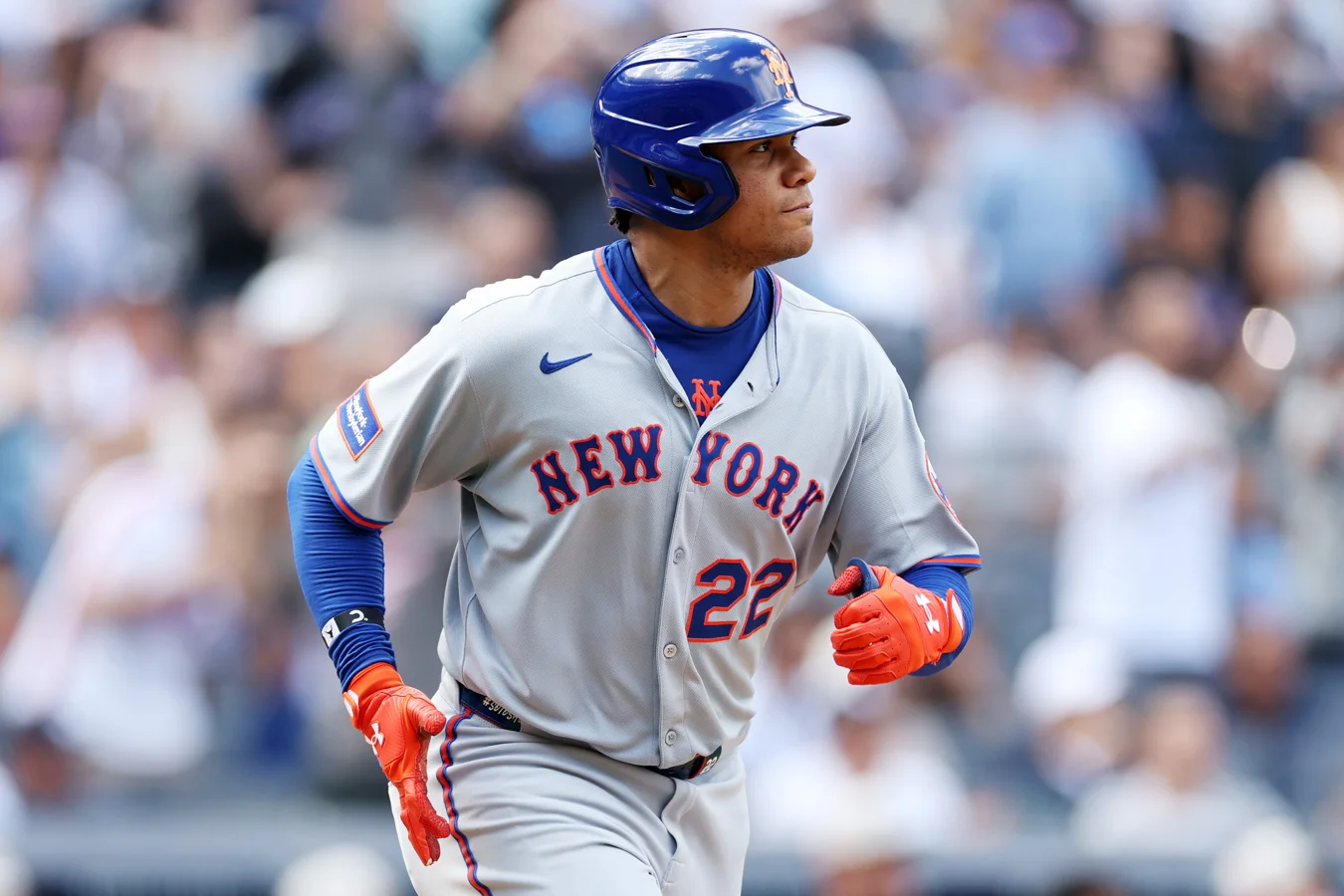
For fans fearing a full-scale meltdown, this slump feels significant. Yet, before rushing to judgment, it’s important to consider deeper analytics that suggest a different narrative beneath the surface decline.
Underlying Metrics Paint a More Nuanced Picture
Soto’s lower actual statistics clash with his underlying skill indicators, hinting that bad luck has played a major role in his disappointing start. Despite a .340 weighted on-base average, his expected wOBA—a calculation factoring the quality of contact and likelihood of success—does much better at .425. For context, Soto’s expected wOBA was .462 in 2024 and .408 in 2023. Similarly, his expected batting average is .297 this year compared to an actual mark of .233, and his expected slugging percentage sits at .597, far above the actual .409.
These discrepancies suggest that Soto continues to make high-quality contact but has been unlucky not to convert those into hits. His plate discipline remains elite; he ranks in the 100th percentile for chase rate, rarely swinging at pitches outside the strike zone. His average exit velocity is 93.7 miles per hour, placing him in the 96th percentile, while his rate of hard-hit balls is similarly among the top 5%, indicating he consistently drives the ball with power.
Such data confirm that Soto remains a top-tier hitter based on skill, despite the disappointing results so far this season. The disparity between expected and actual outcomes indicates room for optimism that his performance will trend upward as the campaign progresses.
Emerging Concerns in Physical Metrics and Defense
Though statistically Soto’s hitting ability is largely intact, there are warning signs regarding his physical tools. His bat speed has notably decreased from 75.4 mph last year, when it ranked in the 94th percentile, down to 73.3 mph this season, at the 73rd percentile. This drop is meaningful because bat speed directly impacts power and contact quality. Furthermore, Soto’s hard-hit rate has increased slightly from 55.7% to 57%, but his barrel rate—a measure of the best quality batted balls—has dropped from 20% (an elite 99th percentile) to 14% (still solid at the 85th percentile). His average exit velocity also slipped from 94.2 mph to 93.7 mph, indicating a subtle decline in contact explosiveness.
Defensively, Soto’s once weak range has deteriorated further: from the 13th percentile league-wide down to just the 5th percentile. While his arm remains effective—league average compared to 90th percentile last year—his overall fielding value has fallen. Perhaps most concerning is his sprint speed, which dropped from 26.8 feet per second (36th percentile) in 2024 to 25.8 feet per second (17th percentile) this season. This could mean he has physically slowed down or is less aggressive on the basepaths, affecting his defensive coverage and baserunning.
These metrics raise real questions about the physical durability or conditioning of a player still at just 26 years old, an age when athletes typically hit their prime.
Comparisons Highlight Underwhelming Return on Investment
Current evaluators rate Juan Soto’s WAR at just 93rd in all of Major League Baseball, according to Fangraphs. This places him behind significantly less compensated players like Miguel Vargas of the Chicago White Sox, who earns approximately $770,000 in 2025—less than what Soto makes in just a few games. The contrast underscores the gap between Soto’s massive salary and his current production, amplifying scrutiny on the Mets’ huge financial commitment.
Despite these concerns, Soto’s elite percentile rankings in underlying statistics and the widespread evidence of bad luck imply optimism for improvement. The Mets, holding a respectable 33-21 record as of midseason, stand to benefit greatly once Soto’s performance normalizes, potentially improving their chances of postseason success.
Still, monitoring his bat speed, sprint speed, and defensive trends will be crucial, as any further declines could indicate a more serious issue needing urgent attention.
In summary, while Juan Soto’s 2025 performance has not lived up to the lofty expectations accompanying his record-breaking contract, the situation is complex. A mixture of unlucky outcomes and early-season rust cloud the outlook, but signs of decline in key physical attributes warrant cautious concern. Mets fans should remain watchful and patient while hoping the hitter’s quality skills return to full force as the season unfolds.