
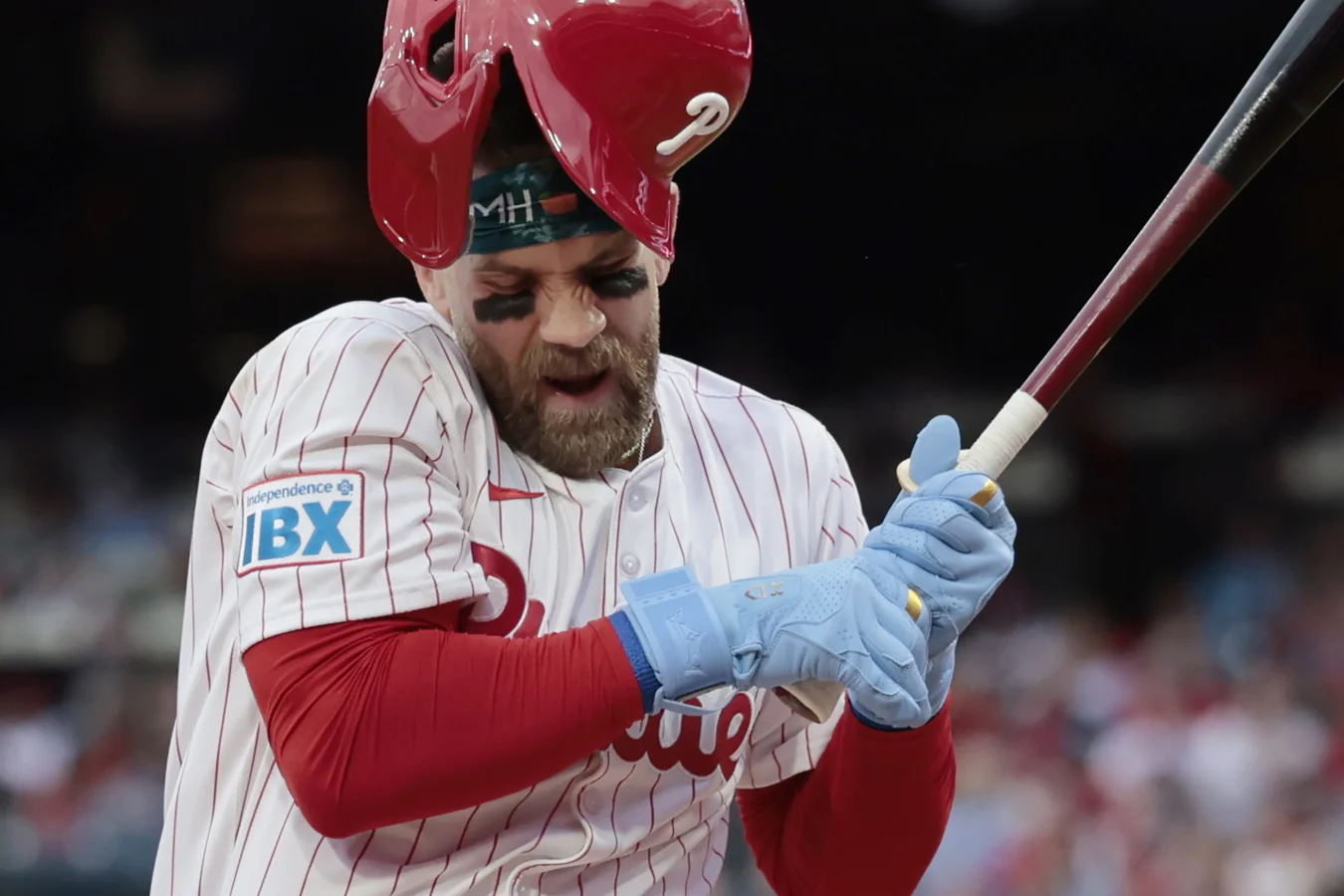

During Tuesday’s game at Citizens Bank Park between the Phillies and the Braves, Bryce Harper was struck by a 95 mph fastball thrown by Spencer Strider, hitting his surgically repaired right elbow. The incident immediately raised alarms among fans given Harper’s recent injury history and his status as a key player for the Phillies this season.
Harper, who entered this contest batting .267 with an OPS of .825, eight home runs, and 33 RBIs, was visibly affected as the pitch landed on his unprotected elbow, drawing audible reactions from the crowd.
Fan Reactions Highlight Unease Over Harper’s Injury
Supporters expressed concern for Harper’s well-being after the fastball incident. Many urged caution for the star player, emphasizing the vulnerability of his elbow following recent surgery.
“Should be wearing an elbow guard on that repaired elbow. Hope he’s ok,” a fan sent well wishes.
“I’m a Mets fan and I hope he’s okay. Baseball needs its stars,” one fan shared.
“Hate to see that – not my team, but Harper is such a force for Phillies,” a fan stated.
“Feel better bro,” one fan wished.
In addition to expressions of sympathy, some fans criticized Spencer Strider for targeting Harper with such a risky pitch.
“Strider needs to be banned,” a fan suggested.
“Screw Strider. Arrogant p*s,” a fan exclaimed.
Medical Evaluation and Phillies’ Response Following the Hit
Medical examinations alleviated initial fears; x-rays revealed no fractures or new tears in Harper’s surgically repaired elbow. This positive update came as the Phillies secured a 2-0 victory over their NL East rivals, though anticipation builds for the next matchup where the team may look to support their star player further on the field.
Harper’s Recent Challenges and Position Adjustment Due to Elbow Injury
Harper’s elbow troubles stem from a small tear in his ulnar collateral ligament (UCL) diagnosed in May 2022, prompting a shift in his playing role from outfield to designated hitter to reduce strain. After undergoing a platelet-rich plasma treatment, Harper ultimately required Tommy John surgery later that year.
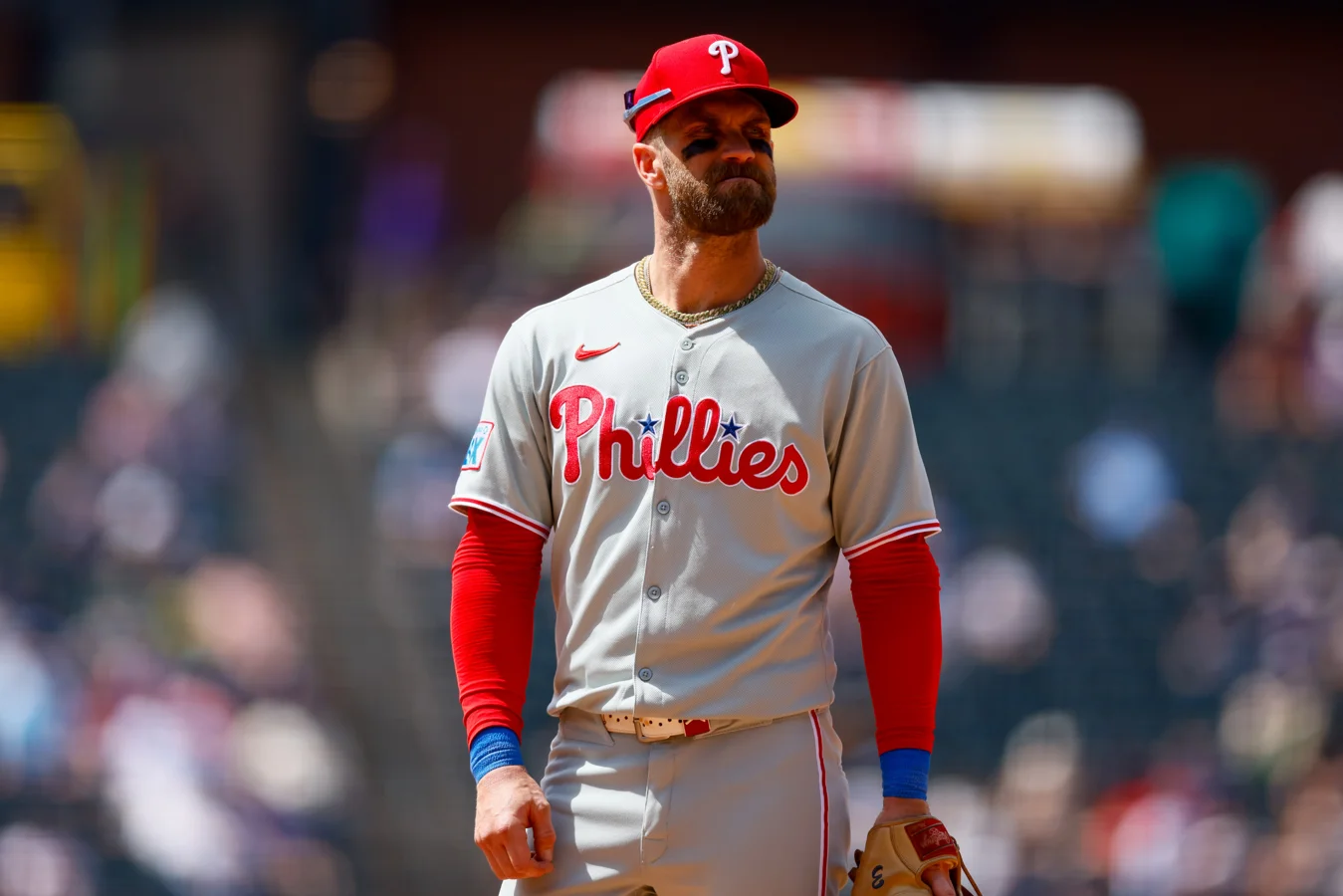
Since returning, Harper transitioned from designated hitter to first base, a position that limits stress on his right elbow and has allowed him to remain a regular on the roster without risking re-injury.
Impact of Injury on Harper’s Performance Metrics
Though Harper’s elbow issues have not always been visible during games, his performance statistics indicate a slight decline since the injury. Prior to 2023, Harper averaged roughly 92 mph in exit velocity, ranking him among the top 8% of hitters in this category. Post-surgery, his exit velocity average dropped to about 91 mph.
Additionally, Harper’s hard-hit ball percentage decreased from 49.7% in 2022 to 48.2% in 2024. His barrel rate—a measure of well-struck balls—also fell significantly from 88% three years ago to 73% last season, reflecting subtle but meaningful changes in his hitting output.
Despite these shifts, Harper’s resilience remains evident as he adapts to his new role and continues to contribute to Philadelphia’s lineup following his recovery.