
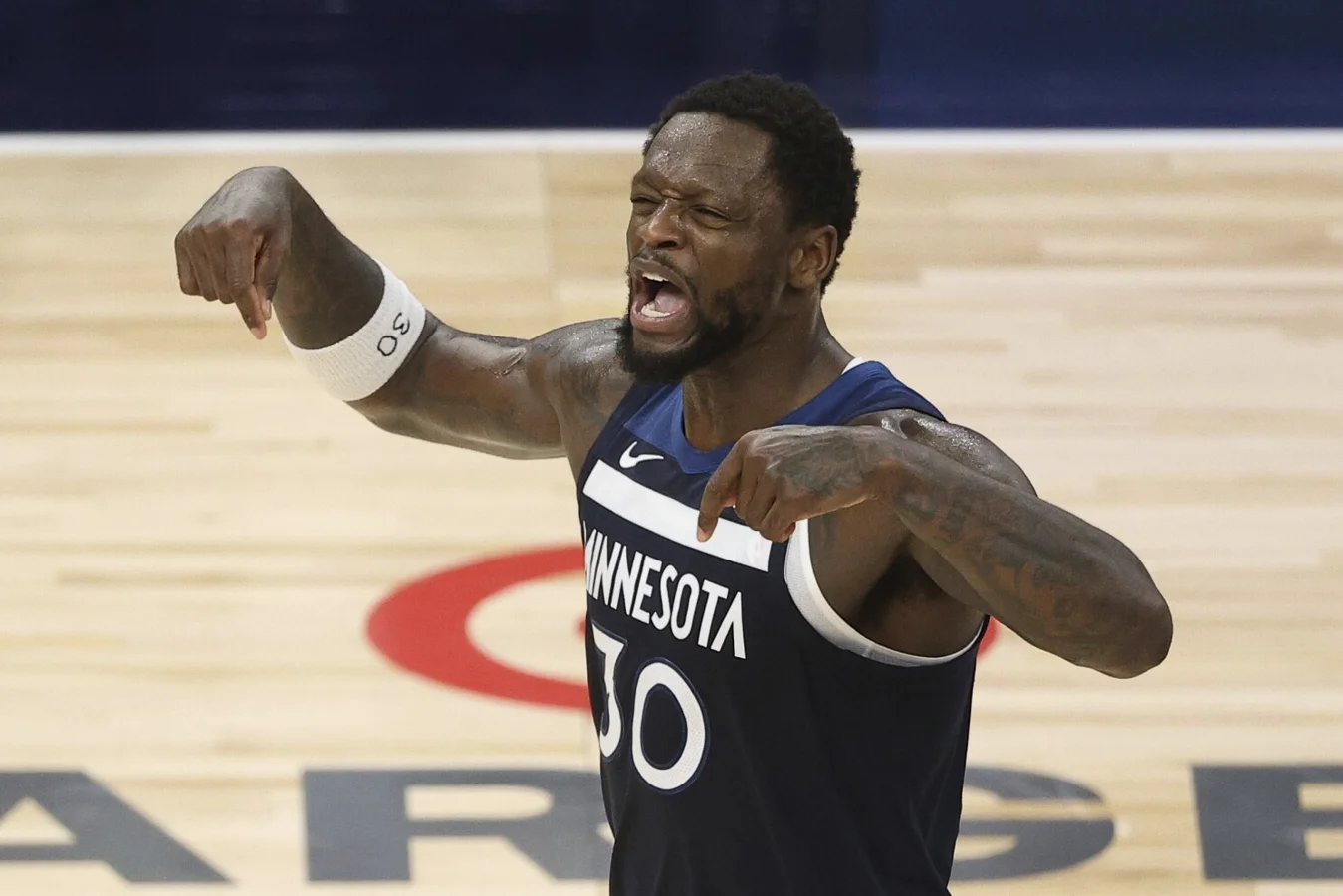

In a critical juncture of the 2025 Western Conference finals, Minnesota Timberwolves forward Julius Randle’s playoff performance and struggles have become a focal point as the team faces a 3-1 series deficit against the Oklahoma City Thunder. Despite earlier bursts of dominance during the postseason, Randle’s inconsistency surfaced sharply in Game 4, threatening to derail Minnesota’s hopes of an NBA Finals berth.
Game 4’s struggles deepen concerns for Timberwolves
During the pivotal Game 4 loss to the Thunder, Randle scored a career-low five points on just seven shot attempts, while committing five turnovers. His minimal impact was stark compared to his consistent contributions throughout Minnesota’s playoff run. Sitting quietly after the 128-126 defeat that dropped the Wolves into a 3-1 hole, Randle had no clear explanation for his subdued performance.
I don’t know, to be honest,
Randle said.
I think it was just a lot of me just spectating.
Though frustration mounts with the team’s precarious season position, Randle accepted accountability for his downturn.
I’ll always take the responsibility for myself,
he stated.
I’ve got to figure it out first.
His Game 4 difficulties echo a larger narrative about his uneven performances throughout his career. Standing 6-foot-9 and weighing 250 pounds, Randle blends physical strength with guard-like quickness and passing skills, but his control on the court sometimes falters, leaving him vulnerable defensively and offensively. His outside shooting, while improved with a 33.4% three-point mark this season, remains unreliable under playoff pressure.
Emergence as a vital supporting piece on a championship contender
Randle’s 2025 season has marked a turning point, redefining his role from the primary option to a key secondary contributor on a team with legitimate title aspirations. After being traded from the New York Knicks to the Timberwolves just days before training camp, Randle found an unexpected home in Minneapolis. This marked his fourth NBA team since being selected seventh overall by the Lakers in 2014 amid the franchise’s rebuilding phase following Kobe Bryant’s storied career.
Reuniting with Timberwolves coach Chris Finch—previously an assistant during Randle’s stint with the New Orleans Pelicans—and bonding with team president Tim Connelly, Randle embraced his evolving role. He and his wife, Kendra, also celebrated the birth of their third child during this intense playoff stretch.
[That was the] change and adjustment for me throughout the year,
Randle told ESPN.
It was like, ‘All right, how can I play a style of basketball that’s going to be beneficial to our team and drive winning when it matters the most?’
A prominent symbol of his central role emerged in Minneapolis, where a massive vertical billboard near the Target Center captures Randle alongside teammate Anthony Edwards, both smiling beneath the team’s rallying slogan, “Wolves Back.”
I feel like there’s been a bad narrative going around about him, as far as the type of person he is,
Edwards said.
He’s the coolest person. He’s one of the coolest people I’ve ever met. I love Julius, man.
Defining moments in the playoff run
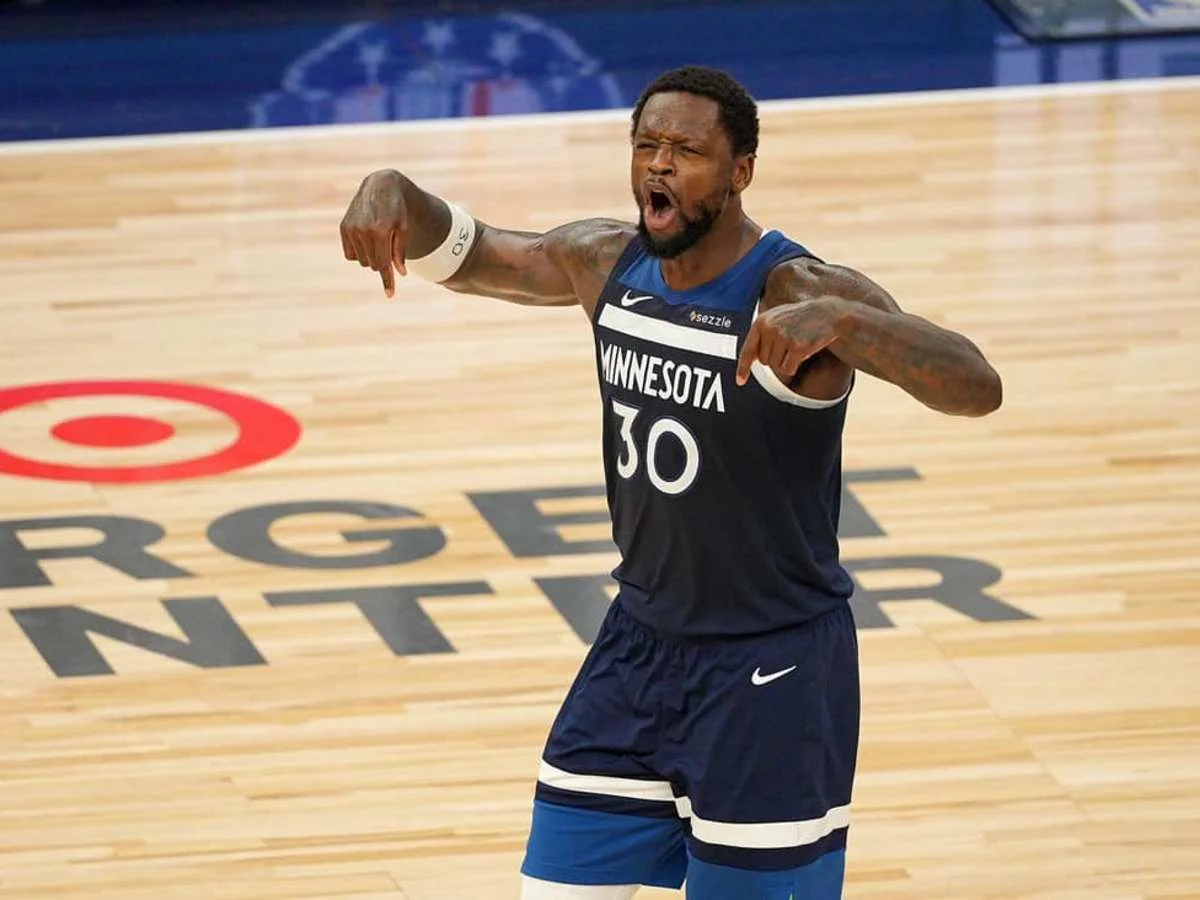
One highlight perfectly encapsulating the Timberwolves’ surprising playoff surge arrived during Game 3 against the Thunder. In a commanding 143-101 victory, Randle electrified the crowd with a crossover move and subsequent jumper over league MVP Shai Gilgeous-Alexander, extending the Wolves’ lead to 38 points in the third quarter and completely disorienting Oklahoma City.
After the play, shouting to the frame-filled Target Center, Randle roaring “We home now!” embodied Minnesota’s newfound confidence. The momentum shifted sharply after losing the first two games by 41 combined points, as the Wolves handed the top-seeded Thunder a crushing defeat, securing their first series win at home and vastly improving their championship outlook.
Challenges and growth amid adversity
After that high point, the volatility of Randle’s impact resurfaced. Just two days post-Game 3, his Game 4 performance plummeted, leaving fans and teammates questioning consistency concerns. Yet Randle remained steadfast, framing disappointment within a broader career theme of resilience.
I think the biggest thing is,
he remarked,
how do you bounce back after adversity? That’s always been the theme of my career. How can you bounce back? How can you be better? How can you learn?
This season brought a shift not only in his role but also in perception. While critics have sometimes questioned his reliability, inside the Timberwolves’ locker room and community, support is strong, highlighting his leadership qualities and personal growth.
Context of the trade and team dynamics
The trade sending star center Karl-Anthony Towns to the Knicks in exchange for Randle sparked comparisons from Minnesota’s limited partner Alex Rodriguez to a historic baseball transaction involving franchise icon Randy Johnson. Rodriguez recounted the mixed reactions to Johnson’s trade in 1998 but noted how, over time, the Mariners’ returns proved fruitful, suggesting a similar trajectory might unfold for the Timberwolves.
Everyone thought, ‘Oh my God, we just got body slammed,’
Rodriguez recalled.
Same reaction like with KAT. Everybody was down on Seattle.
Finch acknowledged early struggles during Minnesota’s adjustment period but highlighted the team’s collective efforts and steady improvement.
It was not always pretty on the floor, it wasn’t always pretty off the floor,
Finch said.
We had a lot of frustrations throughout the season, but they all came from a good place, everyone trying to make it work. And I think Julius’ connection with his teammates has gotten better and better.
Injury setback provides time for adaptation
Randle missed the entire month of February with a strained right adductor, during which Minnesota posted a 5-8 record. This absence, though challenging, allowed Randle to re-evaluate and adjust his approach.
I got to really watch the guys. … I got to really see guys up close and personal and really just evaluate, like, ‘All right, this is how I can help,’
Randle said.
And then I think from there, it was just kind of night and day when I was able to come back.
Upon his return, Randle began settling more comfortably into his role, focusing on facilitating teammates by drawing defensive attention and distributing the ball, a pivot confirmed by sources close to him describing his increased willingness to pass rather than force shots.
Consistency still a challenge during regular season and playoffs
Despite this adjustment, inconsistencies persisted. In January, Randle struggled shooting in a loss to the Memphis Grizzlies, going 2-for-13 and 0-for-7 from beyond the arc. Nevertheless, his coach Finch displayed patience and encouragement through these ups and downs.
I had played a terrible game,
Randle recalled.
and Finch was like, ‘Man, don’t sweat it.’ He was like, ‘Just keep chipping away at it.’ The basis of the conversation when we left it was like, ‘It’ll click when it’s supposed to.’ I think that’s just life and the process of things. It clicks when it’s supposed to.
The end of the regular season and early playoff contests saw Randle’s production rise, featuring an efficient 51.9% shooting average and strong overall contributions in scoring, rebounding, and assists during Minnesota’s run.
Playoff series performances against top competition
Randle’s form shone especially during the Timberwolves’ upset over the Los Angeles Lakers in the first round, where he averaged 22.6 points on 48.1% shooting and performed well against LeBron James. In the subsequent series against the Golden State Warriors, Randle surpassed 25 points on 53.3% shooting, with notable playmaking numbers and earned the respect of even Draymond Green.
I lost my matchup,
Green admitted.
Julius was incredible.
Fluctuations against the Thunder underscore defensive challenges
The Thunder proved uniquely challenging, known for their aggressive defense and high-pressure style that disrupts opponents with forced turnovers. Despite a strong first half in Game 1 against Oklahoma City, Randle’s influence diminished as he took fewer shots and struggled in the second period. His diminished offensive rhythm continued into Game 2, resulting in extended benching in the critical fourth quarter, a decision accepted without drama.
To be able to trust in the coach’s decision at that level of stature of player, it’s remarkable to see,
said teammate Donte DiVincenzo.
And it gives us a different perspective. Like, ‘OK, if Coach goes away from me, well Julius didn’t pout, why are you pouting?’
The brief friction with coach Finch quickly dissipated by Game 3, marked by a playful exchange signaling Randle’s readiness to contribute again.
Randle’s historical impact amid team growth
Regardless of the season’s closing outcome, statistics solidify Randle’s importance to the Timberwolves. His standout series against the Warriors places him alongside franchise legend Kevin Garnett as the only players to average 25 points and seven assists in a playoff run. Notably, Randle achieved back-to-back 20-point, 10-assist playoff games—another first in team history.
The unique challenge presented by the Oklahoma City Thunder
On the other side, the Thunder represent a well-built, defense-focused contender with a disruptive style rarely seen in the NBA. Randle explained their approach as a high-pressure, turnover-generating system more reminiscent of college basketball defenses.
They’re a team that’s different than any of the other [great] teams,
he said.
They’re not just a defense that bogs you down and stops you from scoring. Their identity is creating points off of turnovers and high pressure, which is different. You don’t really see high-pressure defenses in the NBA.
You see that more in college and stuff like that. I remember being in college and playing Louisville and they used to press and trap and all those different types of things. … It’s a different kind of team, obviously, than I’ve played in my career.
Leadership and optimism remain despite adversity
The Timberwolves are still early in their roster overhaul, working to create the chemistry and consistency often needed to contend for championships. The pressure of being down 3-1 is immense, yet Randle’s leadership and determination persist.
He just said, ‘I’ll be ready and I’ll be better,’
Anthony Edwards said regarding Randle’s mindset. And that’s leadership, man.
With Games 5, 6, and possibly 7 looming, Randle’s ability to rebound from prior challenges will be critical for Minnesota’s hopes to push past the Thunder and reach the NBA Finals for the first time in franchise history.