
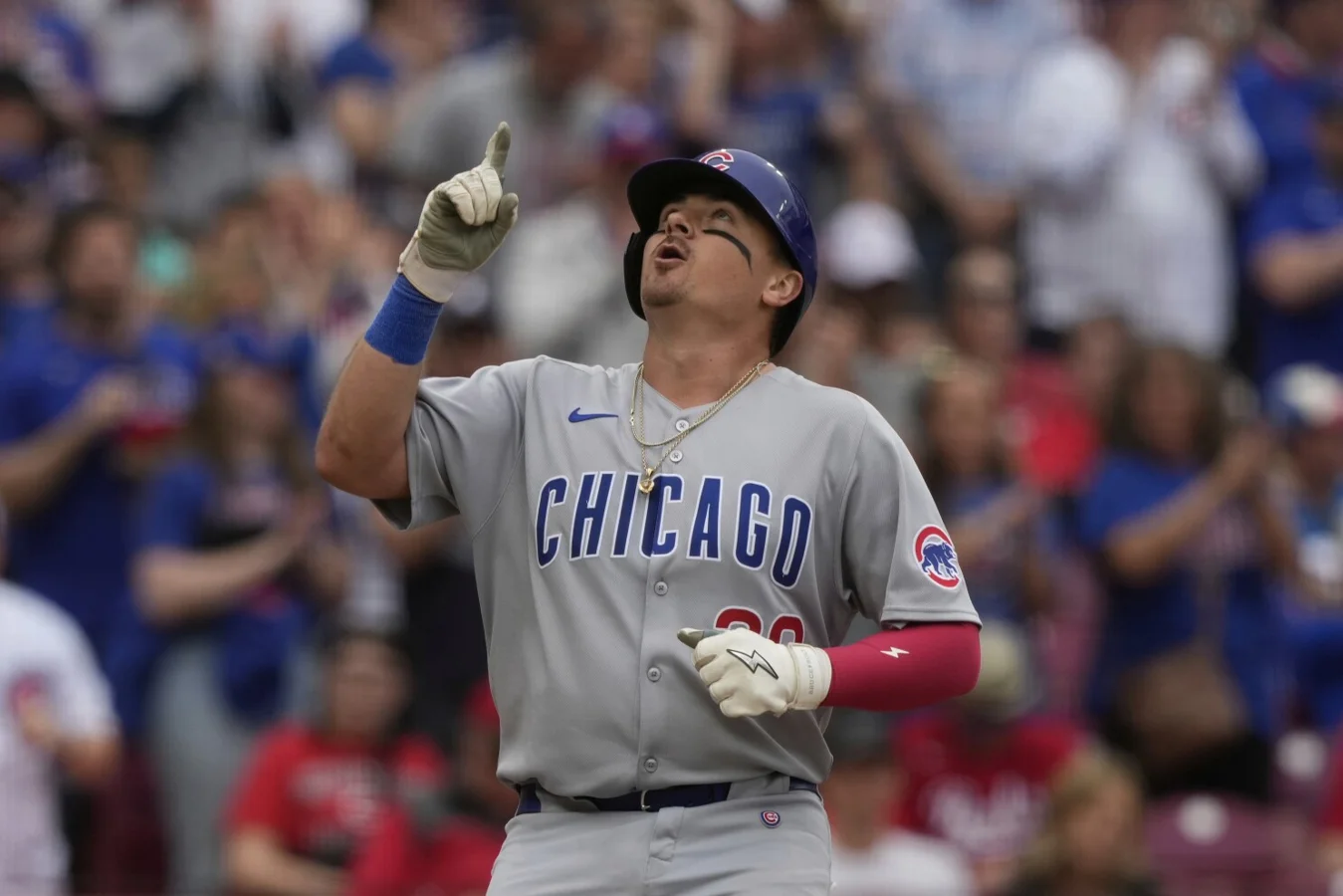

Carson Kelly is delivering a standout performance during his 2024 season with the Chicago Cubs, marking a significant breakthrough after years of underwhelming results. Though he doesn’t have enough plate appearances to qualify for the batting title, Kelly has driven impressive offense, particularly when there are runners in scoring position. His work with the Cubs, leading the NL Central, shows how a revamped swing approach has been central to his MLB breakout season with Cubs.
At 30 years old, Kelly owns a .290 batting average, .412 on-base percentage, and .589 slugging percentage, alongside nine home runs and a 179 weighted runs created plus (wRC+) in just 131 plate appearances. He has shared catching duties closely with Miguel Amaya, who recently went on the injured list due to an oblique strain. After Kelly hit a home run stepping in for Amaya on a Saturday loss to the Reds, an illness limited him to brief late-game appearances over the next few days. During his absence, Reese McGuire was called up from Triple-A Iowa to fill in, hitting two home runs in his debut series with the Cubs. Together, the Cubs’ catching corps has been one of the most potent offenses, rivaling only the Mariners and their star catcher Cal Raleigh in power and overall offensive production.
Kelly’s Journey to Becoming a Reliable Offensive Force
Carson Kelly’s current performance contrasts sharply with his previous career track record across ten major league seasons with five teams, where he never made an All-Star roster and rarely played full seasons. Before this breakout, Kelly had only twice posted a wRC+ of 100 or better and played more than 100 games in just two seasons. Yet, his offseason training focus and mechanical changes have propelled him to a new level.
Originally drafted by the St. Louis Cardinals in the second round of the 2012 draft out of high school in Portland, Oregon, Kelly was initially a third baseman before converting to catcher in 2014. He was once seen as a potential successor to Cardinals legend Yadier Molina due to his exceptional defense, but limited offensive output and Molina’s resilience kept Kelly from securing a stable role. From 2016 to 2018 with St. Louis, Kelly posted a disappointing .154/.227/.188 line over 131 plate appearances.
In December 2018, Kelly was traded to the Arizona Diamondbacks as part of the deal that brought Paul Goldschmidt to St. Louis. Over four seasons in Arizona, his offensive numbers improved but remained below average with a combined .231/.318/.405 line and mixed success affected by injuries. A fractured ulna sustained during 2023 spring training after being hit by a pitch further derailed his path with the Diamondbacks, and after returning, he was eventually released in August amid struggles at the plate.
How a New Swing and Stance Reenergized Kelly’s Career
After signing with the Detroit Tigers, Kelly embraced a major overhaul led by the team’s coaching staff, who encouraged a one-knee crouch that changed his catching stance. More importantly, the Tigers helped Kelly refine his bat speed and swing mechanics drastically, focusing on a more direct bat path aimed at handling low pitches and breaking balls better. Kelly described his process as experimental:
“It was basically, try a lot of different things,”
Kelly said.
“We’re going to lower my hands; we’re going to put my hands higher. We’re going to change the bat angle of where we start.”
—Carson Kelly, Catcher
This adjustment resulted in a lower athletic stance and quicker bat speed, allowing Kelly more time to judge pitches and make better swing decisions. The changes helped him raise his wRC+ to 108 with Detroit before being traded midseason to the Texas Rangers.
Statcast Metrics Highlight Kelly’s Improved Contact Quality
Continuing his evolution, Kelly has focused this year on hitting the ball in the air more often and driving pitches instead of grounding them out, a frustration he voiced in April:
“What grinded my gears was I’d get a pitch I could drive and I’d hit it into the ground,”
—Carson Kelly, Catcher
One vital alteration to his swing involves weight distribution; Kelly shifted from an even 50-50 stance to holding approximately 70% of his weight on his back foot, a change supported by force plate data and designed to enable better launch angles and bat speed:
“One major change Kelly made was the weight distribution between his back and front foot. Previously, it was a 50-50 distribution. But now, force plate data tells him he’s more 70-30 weighted toward the back foot.”
—Carson Kelly, Catcher
Compared to his 2023 posture, Kelly now stands deeper and farther off the plate, narrows his stance by a couple of inches, and maintains a less crouched position. These adjustments have increased his bat speed, swing path arc, and launch angles, all contributing to better overall contact results. He hits the ball harder and elevates it more consistently, as reflected by a nearly three mph increase in average exit velocity, a 1.6-degree rise in launch angle, and a doubling of his barrel rate, all factors leading to greater power production.
Kelly’s Plate Discipline and Performance with Runners on Base
Kelly’s discipline at the plate has been equally important to his success. His chase rate—the percentage of pitches outside the strike zone that a batter swings at—has fallen to a career-low 17.9%, down sharply from 23.5%. Simultaneously, his swinging strike rate dropped to 8.1%, allowing him to walk more, at a career-best rate of 16.8%, and strike out less frequently at 13%. This combination has made him particularly effective in crucial moments, especially with runners in scoring position.
Remarkably, Kelly walks over four times as often as he strikes out with runners on base, an unusual and valuable trait. Unlike Will Smith, who chases more in those situations, Kelly is more patient, helping him accumulate a 208 wRC+ with runners in scoring position last season despite limited power output overall. His ability to control the strike zone in these high-leverage cases continues to underline his offensive value.
Recent Trends and Outlook After Amaya’s Injury
Although Kelly’s hot start has moderated, with weaker numbers in May compared to his blistering performance earlier in the year, he shows signs of improvement and the adaptability that made his swing overhaul successful. Over his recent stretch, Kelly’s contact quality has declined but remains solid enough to suggest he can regain his prior production levels.
With Miguel Amaya expected to miss four to six weeks due to injury, Kelly is poised to take on the bulk of catching duties for the Cubs. This increased workload presents both an opportunity and a risk, as catchers often face wear that can reduce productivity. However, Kelly’s demonstrated ability to adjust his approach gives reason for optimism that he can sustain his breakout season.
In summary, Carson Kelly’s MLB breakout season with Cubs is the culmination of years of perseverance, technical adjustment, and a comprehensive swing overhaul. The Cubs’ organization has benefited from his transformation, and the ongoing challenge will be whether Kelly can maintain this level of performance as opponents adapt to his evolved hitting techniques.