
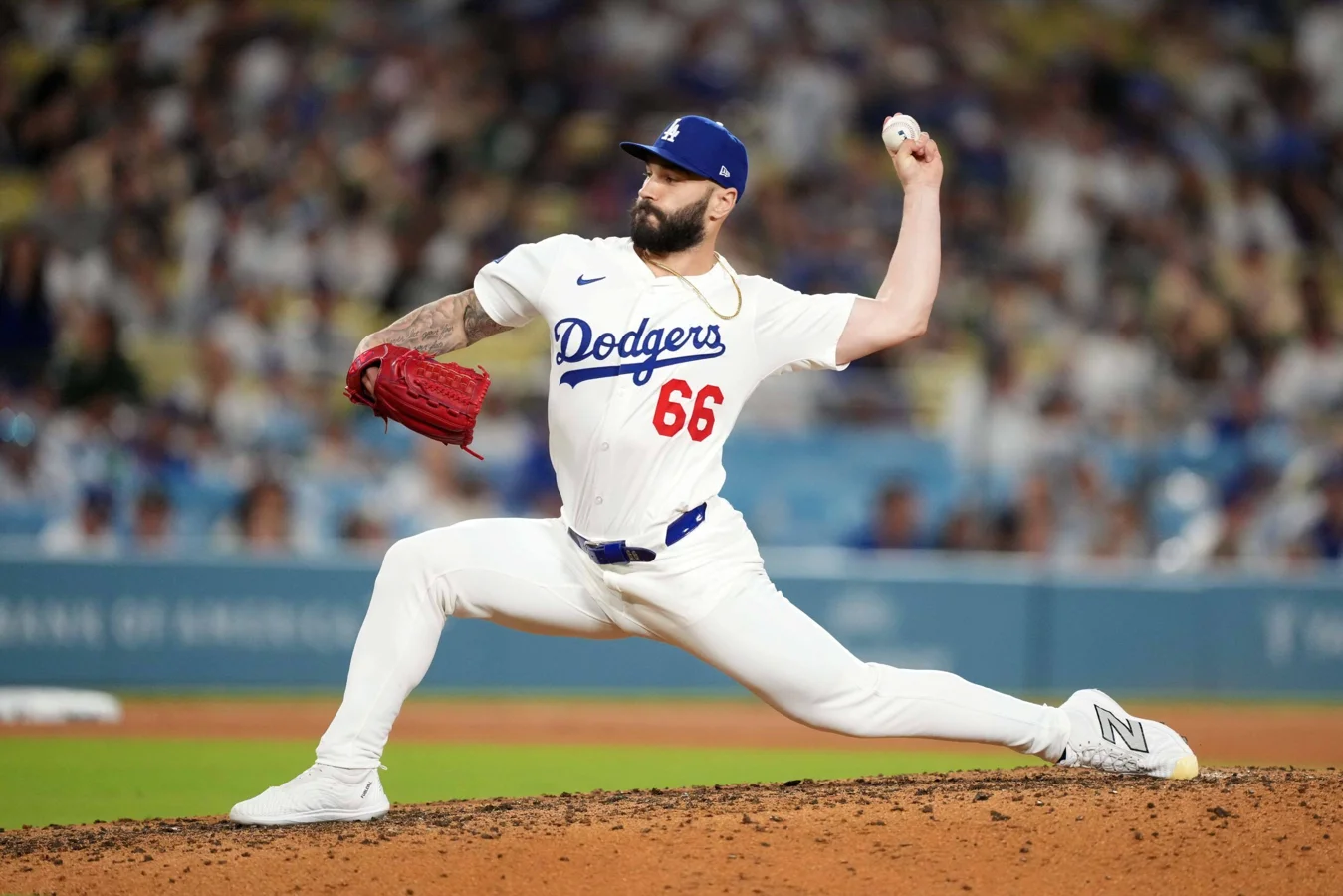

The Los Angeles Dodgers made a major commitment to Tanner Scott by signing the reliever to a four-year, $72 million contract during the offseason. Scott, regarded as one of baseball’s top bullpen arms, entered the season with high hopes, but his performance has fallen short of expectations so far.
Through 25.1 innings pitched this year, Scott carries a 4.62 ERA and has blown three of his last four saves. A particularly disappointing moment came during a crucial four-out save attempt against the Cleveland Guardians, where Scott gave up four runs while only recording two outs, costing the Dodgers a sweep.
Manager Dave Roberts Identifies Key Issue in Scott’s Ineffectiveness
Dodgers manager Dave Roberts pointed out that Scott’s struggles largely stem from an inability to finish off hitters in critical counts, despite earning favorable strike zone leverage. Roberts explained the difficulty:
“I think the crux is, when you get count leverage, we’re just not able to put guys away with the strikeout. And leaving middle spin, sliders in the zone, for them to put the ball in play. I think when you do that, sometimes the ball finds holes or some outfield grass. So that’s kind of what I see.” —Dave Roberts, Dodgers manager
Roberts emphasized that Scott’s problem isn’t related to how often he is used, but rather to consistently executing that final pitch to retire batters. He underlined efforts to resolve this, highlighting moments when Scott demonstrated the ability to close effectively:
“I think that’s what it is. We’ve got to kind of get to bottom of it. It’s not a usage thing. It’s something we’ve seen all year. There’s great strike throwing, getting count leverage, but just that last pitch to put guys away — like he did with Arias, I thought that was really impressive. That’s what we’ve got to unlock and be consistent with. I think the stuff is good at times, it’s just the finishing off hitters.” —Dave Roberts, Dodgers manager
Strikeout Rates Remain High, But Effectiveness Has Dropped
Despite the struggles, Scott’s strikeout rate remains nearly consistent with his previous dominant season, holding steady at 28.3% this year compared to 28.6% in 2024. However, his whiff rate—the percentage of swings and misses—has declined from 32.7% to 28.4%, signaling hitters are making more contact.

This increase in balls put into play has led to more hard-hit balls and barrels, which especially challenges a Dodgers defense that has had its own difficulties. Additionally, Scott has been afflicted by some unfavorable luck, contributing to these poor results. For Scott to regain his elite status, finding a way to consistently miss bats remains essential.
Initial Excitement Among Dodgers Players Over Signing Scott
When the Dodgers acquired Scott, he was coming off two seasons of outstanding performance split between the Miami Marlins and San Diego Padres. In 2024, Scott posted a combined 1.75 ERA with a 2.92 Fielding Independent Pitching (FIP) and 1.13 WHIP over 72 innings, with both years including sub-2.35 ERAs across at least 70 innings pitched.
Having seen Scott’s dominance firsthand in the postseason, Dodgers general manager Brandon Gomes recalled how the team’s hitters reacted positively to the signing:
“Obviously, our pitching group was incredibly excited when they found out the news about Tanner joining us,”
Gomes said.
“But I do think what was even more impressive and speaks volumes to Tanner is I think our hitting group was equally as giddy not having to face him and game plan for him, because the stuff he’s bringing is not something you can game plan for.” —Brandon Gomes, Dodgers general manager
Outlook for Tanner Scott and the Dodgers Moving Forward
The Dodgers face a pressing challenge in helping Tanner Scott overcome his ongoing hurdles to maximize the sizable financial investment they placed in him. Scott still shows flashes of the dominant pitcher who earned his lucrative contract, but the lack of consistent success in high-leverage save situations raises concerns.
If the Dodgers are able to unlock Scott’s ability to finish hitters reliably, it could stabilize the bullpen and improve late-game results, which are vital in a competitive division. Conversely, ongoing struggles could force the team to explore adjustments or alternatives to bolster their relief corps before critical playoff stretches.