
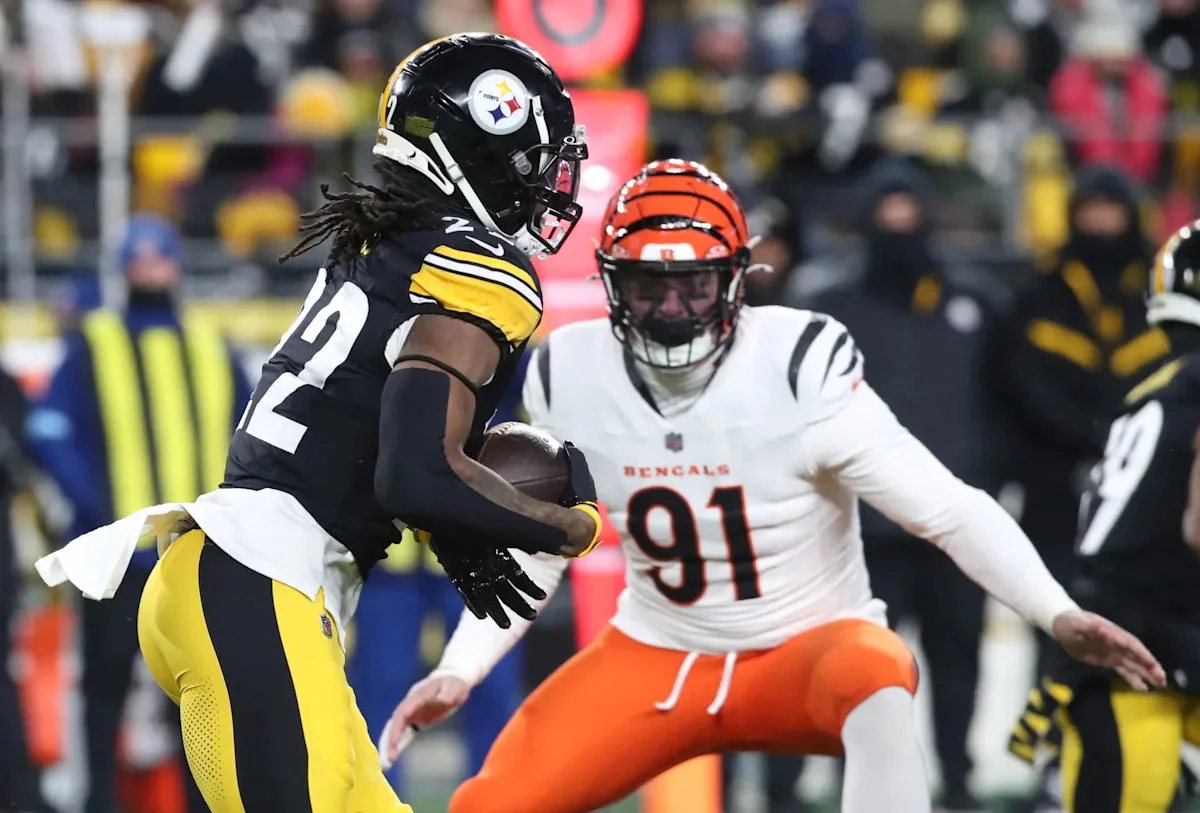

The ongoing Trey Hendrickson Bengals contract dispute update remains unresolved as the star defensive end continues to hold out before the mandatory minicamp starting June 10. Hendrickson, the NFL’s sack leader in 2024, has yet to attend any voluntary offseason workouts, signaling a standoff between him and the Bengals regarding a new agreement.
Following long-term contract extensions for Bengals wide receivers Ja’Marr Chase and Tee Higgins, Hendrickson’s situation stands as the most high-profile contract challenge facing the team this offseason. After leading the league with 17.5 sacks last season and earning a fourth consecutive Pro Bowl nod, Hendrickson seeks a deal reflecting his on-field dominance and long-term security.
Tracing the Roots of the Contract Impasse
This is the third consecutive offseason that Hendrickson has pushed for a revised contract. In 2023, he signed a one-year extension accompanied by an $8 million signing bonus. However, last year, when he pursued a multi-year deal, the Bengals declined, prompting Hendrickson to request a trade — a request that was not addressed at the time.
This most recent offseason saw the Bengals permit Hendrickson to explore trade opportunities prior to free agency and the NFL draft. Reports suggest several teams initially showed interest in acquiring Hendrickson via trade coupled with a long-term contract commitment, but no agreement was reached. This deadlock has prolonged negotiations and clouded the team‘s offseason preparations.

League Perspectives on Hendrickson’s Market Value
Across the NFL, observers recognize the difficulty Cincinnati faces in resolving this dispute under current market conditions. Only four edge rushers—Myles Garrett, Danielle Hunter, Maxx Crosby, and Nick Bosa—earn $34 million or more annually, a group Hendrickson believes he merits inclusion in after topping the sack charts.
Hendrickson not only demands compensation that reflects his ranking among elite pass rushers, but also requires lengthier contract terms. Short-term deals lasting one or two years are reportedly insufficient to meet his criteria for long-term financial security.
An NFC executive commented on the situation,
“I can’t see how they can let a great player go for a draft pick, given the pressure to win now.”
—NFC Executive
Trade discussions have since cooled, with assumptions that Cincinnati either declined deals lacking a first-round pick or elected not to engage further in March. Another source reveals,
“I still think they can come to a compromise, getting him above that $30-million threshold while covering themselves.”
—NFC Executive
Concerning Hendrickson’s age, the executive added,
“The age [30] is something that must be a factor for them.”
—NFC Executive
National reporter Jeremy Fowler shared insights on Hendrickson’s resolve, stating, “He’s extremely dug in.” —Jeremy Fowler
Impact of Market Shifts on Negotiations
Contract valuations of elite edge rushers jumped significantly during the offseason, complicating talks between Cincinnati and Hendrickson. Early in 2024, while Hendrickson anticipated a rewarding new deal for his rise to sack leader, it was unclear how the market would evolve.
Myles Garrett’s record-setting contract at $40 million per year with the Cleveland Browns and Danielle Hunter’s extension with the Houston Texans at $35.6 million annually—despite Hunter being 30—reset expectations for Hendrickson’s compensation. The value hike was notable, especially as Hunter’s deal included multiple void years and extends through 2026.
Hendrickson remarked,
“Having that conversation in July of 2024 does not forecast May of 2025.”
—Trey Hendrickson
Salary Cap Considerations for the Bengals
The Bengals generally maintain a conservative approach to salary cap management, reserving funds to manage the entire season. Presently, Cincinnati officially holds $27.6 million in cap space for 2025, though not all of this is immediately available for new contracts, due to ongoing roster and injury contingencies.
The team’s management has experience reallocating cap space midseason, exemplified by acquiring running back Khalil Herbert after Zack Moss suffered a season-ending injury. Similarly, with strategic contract restructures and finalizing linebacker Germaine Pratt’s future—saving $5.8 million—the Bengals could maneuver their cap to offer Hendrickson between $28 million and $30 million annually.
Hendrickson is slated to earn $15.8 million plus $200,000 in bonuses in 2025, indicating a substantial raise would be necessary to satisfy his demands.
Which Party Holds the Upper Hand?
The Bengals appear more reliant on Hendrickson than vice versa. Even if released, Hendrickson’s base salary of $15.8 million in 2025 would attract teams interested in a proven pass rusher. For context, that figure matches the salary of Chicago Bears defensive end Dayo Odeyingbo, who recorded only three sacks last season.
Hendrickson contributed nearly half of Cincinnati’s sack total last season, a critical figure given the team’s well-documented defensive struggles. His absence would significantly challenge the new defensive coordinator Al Golden’s efforts to halt the Bengals’ playoff drought, now lasting two seasons.
Potential for a Prolonged Holdout
Hendrickson’s unwillingness to play under his current contract suggests the deadlock could extend into the regular season. When pressed about the possibility of missing games, he avoided a direct answer but implied the dispute might persist beyond training camp.
Cincinnati has advised Hendrickson about possible fines for missing mandatory minicamp, but Hendrickson appears prepared to accept financial penalties to make his position clear.
Alternatives if Negotiations Fail
If Hendrickson chooses not to relent, he could play out the final year of his contract, becoming a free agent in 2026. However, replicating the high earnings he seeks now at that stage of his career would be uncertain.
Another scenario could mirror the 2020 situation with Carlos Dunlap, whose bitter standoff forced the Bengals to trade him midseason. A drawn-out dispute might compromise Cincinnati’s leverage in potential trades if the league perceives the Bengals need to resolve a “toxic situation” quickly, potentially lowering trade compensation.
Locker Room Reactions and Teammate Support
Hendrickson’s teammates have largely backed his firm stand. Quarterback Joe Burrow expressed understanding of the situation, stating,
“Just like anybody, I’m sure there’s things he’d like to have back.”
—Joe Burrow
Burrow continued,
“He’s very well thought out in his process and what he’s trying to do. If he thinks that’s the way to go, then that’s the way to go.”
—Joe Burrow
Wide receiver Ja’Marr Chase echoed strong support, acknowledging Hendrickson’s impact on the team.
“He’s an amazing player, man. I mean, everyone sees it. We all see what he does to this team, the energy he brought back the day he came in.”
—Ja’Marr Chase
Chase also asserted,
“We all know he deserves it.”
—Ja’Marr Chase
What Lies Ahead for the Bengals and Hendrickson
The ongoing contract dispute involving Trey Hendrickson represents both a critical challenge and a potential turning point for the Bengals’ defensive future. The outcome will significantly influence the team’s roster building, salary cap flexibility, and ability to compete for a playoff berth in 2025.
With mandatory minicamp fast approaching, the Bengals face a pressing deadline to either reach an agreement or prepare contingency plans. Hendrickson’s next moves will be closely watched by the league, teammates, and fans alike, as the team’s commitment to winning now creates considerable pressure to resolve this stalemate.