
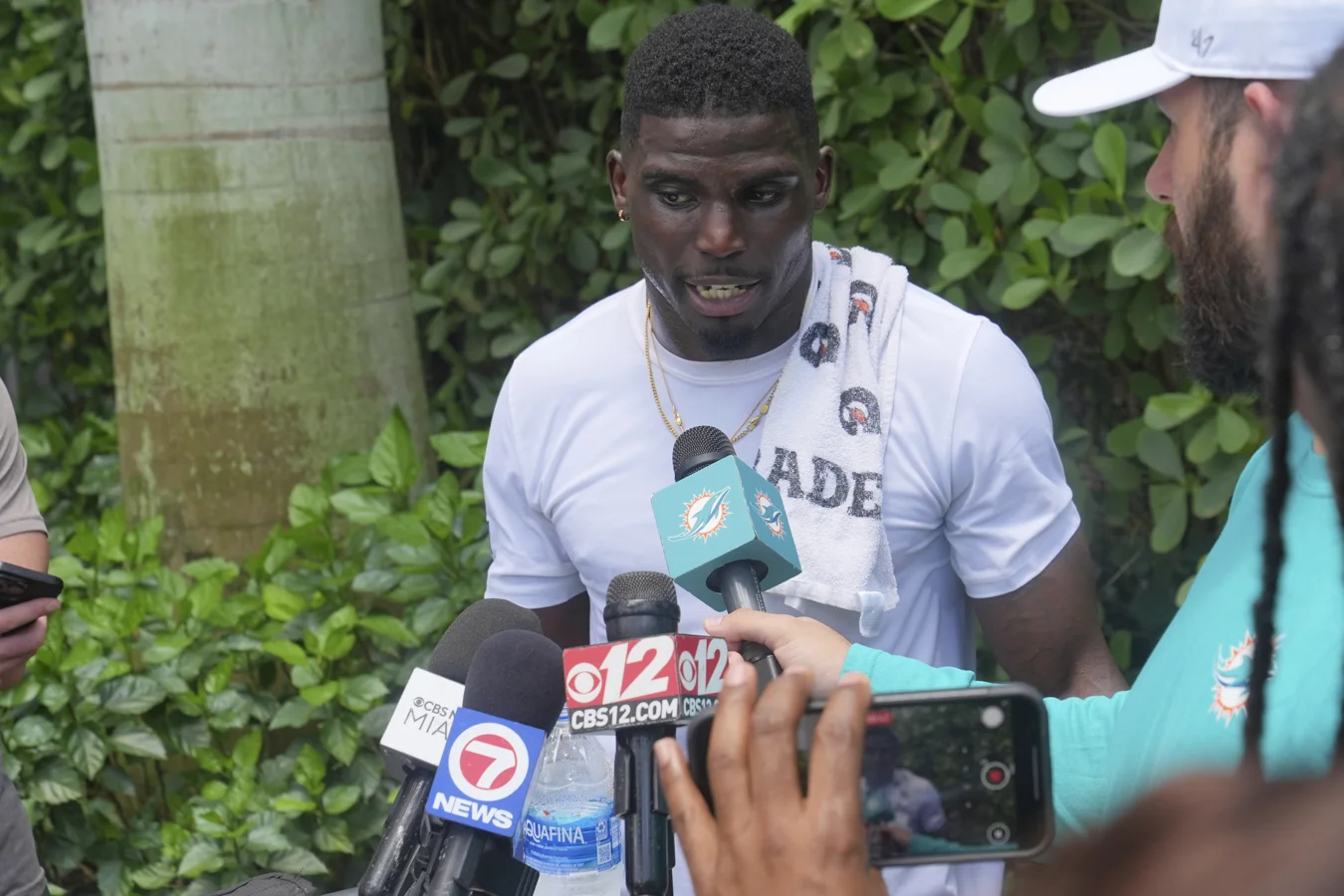

As NFL teams kick off their spring workouts in 2025, rosters remain fluid, especially as the post-June 1 period approaches. This timeframe could bring significant roster changes, with prominent players such as Tyreek Hill among those likely to be traded or released as teams seek salary cap relief and realignment ahead of the upcoming season.
The Significance of the Post-June 1 Roster Adjustment Window
The post-June 1 period refers to a critical point during the NFL offseason, when teams have new flexibility to make roster moves with more favorable financial implications. Many veteran contracts are structured to become easier to move or release without as severe salary cap penalties after June 1. This encourages teams to hold onto expensive veteran players during early offseason activities, then explore trades or cuts after that date to maximize cap savings. Consequently, substantial lineup changes often occur in this phase, affecting high-salary veterans seeking new opportunities or contract adjustments.
Prominent Players Viewed as Potential Post-June 1 Departures
With the offseason progressing, several notable veterans are attracting attention as possible trade or cut candidates in the post-June 1 period. Below is an overview of key players whose futures may hinge on moves during this window, along with projected financial impacts for their teams and likely outcomes.
Kirk Cousins, Atlanta Falcons: Cousins opted out of the Falcons’ voluntary OTAs, signaling his desire for a fresh start following a disappointing 2024 season marked by a late-year benching. Despite his $180 million contract, Atlanta has resisted absorbing significant dead money to facilitate a trade early. However, post-June 1 trades would save the Falcons about $27.5 million in cap space compared to only $2.5 million if traded earlier, greatly increasing the likelihood of a deal after June 1. Releasing Cousins after June 1 also reduces the financial hit from $35 million to $10 million. Potential landing spots include the New Orleans Saints or Pittsburgh Steelers, with predictions favoring his release from Atlanta and signing with New Orleans.

Malik Willis, Tennessee Titans: Tennessee has been publicly reluctant to move on from their former second-round quarterback, but the presence of top draft pick Cam Ward heightens uncertainty about Willis’ long-term role. While Willis might remain as Ward’s backup, the Titans can save $1.6 million by trading after June 1 rather than the roughly $600,000 saved by moving him earlier. Teams like the Tampa Bay Buccaneers, Detroit Lions, or Los Angeles Rams could be potential landing spots, with a trade to the Buccaneers seen as most probable.
Damien Harris Gibson, New England Patriots: With the Patriots recently acquiring Ohio State running back TreVeyon Henderson in the early second round and having recently extended lead back Rhamondre Stevenson, Gibson faces an uphill battle to maintain his roster spot despite his receiving abilities out of the backfield. The Patriots could save $2.3 million by trading Gibson post-June 1, compared to $1.3 million prior to that date. A release after June 1 would also offer $1 million more in savings. The Denver Broncos, Arizona Cardinals, and New Orleans Saints are possible destinations, with a trade to Denver anticipated.
Tyreek Hill, Miami Dolphins: Despite suggestions of dissatisfaction following the 2024 campaign, Hill currently appears set to remain with Miami. Nevertheless, the Dolphins stand to save nearly $15 million by trading Hill post-June 1, while earlier trade deals would result in a slight net loss of $600,000. Hill’s history includes off-field concerns dating back to his time with the Kansas City Chiefs, and teams such as the Denver Broncos, Los Angeles Chargers, and Las Vegas Raiders could express interest. Current forecasts indicate Miami will retain Hill in 2025.
Jaire Alexander, Green Bay Packers: Alexander is one of the league’s top cover corners yet has been repeatedly hampered by injuries. The Packers anticipated parting ways with him, but recent reports suggest Green Bay has extended a restructured offer to try to keep the Pro Bowl cornerback. Should Alexander decline a pay cut, the Packers would save $17 million by moving him after June 1, a $9.5 million improvement on savings available before that date. Potential suitors include the Washington Commanders, Atlanta Falcons, Raiders, and Minnesota Vikings. The preferred outcome is a retention through a new contract restructuring.
Marcus Ramsey, Miami Dolphins: Another veteran cornerback facing possible offseason departure is Ramsey, who signed a $72 million extension just last September but has reportedly been seeking a trade for some time. Miami could save close to $10 million by trading Ramsey after June 1, whereas moving him earlier would cost the team $8.5 million in dead money. The Falcons, Raiders, and Rams have emerged as likely destinations, with a trade to the Raiders considered a probable scenario.
What to Expect as the Offseason Progresses
The post-June 1 period is expected to prompt a flurry of significant roster transactions as teams balance salary cap constraints with the need to improve competitiveness. Veterans with high salaries but uncertain futures, including Tyreek Hill and Kirk Cousins, could change uniforms or be released in favor of younger, cost-controlled talent. For teams, these moves are a strategic way to optimize payroll flexibility heading into minicamps and training camp. Observers should anticipate evolving situations for players like Jaire Alexander and Marcus Ramsey, where contract negotiations and trade rumors will dominate headlines.
These shifts carry implications not only for the individuals involved but also for team dynamics and league-wide competitive balance. How franchises manage these post-June 1 adjustments could influence their readiness for the 2025 season and beyond.