
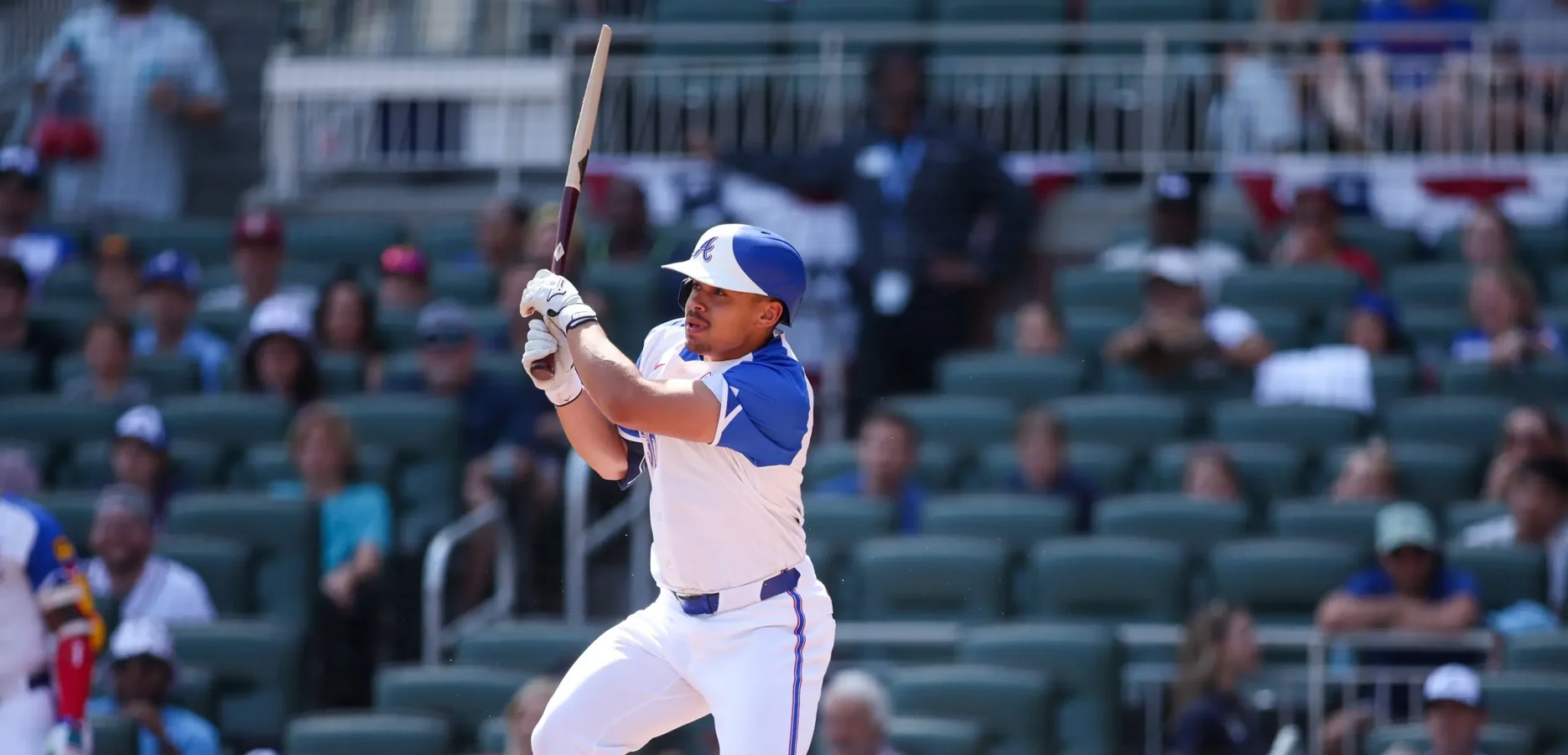

Heading into the 2025 season, Drake Baldwin has demonstrated the promising hitting ability and defensive skills expected from a top prospect within the Atlanta Braves organization. Throughout 2024, Baldwin produced solid offensive numbers at multiple levels, including a .244/.313/.337 slash line with a 104 wRC+ in the offense-challenged AA South, a .298/.407/.484 line with 125 wRC+ in Triple-A, and an impressive .377/.452/.491 in the Arizona Fall League, which is known for further honing the skills of elite prospects.
His batting displays strong contact skills and emerging power, marking him as a hitter who can adapt and succeed at the major league level. Baldwin’s ability to hit at all fields and maintain a consistent approach has been a major factor in his upward trajectory.
Balancing Power and Placement at the Plate
While Drake Baldwin was once noted for needing to develop more power, recent evidence shows he has made substantial progress. One standout was a homer measured at 416 feet, launched at 112.3 MPH with a 28-degree angle, narrowly missing being fair down the left-field line. Although this particular home run is exceptional, it reflects a newfound capacity to deliver powerful contact.
Beyond power, Baldwin shows a remarkable ability to hit ground balls to various infield spots with some success, including slightly to the right of second base. His hits are fairly balanced, with 19 landing to the right of second and 14 to the left, highlighting his ability to adjust the ball’s direction effectively.
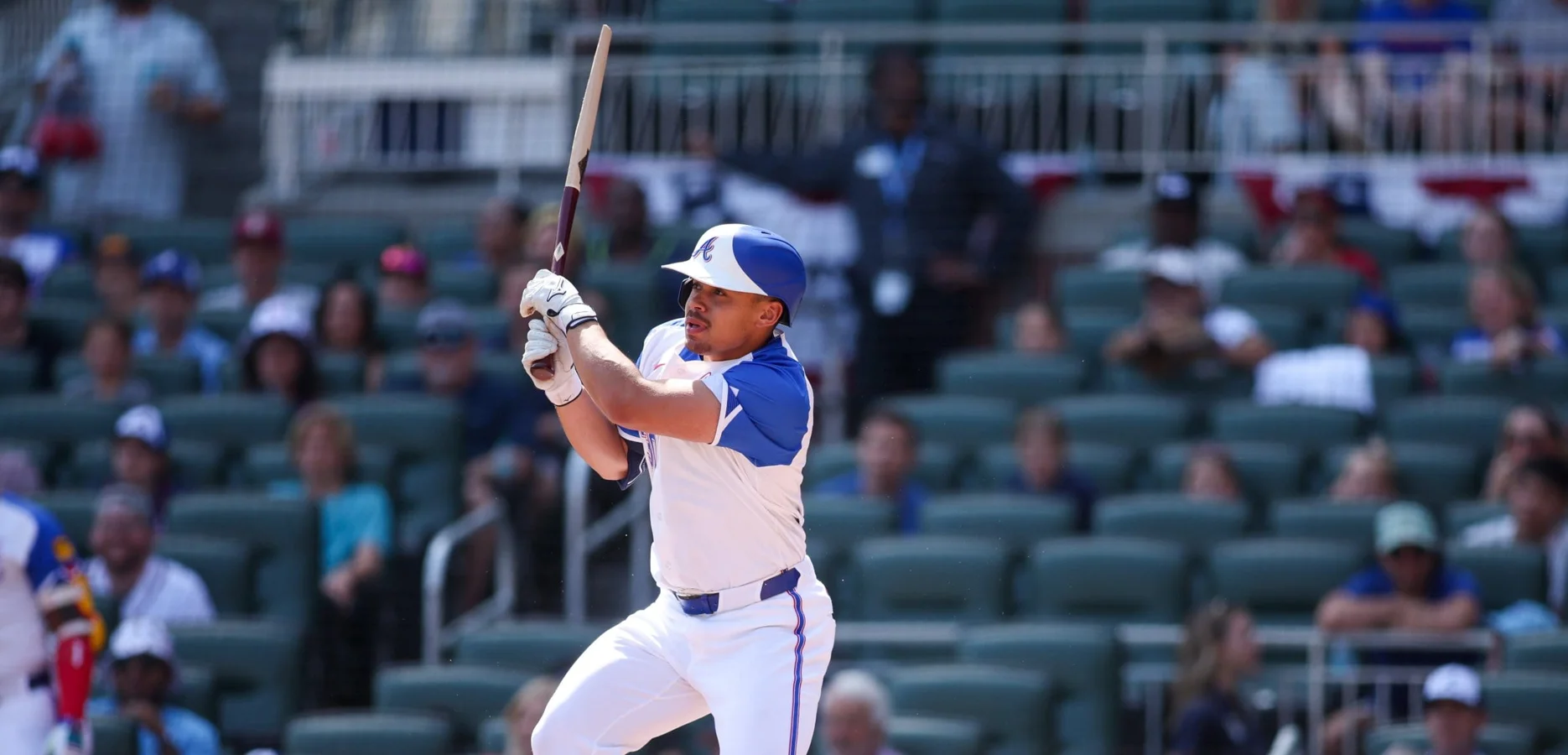
He does not appear vulnerable to any specific pitch types, as he maintains a .581 slugging percentage and a .439 expected weighted on-base average (xwOBA) against breaking balls despite a .226 batting average in those instances. Baldwin’s plate discipline is reflected in a slightly below-average walk rate of 7.3%, indicative of his current aggressive, in-season approach.
Examining Pitch Zone Tendencies and Strikeout Patterns
Baldwin’s performance inside the strike zone is outstanding, particularly in the power-producing areas. Though some singles have come from the power cross zone, he remains productive and rarely misses pitches there. Against pitches outside the zone, his batting average sits at a healthy .212 with a .272 xwOBA, which points to his capacity to extend the strike zone profitably.
Pitchers have found some success getting Baldwin out mostly by employing sinkers and breaking balls below the strike zone. His strikeout rate of 14.5% shows he is not overly prone to being fooled, but he can be challenged on pitches strategically located low and off the plate.
Defensive Capabilities and Areas for Growth
Despite the high praise for Baldwin’s defense earlier in his development, his major league performance reveals room for improvement. Minor league data reported pop times around 1.7 seconds, an indicator of strong arm quickness when throwing to bases. However, current defensive statistics feature two passed balls and ten wild pitches allowed, suggesting some inconsistency or adjustment challenges.
Some of these difficulties could stem from complex game situations like aborted throws or awkward angles, but the crossover to major league catching is still deemed attainable for Baldwin given his raw tools and athleticism.
Playing Time Challenges Amidst a Strong Braves Catching Corps
With Sean Murphy firmly established as the Braves’ starting catcher, the team faces strategic questions about how to maximize Baldwin’s role and development. Baldwin has seen minimal time as a designated hitter this year, primarily because Marcell Ozuna occupies that spot regularly.
There have been experimental approaches, such as pinch-hitting, to give Baldwin additional opportunities without compromising his defensive responsibilities. The idea of converting him to an outfield position has surfaced but is viewed cautiously, given Baldwin’s limited experience, the risk of injury early in his career, and the necessity for offseason preparation before switching positions.
As the Braves await Jurickson Profar’s return, short stints of Ozuna in left field combined with Baldwin as the designated hitter could provide more plate appearances for Baldwin. However, Ozuna’s lack of recent outfield playtime and potential defensive liabilities make this a less than ideal solution.
Outlook for Baldwin’s Role and Future Contributions
After accumulating a reasonable sample of major league games, Baldwin has seldom looked overmatched at the plate. His combination of solid hitting ability and developing defense makes him a key piece for the Braves to cultivate as they plan for competitiveness and roster flexibility.
The organization is likely to explore more creative ways to integrate Baldwin into the lineup more regularly, building on his offensive impact while continuing to refine his catching skills. His progression is crucial, as increased playing time will help the Braves assess how best to utilize his growing talents in the seasons ahead.