
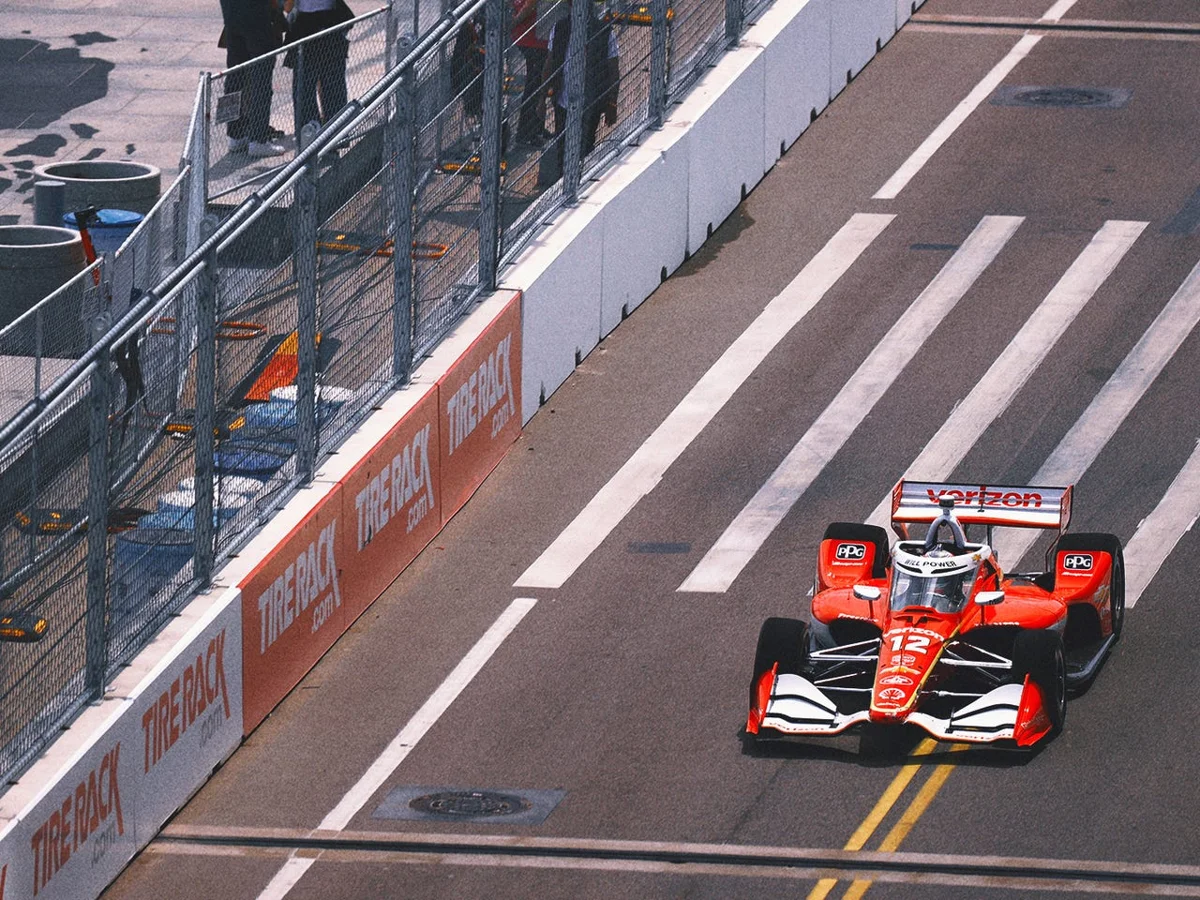

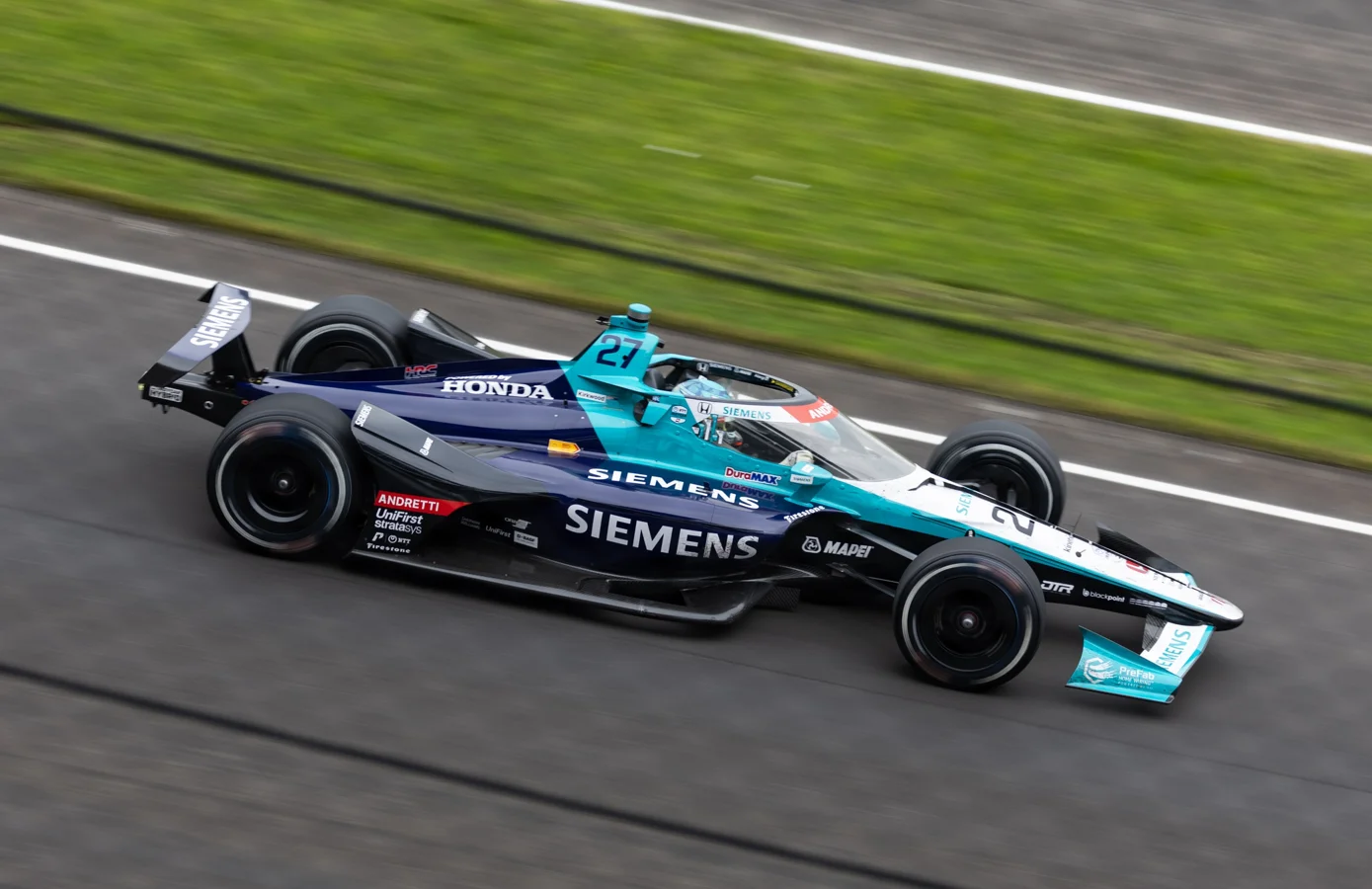
During practice at the Detroit Street Circuit ahead of the Chevrolet Detroit Grand Prix on June 1, Kyle Kirkwood responded strongly to an aggressive incident involving Team Penske’s Will Power. The collision between the two drivers on the narrow street course sparked tension and significant damage to Kirkwood’s vehicle, drawing wide attention from drivers and commentators alike.
Details of the aggressive encounter between Will Power and Kyle Kirkwood
In a tense moment at Turn 5 on Detroit’s tight 1.6-mile street circuit, Will Power repeatedly made contact with Kirkwood’s Andretti Global car. Power forced Kirkwood along the track through Turns 5 and 6 near the Renaissance Center, causing damage to Kirkwood’s floor and gearbox casing. The move was described during the broadcast as a “Chrome Horn,” a tactic where a car’s front bumper nudges another vehicle to signal an intent to pass. However, many observers found the contact unusually forceful and excessive for a practice session.
Kyle Kirkwood reacted to the incident on X (formerly Twitter), stating,
“This is without a doubt the most absurd thing I’ve had happen to me at a racetrack,”
Kirkwood wrote.
IndyCar drivers share their perspectives on the narrow Detroit track and collision
Kirkwood maintained composure despite the confrontation and suggested that Will Power’s frustration was aggravated by the extremely limited space on the street circuit. Fellow drivers also weighed in on the challenges posed by Detroit’s tight layout and the event’s crowded field of 27 cars.
Christian Lundgaard from Arrow McLaren highlighted the difficulty of managing so many cars on such a short track, noting that the cramped conditions exacerbate tensions between drivers.
“What makes it difficult here is it’s such a short track. We have 27 cars going on a 1.6-mile track. It doesn’t really add up. It’s frustrating, but at the end of the day, it’s the same for everyone,”
said Lundgaard (via Detroit Free Press).
David Malukas of A.J. Foyt Racing, who was near the incident, initially mistook the trailing car for Marcus Ericsson and likened the aggressive move to a scene from a movie, emphasizing how surreal the moment felt.
“I couldn’t believe it. I was very confused at the start. I thought, like, something was wrong with Ericsson, and Power was towing him across, like the ‘Cars’ movie.”
Malukas also pointed out how certain parts of the circuit appear inviting but quickly tighten, leading to frequent incidents and probable caution flags.
“I’ll be surprised if there’s not going to be a yellow (flag) for this race,”
he said.
“Turn 1, it’s very wide on entry, and it looks inviting. And then all of a sudden it gets very, very tight on exit. And it happens a lot around this track.”
Implications for the Chevrolet Detroit Grand Prix and driver dynamics
The incident underscores the challenges drivers face on the Detroit Street Circuit, where limited room to maneuver heightens tension and increases the risk of contact during racing events. As the packed field of 27 drivers prepares for the race on June 1, managing space and maintaining control will be key to avoiding further clashes. Kirkwood’s vocal disapproval of Power’s tactic brings attention to the fine line between aggressive driving and unsportsmanlike behavior in tightly contested street races.
The responses from Christian Lundgaard and David Malukas reflect the shared frustrations drivers experience when competing on such a restrictive layout, suggesting strategic caution may be necessary throughout the event. Observers and competitors alike will be watching to see how drivers adapt to the circuit’s challenges and whether tensions escalate or ease in the upcoming race weekend.