
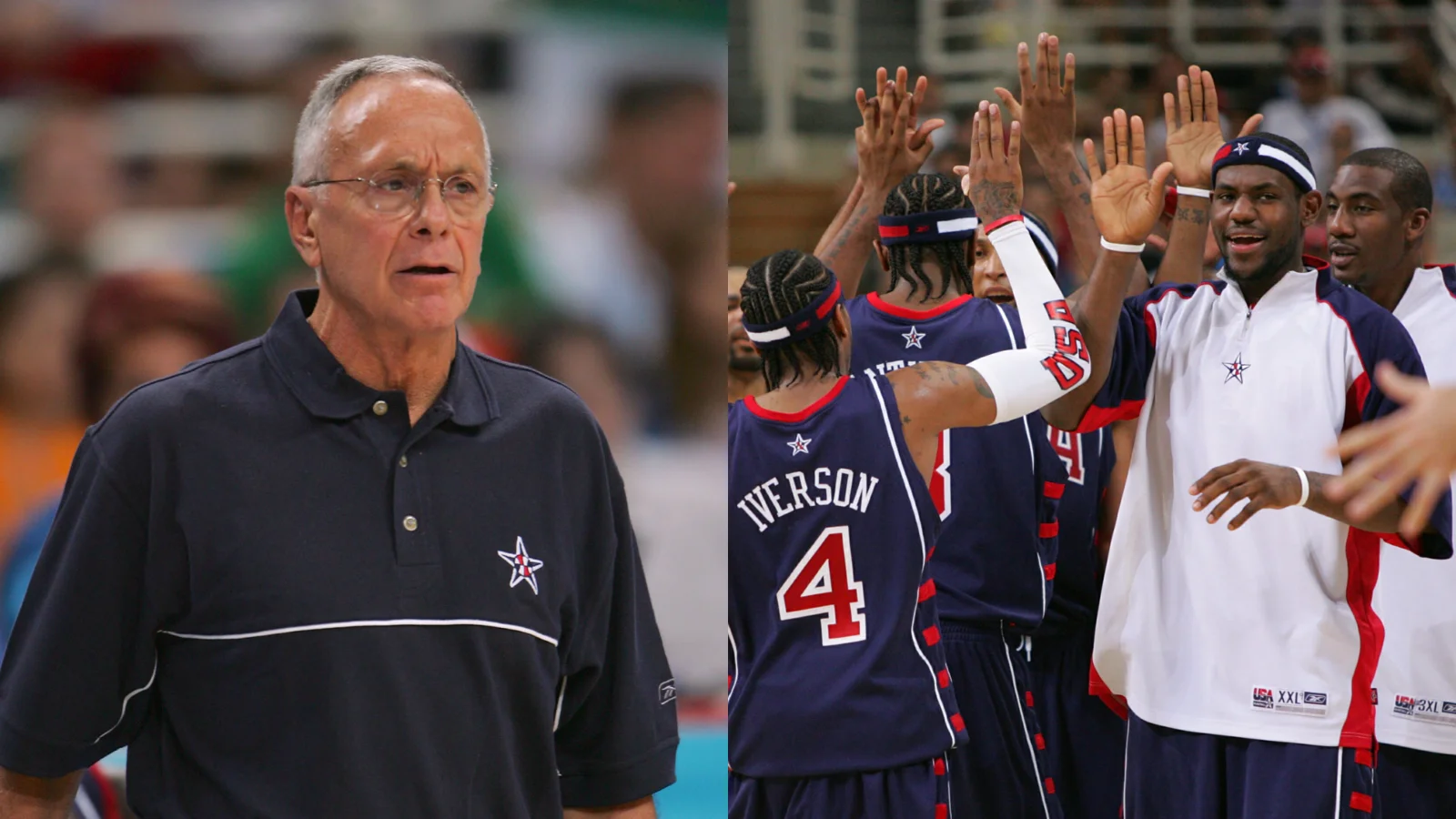

During his podcast, Carmelo Anthony shared a striking account of Larry Brown’s rigorous approach as head coach of Team USA during the 2004 Athens Olympics. Anthony revealed that Brown suspended LeBron James, Amar’e Stoudemire, and Allen Iverson for an exhibition game against Puerto Rico—not for tardiness, but for arriving early to a team meeting. This incident exemplified Brown’s no-nonsense coaching style, emphasizing discipline and accountability.
Details of the Suspension Incident as Recalled by Carmelo Anthony
Anthony described the scenario where Brown scheduled a meeting for 2 p.m., yet Stoudemire, James, and Iverson were deemed late for arriving three minutes before that time. Reflecting on the event, Anthony recounted,
The minute I knew what type of environment that was going to be was when they got suspended in Florida for being a minute early [to a meeting],
—Carmelo Anthony. He elaborated that the meeting unofficially started earlier than the set time and arriving even slightly ahead was considered disrespectful enough to bar the players from playing.
Anthony continued,
We about to go play Puerto Rico in Jacksonville,
and quoted Brown’s blunt response:
We coming to the meeting, he like, ‘You ain’t playing, you ain’t playing, and you ain’t playing.’
—Carmelo Anthony. This decision was particularly harsh given Stoudemire’s family was present for that game in Florida.
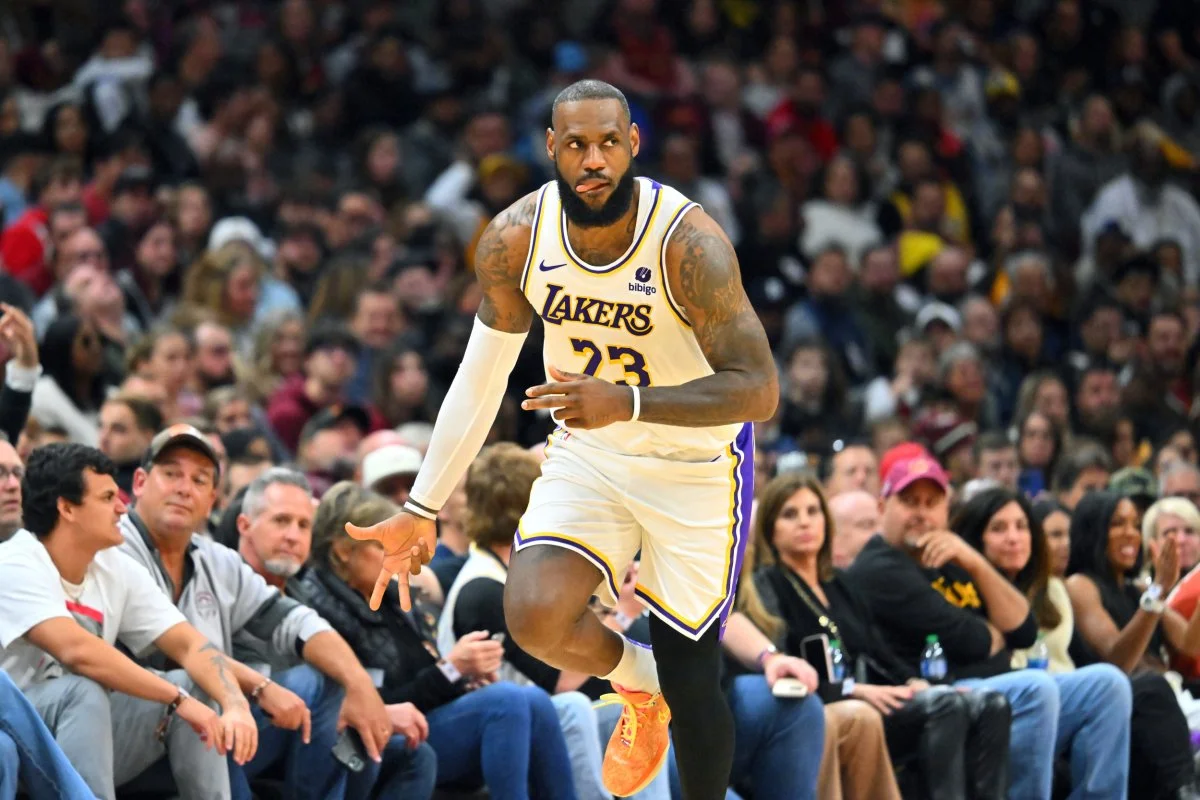
Three Premier NBA Players Suspended Together
Anthony highlighted the prominence of the three suspended players, stating,
It was you (Stoudemire), AI, and Bron. You talk about the three biggest names at this point in time. You talking AI, who was damn near the face of the world. He’s the face of the world in basketball. You got this young rookie of the year, you know, Stat, and then you got Bron, who was the next star,
—Carmelo Anthony. This illustrated the significance of the punishment imposed on some of the team‘s most influential figures.
Despite the severity of the penalty, Anthony also acknowledged Brown’s intention behind the move, stating,
You (Brown) made a statement, and I respect the statement you made, and stood on it.
—Carmelo Anthony. Brown wanted to underline the importance of accountability while reinforcing his authority over the team. Anthony shared that he gradually came to understand Brown’s philosophy that to be on time meant to be late, although he personally disliked how Brown started the meetings earlier than scheduled.
Amar’e Stoudemire’s Perspective on Being Suspended Despite Arriving Early
Stoudemire provided his own account, explaining that he and the others were being taped up before practice and rushed to the meeting, arriving a few minutes ahead. He recalled,
We actually in the training room getting taped and getting ready for practice,
and continued,
So we get our bags, and we rush over to the meeting, and we are early. We there like a few minutes early, so we’re thinking we’re good. He’s like, ‘You ain’t playing, you ain’t playing.’ Like ‘What? What do you mean we’re not playing?’
—Amar’e Stoudemire. This reflected the rigid expectations Brown imposed, regardless of circumstance.
Comparison to Other Coaching Philosophies on Punctuality
The concept of strict punctuality is not unique to Larry Brown. Similar practices were employed by Tom Coughlin during his New York Giants’ Super Bowl-winning seasons, enforcing the rule that if a player is “on time,” they are actually “late.” This toughness underscores a broader coaching trend emphasizing discipline and order in professional sports environments.
Relationship Dynamics Within the 2004 Team USA Squad
Anthony reflected on the uneasy dynamic between Brown and Iverson at the time. Brown sought to use Iverson’s leadership role to set an example, hoping he would mentor younger stars like James and Stoudemire better. Despite the attempt to hold Iverson to high standards, the underlying tensions possibly limited the effectiveness of this approach.
Outcome of the Suspension and Its Impact on Team Performance
Although Team USA won the exhibition game against Puerto Rico 96-71 at the Veterans Memorial Arena, the overall 2004 Olympic performance was disappointing. The team dealt with multiple issues, including star players withdrawing, safety concerns following 9/11, and coaching conflicts. Brown’s reluctant usage of rookies James and Anthony resulted in limited minutes, contributing to the squad’s failure to gel properly and a shocking bronze medal finish after losing 89-81 to Argentina in the semifinals.
Retrospectively, many believe the team would have benefited from more playing time for James and Anthony, both of whom became future Hall of Famers, with James widely regarded as one of the greatest players ever.
Reflections from Observers and the Legacy of the 2004 Team USA Experience
Doug Collins, the former NBA coach and broadcaster, recounted the team’s turmoil, saying,
I broadcast the games, and it was a disaster. There were rumblings that they wanted to send guys home before they even got to the Olympics…what did we just watch?
—Doug Collins. The 2004 Team USA suffered a highly disruptive preparation and a disappointing result, marking one of the most troubled periods in U.S. Olympic basketball history.
Despite its failures, the 2004 experience acted as a catalyst to improve the approach of future Olympic teams. Former NBA Commissioner David Stern observed that the setbacks prompted subsequent squads to treat the Olympics with far more seriousness, which laid the groundwork for their dominance in ensuing years.