
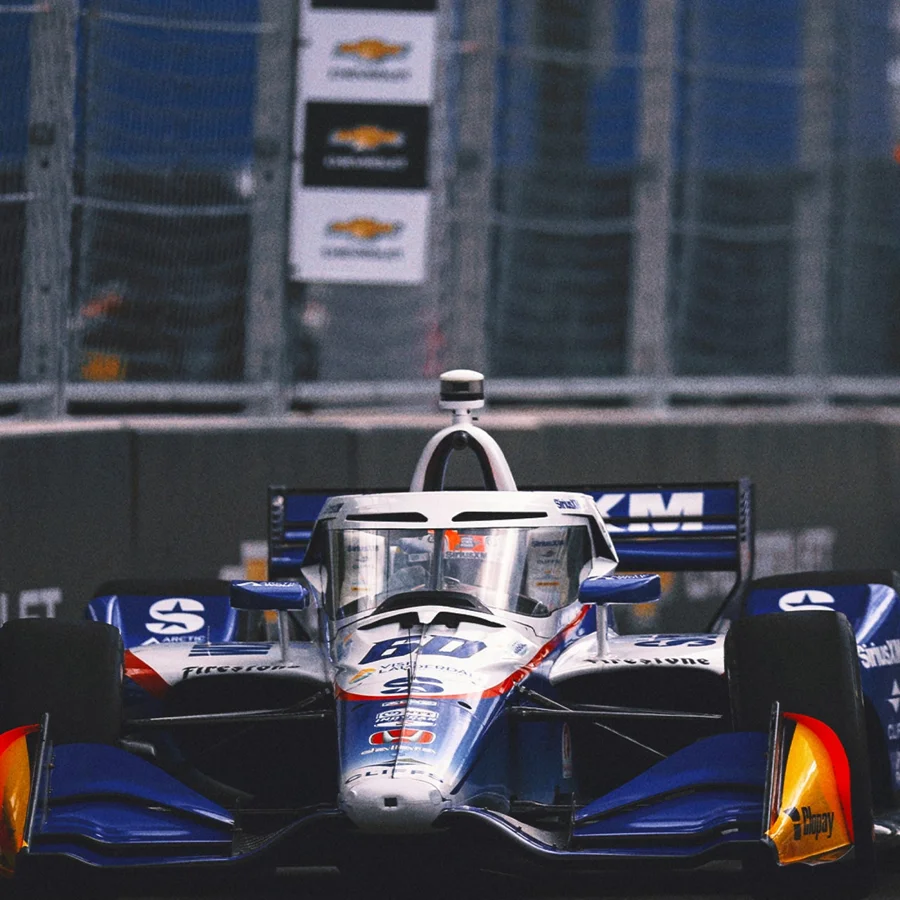

During the Detroit Grand Prix, Louis Foster and Felix Rosenqvist were involved in a severe crash triggered by a suspension failure on Foster’s car. Foster’s vehicle initially collided with the wall before striking Rosenqvist’s car, which caused a widespread debris field and forced a temporary halt to the race. Both drivers were taken to the medical center and were released with only minor injuries, with Rosenqvist mentioning he experienced pain in his knee.
Drivers’ Reactions and Track Conditions
Rosenqvist expressed his surprise about the collision, explaining that Foster’s car came from a direction he had not anticipated. Foster pointed to the notoriously bumpy surface of the Detroit Grand Prix circuit as a likely contributor to the suspension failure that led to the crash. Prior to the incident, Foster was on course to achieve his best result of the season, making the crash particularly disappointing.
Safety Concerns and Future Implications
The crash has raised concerns among drivers and racing teams about the track’s condition and overall safety measures. Conversations are underway regarding potential improvements to the circuit and vehicle safety to prevent similar accidents. Both Foster and Rosenqvist are expected to return to competition soon, while teams will focus on analyzing vehicle performance under demanding street course conditions.
Broader Impact on Motorsport Safety
This incident serves as a stark reminder of the dangers inherent in racing on complex street circuits. The event underscores the urgent need for continuous assessment of safety protocols and vehicle durability to protect drivers in high-risk environments. The forthcoming races will be crucial for identifying necessary adjustments and reinforcing safety standards in the sport.
“I didn’t see Foster’s car coming as it approached from an unexpected angle.” —Felix Rosenqvist, Driver
“The bumpy course conditions may have contributed to the suspension failure.” —Louis Foster, Driver