
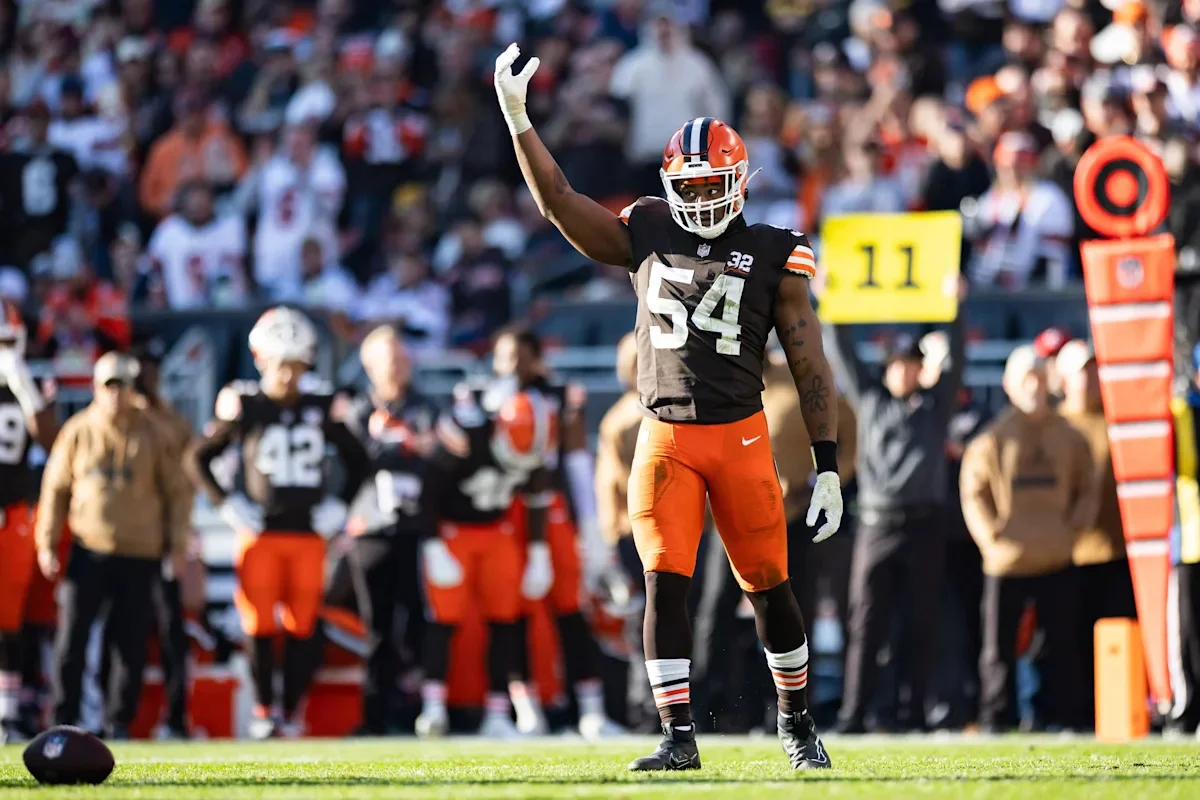

The Cleveland Browns face mounting questions about edge rusher Myles Garrett’s commitment following his absence from recent Organized Team Activities (OTAs), despite signing a four-year, $160 million contract. While Garrett’s on-field performance is expected to reflect his elite status, his decision to skip OTAs has stirred controversy over team attendance policies and leadership expectations.
The Expectations Surrounding Garrett’s Role and Presence
Myles Garrett is regarded as one of the NFL’s top defensive players, having earned the NFL Defensive Player of the Year award in 2023. The Browns rely on him not only for his talent but also for his leadership given the substantial contract investment. However, Garrett was noticeably absent from the team’s recent OTAs—not due to a contract disagreement or injury, as some might assume, but because he was reportedly in Japan during this period.
Brown reporter Mary Kay Cabot addressed this situation on the Orange and Brown Talk podcast, acknowledging that Garrett is treated with a “different set of rules” compared to other players. She stated,
“Myles has really, truthfully, whether we like it or not, a little bit of a different set of rules than everybody else,”
highlighting Garrett’s established status with the organization.
Cabot also noted,
“He has kind of earned that by being the best defensive player in the NFL, by earning NFL Defensive Player of the Year honors in 2023, by being on the road to the Hall of Fame, and by getting himself ready every single year to go out there and dominate.”
Despite this recognition, many question whether this exemption from attendance at OTAs is justified given the purpose of these sessions.
Challenges to the Browns’ Norms on Offseason Attendance
The Browns have traditionally emphasized participation during OTAs as a foundation for team cohesion and preparation. Critics argue that no player, regardless of stature or contract, should be exempt from these workouts, especially since OTAs offer critical time to build chemistry before the intensity of training camp and the regular season. The month-long gap between OTAs and camp raises questions about why Garrett could not schedule travel during that later timeframe instead.

Some fans and analysts feel uneasy about what Garrett’s absence implies for the team’s culture and leadership, given the financial and performance expectations attached to his deal. If a $160 million contract buys dominant play on Sundays, many believe it should also ensure Garrett’s presence and influence during all team activities, including OTAs.
Looking Ahead to Training Camp and the Season
While Garrett’s impact during the regular season and training camp remains critical, the debate over his offseason attendance underscores broader tensions about accountability and team standards. The Browns must decide how to balance star players’ individual needs and the collective commitment required to build a winning team. As training camp approaches, the organization will be watching closely to see if Garrett reaffirms his leadership role on and off the field.