
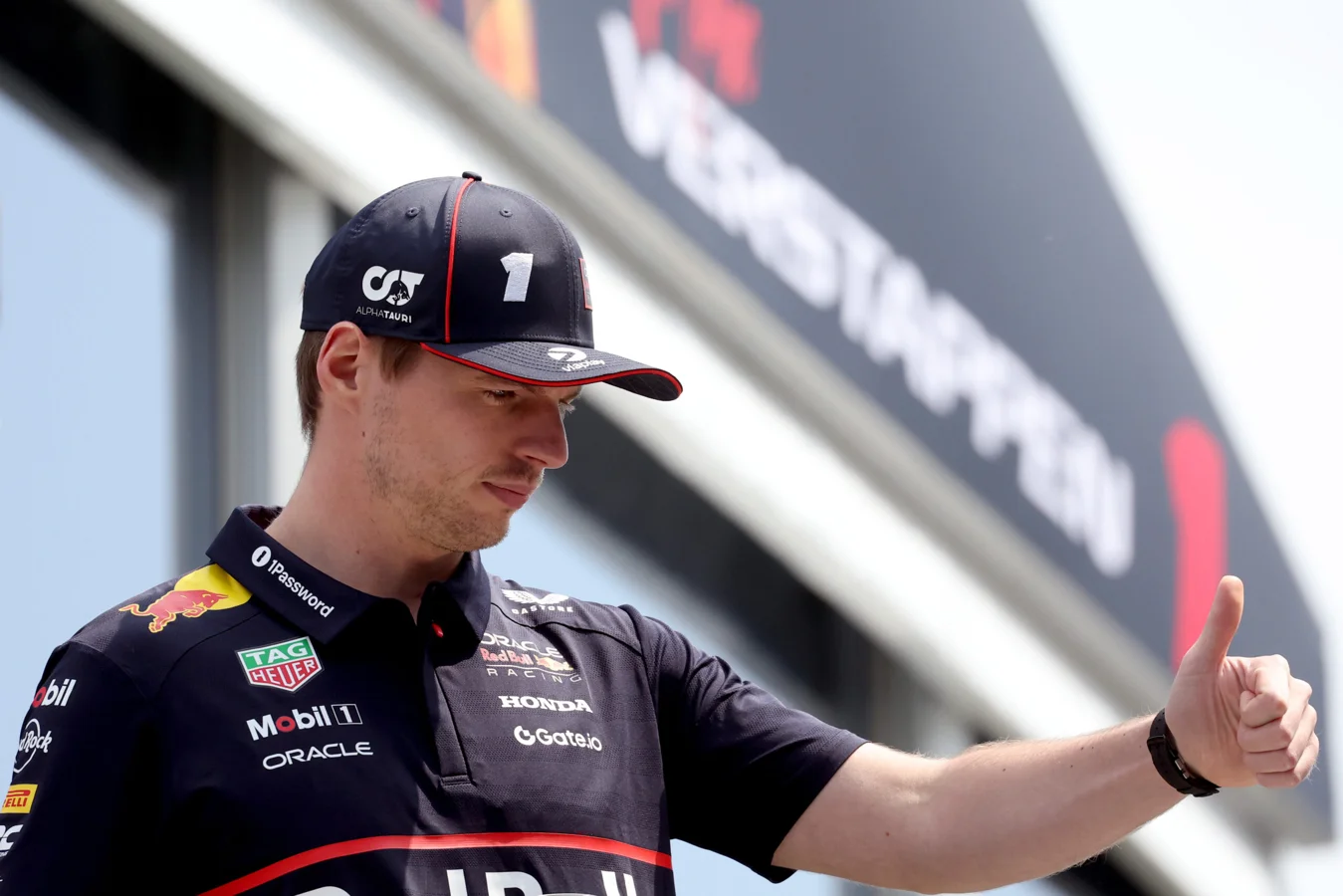

Ted Kravitz has reflected on how his interview with Max Verstappen prior to the Canadian Grand Prix became unexpectedly confrontational. The Sky F1 presenter questioned Verstappen about the contentious incident with George Russell at the Spanish Grand Prix, which led to a significant penalty for the Red Bull driver. This Max Verstappen testy interview with Ted Kravitz highlighted the tension following the clash and the resulting team penalty.
Arriving in Montreal ahead of the Canadian GP weekend, Verstappen faced probing questions about the controversial clash at Turn 5 in Barcelona. The incident saw the Dutch driver given a 10-second penalty and three penalty points on his FIA Super Licence after contact with Mercedes’ George Russell in the closing stages of the race. The consequences were serious, as Verstappen is now just one penalty point shy of a race ban.
Breaking down the Barcelona incident and initial reactions
During the Spanish Grand Prix, Verstappen was forced off the track into an escape area at Turn 2 after Russell lunged into Turn 1 aggressively. Although Verstappen managed to keep his position, the Red Bull team advised him to yield to Russell to avoid penalty consequences. Verstappen appeared to comply, slowing down to let Russell pass, but then accelerated to block Russell from turning left at Turn 5, resulting in a minor collision.
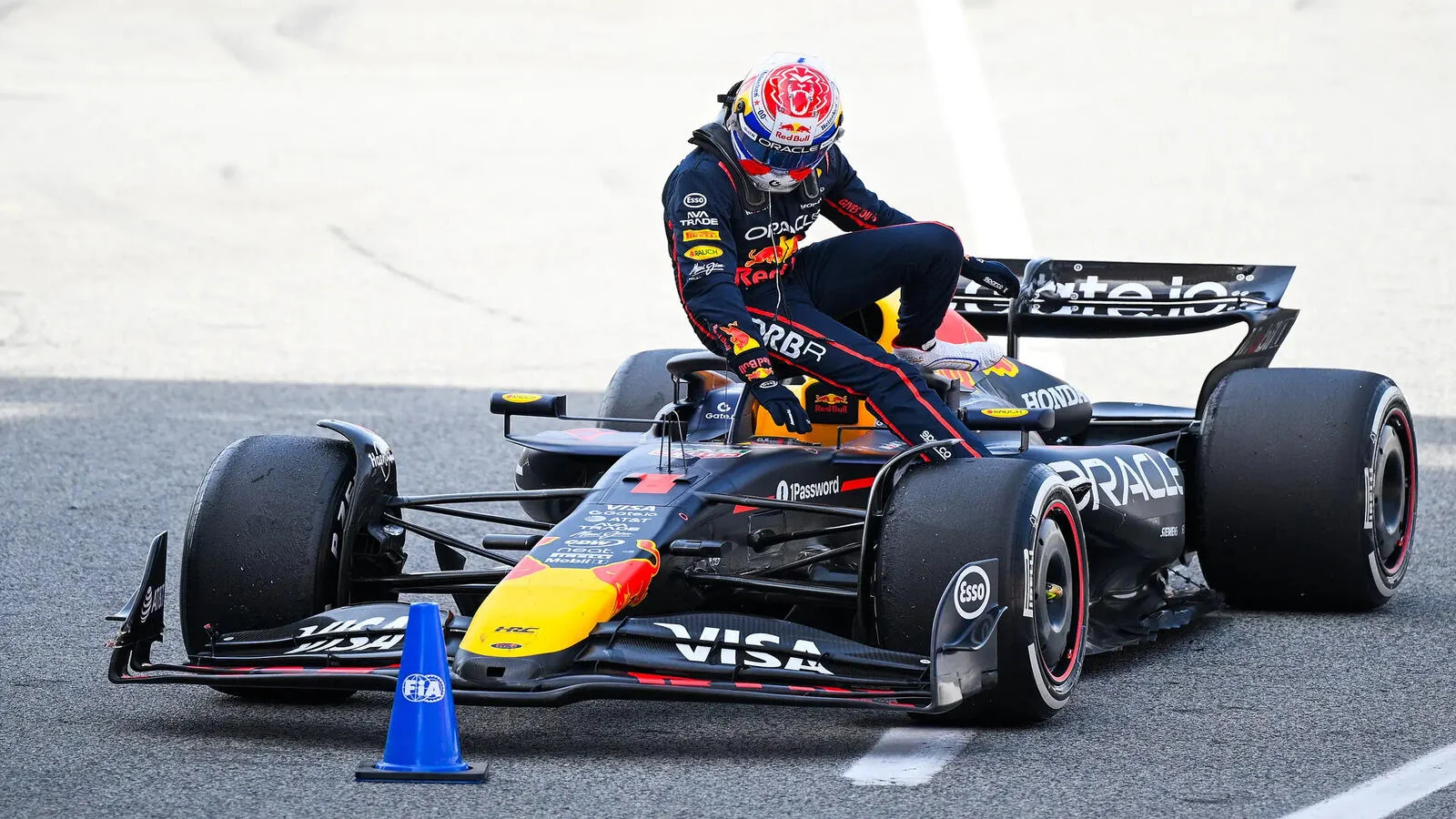
The race stewards disagreed with Verstappen’s tactics, issuing penalties that intensified scrutiny on the four-time World Champion. With his penalty points mounting, Verstappen’s standing in upcoming races became precarious. This context led Kravitz to focus his questioning on how the team communicated during this crucial period and who bore responsibility for the strategic decisions made.
Ted Kravitz’s questioning about team decisions and communication
Kravitz sought clarity from Verstappen about the team‘s internal management during that moment, particularly asking about Steven Knowles, who recently replaced Jonathan Wheatley as Red Bull’s head of sporting regulations. Kravitz suggested it was Knowles who might have misinformed Verstappen’s race engineer GianPiero Lambiase to advise giving the place back to Russell, a call that turned out to be incorrect according to the stewards.
“Since Jonathan Wheatley went, obviously you have Steven Knowles who is doing it,”
Kravitz said.
“I assume it was him who told ‘GP’ [Lambiase] to tell you to give the place back to George, which wasn’t the right call. The stewards later confirmed that.”
“How are you working that out with him? Obviously, he’s not been in the job too long since Jonathan’s gone to Sauber. How are you working that out that same situation doesn’t happen again?”
Verstappen responded by rejecting the notion of singling one person out for blame.
“I think it’s not really nice to try single out a person to be honest, because that’s never the case. I think we just look at it as a team. What we always can do better, and that’s also how we look at it in Barcelona. But it’s not fair to now single out one single person.”
When Kravitz explained he was merely naming Knowles, not blaming him, Verstappen remained firm.
“Well, you named him,” Verstappen said.
Kravitz replied,
“I just named who he was. Jonathan Wheatley is obviously a well-known guy, I wasn’t saying it was Stephen Knowles’ fault.”
Verstappen countered,
“But you mentioned him.”
Kravitz clarified,
“Jonathan Wheatley was a well-known guy, he was your rules guy. Now he [Knowles] is the new guy.”
Verstappen concluded,
“So we’re talking about him, you’re singling him out.”
Kravitz attempted to explain further,
“OK, but he’s on the pit wall. He’s a fairly…”
Verstappen interrupted,
“I do not need to discuss that anyway here. If we ever look at things that we can do better, we do that like every other team. But I’m not going stand here in front of the camera and say who was at fault exactly.”
Kravitz tried to clarify his intent,
“I wasn’t asking…”
Verstappen finished firmly,
“We all live and learn.”
Kravitz closed the topic,
“I wasn’t asking you to do that, just to be clear. I was asking how you… live and learn. Thank you, I think you answered it.”
Ted Kravitz explains his interview approach and aftermath
Following the interview, Kravitz spoke with his Notebook feature, reflecting on the discomfort during the exchange and why he chose that approach. Recognizing Verstappen’s frustration, Kravitz stated he intended to address the team error that contributed to the mistaken instruction to give the place back to Russell. His question aimed to understand how Verstappen intended to improve communication with Knowles to prevent a repeat scenario.
“He wasn’t in a particularly receptive mood about [the George Russell incident], so I thought I’d go with a question about the team mistake that led to that message in error to give the place back to Russell,”
Kravitz explained.
He added that Verstappen appeared to misinterpret the inquiry as an attempt to place blame on Knowles personally.
“What was I meant to do? Was I meant to say an ‘unnamed team representative that deals with the rules’? I said ‘I’m just not here to say it was Stephen Knowles wasn’t it, let’s blame him’.”
“And then he just wouldn’t accept it. He just said, ‘Well, I think it’s not nice of you to do that’, at which point we ended the interview.”
History of tension between Red Bull and Sky F1
This confrontation was not an isolated incident in the fraught history between Sky F1 and Red Bull Racing. In late 2022, Red Bull revoked media access for Sky UK, Germany, and Italy after team principal Christian Horner criticized Sky’s coverage as biased and sensationalist. The friction intensified following Kravitz’s remark that Lewis Hamilton had been “robbed” of the 2021 World Championship, a comment that angered Red Bull and Verstappen.
“I think an accusation of championships being robbed is something that we don’t feel is an impartial commentary,”
Horner said at the time.
“That is, we don’t feel, in any way fair or balanced.”
“Max was very upset about it, and as a team, we support him fully. We were equally upset about it. As a team, we took the decision this weekend, I took the decision that we’ll have a weekend off.”
Afterwards, the conflict was resolved when Sky representatives met with Red Bull at their factory before the Brazilian Grand Prix. Verstappen later explained that much of his anger stemmed from repeated negative treatment by “one particular person,” a statement widely presumed to reference Kravitz.
“This year it’s been a constant… yeah, kind of like daily being disrespectful, especially one particular person. And it’s enough, I don’t accept it,”
Verstappen said.
“You can’t live in the past. You just have to move on. You keep disrespecting me and, at one point, I’m not tolerating it anymore. That’s why I decided to stop answering them.”
Despite previous disputes, Verstappen confirmed that discussion with Sky helped move past the episode.
“Yeah, we drew a line under it. So we just keep on going.”
Implications for Verstappen, Red Bull, and media relations ahead
The tense interview highlights ongoing friction between Max Verstappen, his team, and media outlets like Sky F1. With Verstappen precariously close to triggering a race ban due to penalty points, the Spanish Grand Prix incident remains a focal point for controversy and discussion. The interaction also underscores challenges in managing internal team communication and media narratives amidst high-stakes competition.
How Verstappen and Red Bull navigate further media interactions and maintain internal clarity around race regulations and strategies could impact performance and public perception in the coming races. Meanwhile, broadcasters such as Kravitz are balancing incisive questioning with respect for the drivers’ states of mind following stressful race weekends. This episode serves as a reminder of the pressures facing drivers and journalists alike in the fast-paced world of Formula 1.