
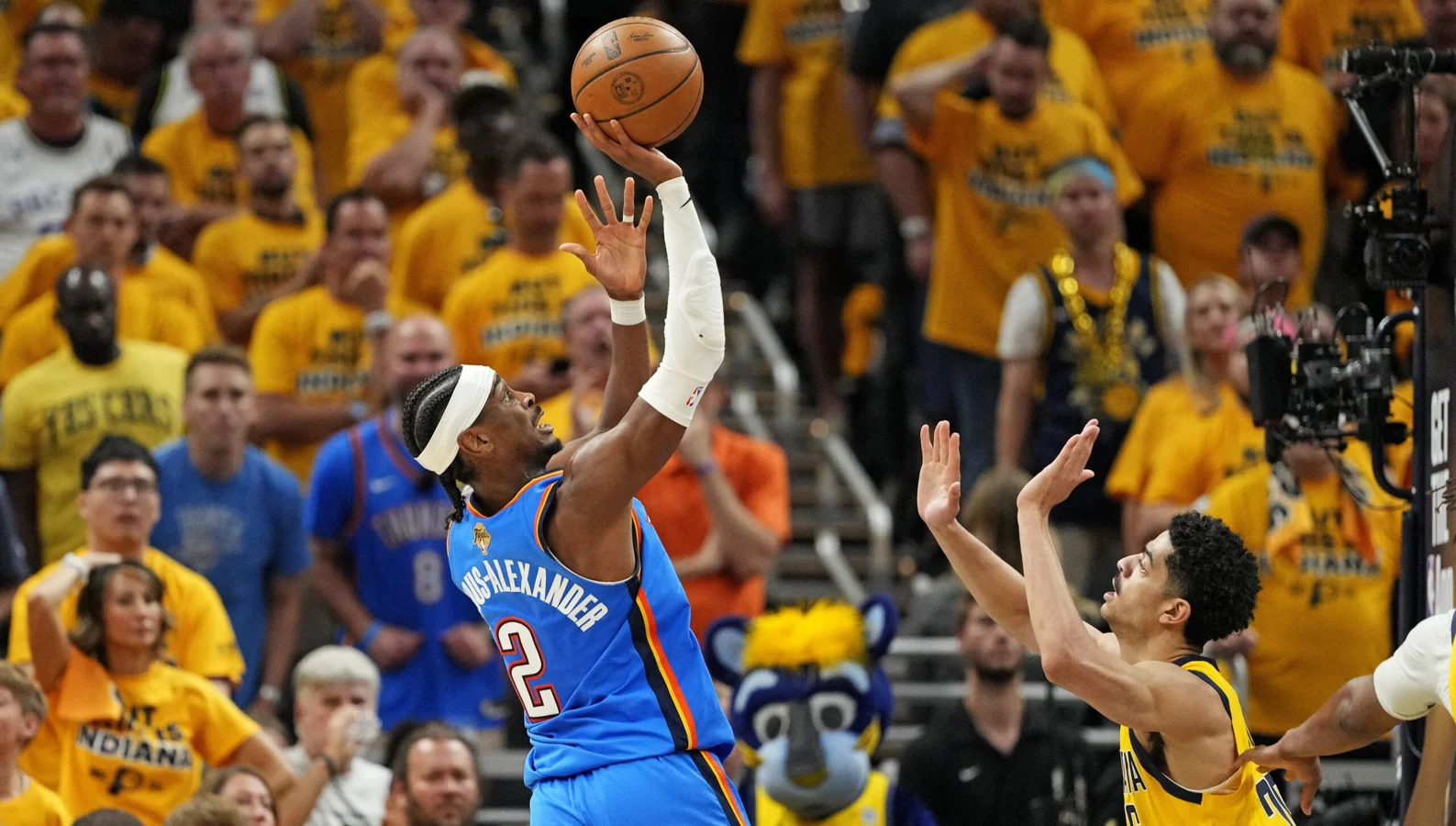

Just eight seconds into Game 3 of the 2025 NBA Finals, Andrew Nembhard established a physical presence that would impact the entire night. Shai Gilgeous-Alexander, frustrated by Nembhard’s persistent off-ball pressure, responded by shoving Nembhard twice, with the second shove involving an elbow that resulted in a foul call. This early altercation paralleled a previous encounter when Jalen Brunson headbutted Nembhard, though this time the officials intervened.
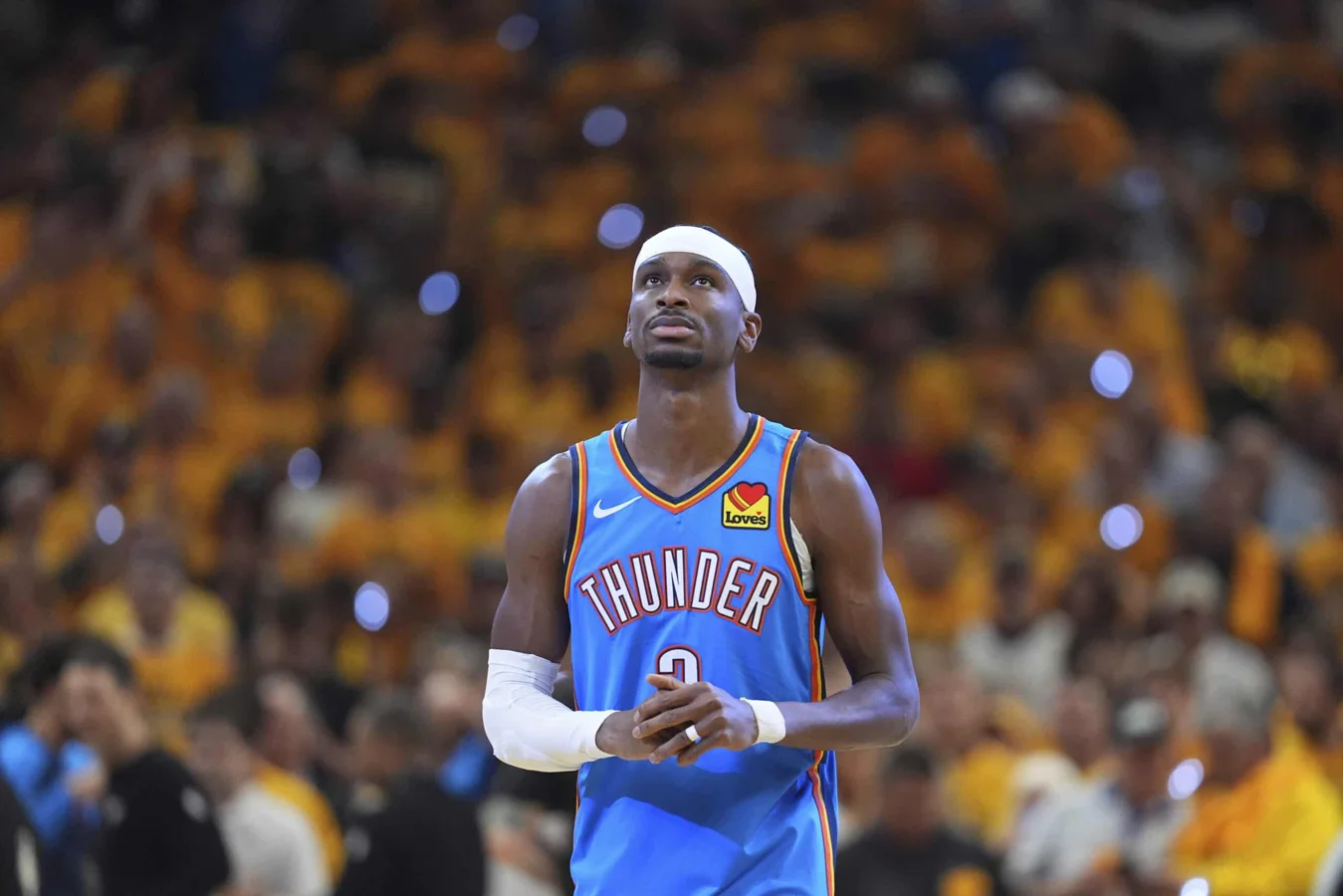
Nembhard’s aggressive defense dictated the flow, pushing Gilgeous-Alexander into a difficult game. The star guard committed six turnovers, the most since December, while scoring 24 points on 9-for-20 shooting and dishing out four assists. This output fell below the high standards Gilgeous-Alexander usually sets.
Indiana’s Defensive Strategy Focused on Relentless Pressure
The Indiana Pacers crafted their defensive game plan to consistently challenge Gilgeous-Alexander by trapping him high on the court and forcing him to earn every point. They pressured him off the ball and limited his movement, particularly on pick-and-roll plays. Although the defensive scheme mirrored those used in earlier games, the Pacers, led by Tyrese Haliburton and their big men, executed more effectively by neutralizing the screens and preventing Gilgeous-Alexander from penetrating downhill.
Andrew Nembhard and second-year guard Ben Sheppard expertly navigated around screens, maintaining tight coverage. When Gilgeous-Alexander shook off his initial defender, the Pacers provided quick help defense, denying him easy paths or passes to shooters.
We didn’t necessarily switch it up as much as people think, to be honest with you,
Nembhard explained.
We did it better.
—Andrew Nembhard, Guard, Indiana Pacers
Nembhard described his approach as an attempt to be a pest, emphasizing the collaborative nature of guarding Gilgeous-Alexander. Indiana’s defensive evolution throughout the series has prompted serious questions about their potential to paralyze the Thunder’s offense and possibly secure a championship through sheer defensive relentlessness.
Gilgeous-Alexander Faces Unfamiliar Frustration in Crunch Time
In the fourth quarter of Game 3, Gilgeous-Alexander struggled to find any rhythm, scoring only three points on 1-for-3 shooting during his 10 minutes on the floor. One illustrative possession saw Nembhard tailing him closely and, along with Haliburton’s assistance, forcing Gilgeous-Alexander to travel. This relentless defense followed Gilgeous-Alexander throughout the game.
From disrupting dribble hand-offs early with Isaiah Hartenstein to neutralizing transition opportunities by anticipating his moves, Nembhard consistently stifled Gilgeous-Alexander’s offensive efforts. Even as Gilgeous-Alexander attempted to create space by using screens, such as those involving Alex Caruso, he struggled to free himself or convert difficult shots, highlighting the effectiveness of Indiana’s pressure defense.
Impact on Oklahoma City Thunder’s Offensive Efficiency
Known for his fluid scoring style, Gilgeous-Alexander often makes complex plays appear effortless. In Game 3, however, every basket seemed hard-earned. Oklahoma City’s overall offense suffered as a result, as reflected in their scoring metrics. They declined from 126.8 points per 100 possessions in Game 2 to just 105.9 in Game 3, including a drop from 119.8 to 100 points per 100 in halfcourt sets, according to Cleaning The Glass.
The fourth quarter displayed this decline most starkly when the Pacers, leading by six, executed their season’s most remarkable defensive stop. Myles Turner rejected Chet Holmgren twice on one possession, while all five Pacers players coordinated perfectly to swarm the Thunder’s offense, mirroring the usual defensive pressure Oklahoma City applies to its opponents.
Possible Adjustments and Tactical Responses for Game 4
As the series moves to Game 4, the Thunder face the difficult task of countering Indiana’s unyielding defense, particularly Nembhard’s persistent coverage of Gilgeous-Alexander. One strategic option is to leverage Gilgeous-Alexander’s value as a screener, which became evident early in the fourth quarter when a back screen he set freed Chet Holmgren for a layup. This adjustment could help exploit the Pacers’ focus on staying physically close to Gilgeous-Alexander.
Additionally, the Thunder recognize the need to return to the core elements of their playing style. Oklahoma City’s head coach Mark Daigneault stressed the importance of rediscovering their strengths, including increased movement within the halfcourt offense and their customary approach of forcing turnovers and pushing the tempo to generate transition baskets.
I think we have to, as a team, tap back into some of the things we’ve been strong in all year,
Daigneault said. —Mark Daigneault, Head Coach, Oklahoma City Thunder
Isaiah Joe, one of the Thunder’s guards, acknowledged the physical pressure Indiana applied and the urgency to respond with greater aggression and faster play.
They really tried to impose their will, especially picking up full, being more physical,
Joe remarked.
I think we just need to attack that with more aggressiveness and try not to succumb to that and play slow. I think that also comes with us being able to get stops and get rebounds and try to push on fast breaks.
—Isaiah Joe, Guard, Oklahoma City Thunder
Broader Implications as the Series Advances
The familiarity Indiana gained in applying relentless defensive pressure signals a critical development in the series. From Nembhard’s shadowing of Gilgeous-Alexander to decisive bench contributions and a visibly disrupted Thunder team late in games, this pattern has the potential to wear down Oklahoma City as the Finals progress.
However, the Thunder present a daunting challenge themselves, as a 68-win team with the league’s MVP leading their effort and a deep, disciplined defense unlike anyone the Pacers have previously faced. Even with a near-perfect performance in two quarters, Indiana’s margin was never more than two possessions late in the fourth quarter.
As the Thunder approach Game 4, they are expected to regroup and sharpen their approach. Indiana must respond with at least the same intensity, persistence, and tactical discipline to maintain their advantage.
Anything less than a total grit mindset, we just don’t have a chance.
—Rick Carlisle, Head Coach, Indiana Pacers