
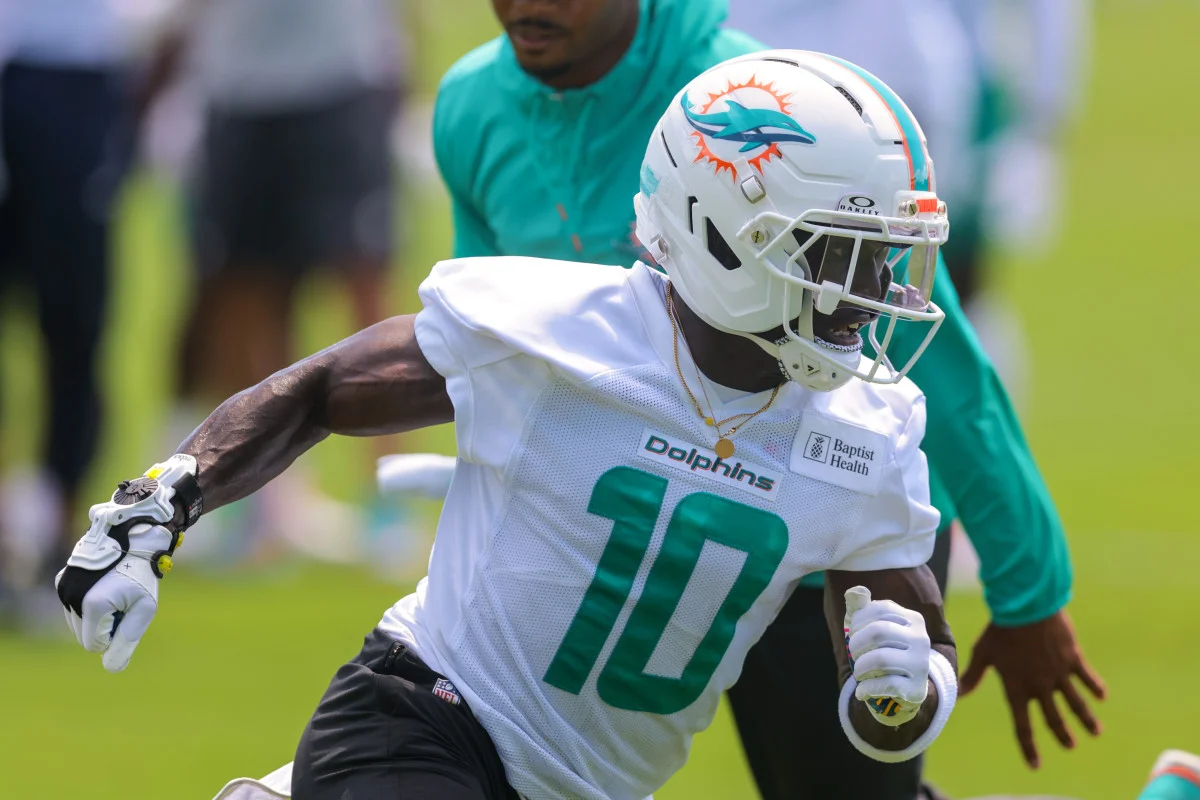

The Miami Dolphins have agreed to trade wide receiver Tyreek Hill to the Arizona Cardinals, receiving 2026 third- and fourth-round draft picks in return, along with an immediate $15 million salary cap space boost. This move, announced ahead of the 2024 season, offers Miami potential flexibility for the future amid ongoing speculation of a team rebuild.
Analysts continue to debate the Dolphins’ prospects, with mixed opinions surrounding the potential for playoff contention under head coach Mike McDaniel and quarterback Tua Tagovailoa. However, concerns over Miami’s salary cap situation and Hill’s recent performance have contributed to the trade.
Financial and Performance Context Behind Miami’s Decision
According to Bleacher Report’s Alex Kay, Hill did not reach 1,000 receiving yards for the first time in his career last season and missed the Pro Bowl for the first time, dropping off from two consecutive All-Pro team selections. Kay observes that letting go of Hill alleviates significant cap pressure for a Dolphins roster that may be steering toward restructuring.
The Dolphins face one of the toughest cap situations in the NFL, ranking fifth lowest in effective cap space, trailing only behind powerhouse teams like the Kansas City Chiefs and Buffalo Bills. Considering the strong link between salary cap management and competitive success, Miami’s decision appears strategically aimed at long-term balance and roster rebuilding options.
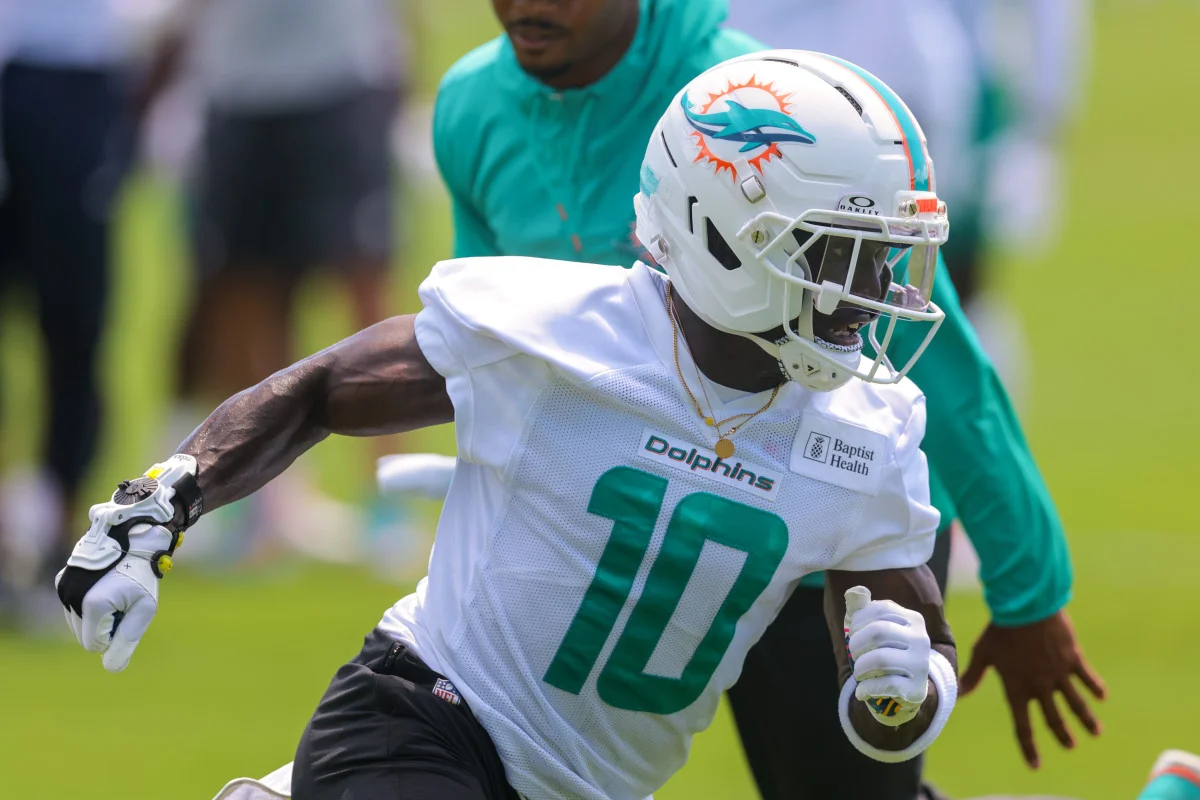
Arizona Cardinals Seek to Strengthen Receiving Corps with Hill
The Arizona Cardinals, under second-year head coach Jonathan Gannon, are actively looking to improve their offensive weapons. In Gannon’s first season, the team bounced back from a 4-13 record to finish 8-9 while quarterback Kyler Murray returned from an ACL injury. Despite improvement, Arizona’s passing offense remained among the lower ranked units in the league.
Alex Kay points out that the Cardinals’ receiving group requires a boost, noting the team made no major moves to address that during free agency or the NFL Draft. Hill’s arrival would respond directly to this need, offering a proven dynamic threat to complement Marvin Harrison Jr., the young pass-catcher already identified as a foundational piece for Arizona’s offense.
While the Cardinals have a foundational pass-catcher in Marvin Harrison Jr. to build around for the long haul, adding Hill would give quarterback Kyler Murray the weapons he needs to contend in wide-open NFC West races this coming year and over the next few seasons,
Kay concluded.
Impact of the Trade on Miami’s Future Draft Capital
The two draft picks acquired from Arizona in 2026 provide Miami with valuable assets as the team weighs its roster options. Even with a belief in the current core, which includes players such as Hill, Waddle, Smith, and rising star De’Von Achane, the extra selections offer flexibility if a full rebuild becomes necessary.
There is also speculation that Miami’s upcoming draft capital could increase further. The Jacksonville Jaguars’ recent signing of defensive player Emmanuel Ogbah may trigger a compensatory pick for the Dolphins, adding another potential selection in a middle round. This is a byproduct of NFL compensatory calculations related to free agent movements.
So the Jacksonville Jaguars did the Miami Dolphins quite a favor by agreeing to a deal with Emmanuel Ogbah that was officially finalized Monday, just before the deadline,
Adam Stites wrote for USA Today.
It wasn’t until Over The Cap revealed details of the contract later in the week that the ramifications of the Jaguars’ favor were unveiled. The one-year, $3.25 million deal is projected to be just enough to count in the compensatory calculations.
What the Trade Means for Miami and Arizona Moving Forward
This trade marks a significant shift for both franchises ahead of the 2024 NFL season. Arizona gains an explosive wide receiver in Hill, who previously transformed Miami’s passing offense, elevating it from 18th to 4th in league rankings within his first two years. His presence alongside Harrison Jr. could bolster the Cardinals’ bid to contend vigorously in the competitive NFC West.
For Miami, the trade opens up salary cap room and adds future draft capital, which may become critical if the team opts to adjust its roster trajectory. While optimism remains around the current core and coaching tandem, the added flexibility gives Miami options to recalibrate as needed.
Ultimately, the Tyreek Hill trade to Arizona Cardinals 2026 draft picks provides Miami with both immediate financial relief and strategic future resources, signaling a potentially pivotal moment in the franchise’s roster planning strategy.