
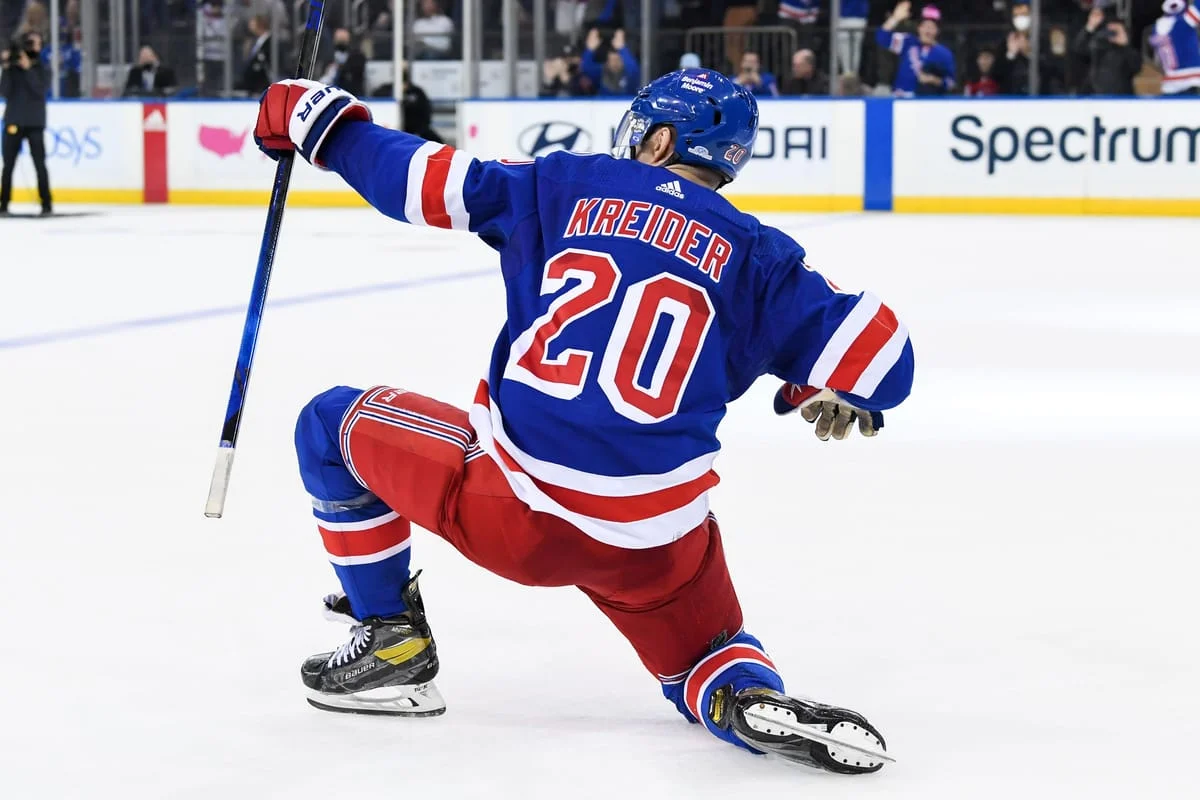

The New York Rangers have taken a significant step in reshaping their team by trading Chris Kreider to the Anaheim Ducks. This move, which took place during the NHL Combine, has generated fresh speculation about the future of Alexis Lafreniere and the Rangers’ evolving salary cap strategy. With the $15 million salary cap space freed up by Kreider’s departure, the franchise is actively evaluating how to optimize their roster moving forward.
Exploring the Potential of Alexis Lafreniere’s Trade
Alexis Lafreniere, a former first-overall draft pick in 2020, has experienced a mixed trajectory during his time with the Rangers. Despite showing moments of impressive skill, the consistency expected from the young forward has not fully materialized. Entering the first year of a seven-year contract valued at $52.15 million, Lafreniere carries a significant $7.45 million cap hit annually through the 2031-32 season. The Rangers’ contemplation of trading him suggests a willingness to recalibrate their investments to boost competitiveness and cap flexibility.
Impact of Lafreniere’s Possible Departure on Team Dynamics
Trading Lafreniere would extend beyond simply easing salary cap pressures; it would represent a key shift in the Rangers’ broader team-building philosophy. Once seen as a foundational player, Lafreniere’s potential move would highlight the franchise’s readiness to pivot from earlier long-term plans in favor of strategies that prioritize immediate and balanced team strength. This decision underscores the fine balance teams must maintain between nurturing potential and achieving consistent performance in professional hockey.
Future Considerations and Strategic Opportunities
Looking ahead, the Rangers must decide how best to use the new salary cap space. Whether the team opts to bring in experienced veterans or invest in fresh talent, these decisions will shape the club’s competitive standing in upcoming seasons. For Lafreniere, being part of a trade could open doors to a different environment where his skills may flourish more consistently. As the offseason unfolds, both fans and analysts are closely watching the Rangers’ choices, which will have lasting effects on the franchise and its players alike.
With notable players like Mika Zibanejad and key figures across the league also in transition, the Rangers’ evolving strategy reflects the heightened stakes and dynamic nature of the NHL’s offseason. The question remains whether Lafreniere will continue to be part of the Rangers’ core or embark on a new chapter elsewhere, making this period a defining moment for the organization.