
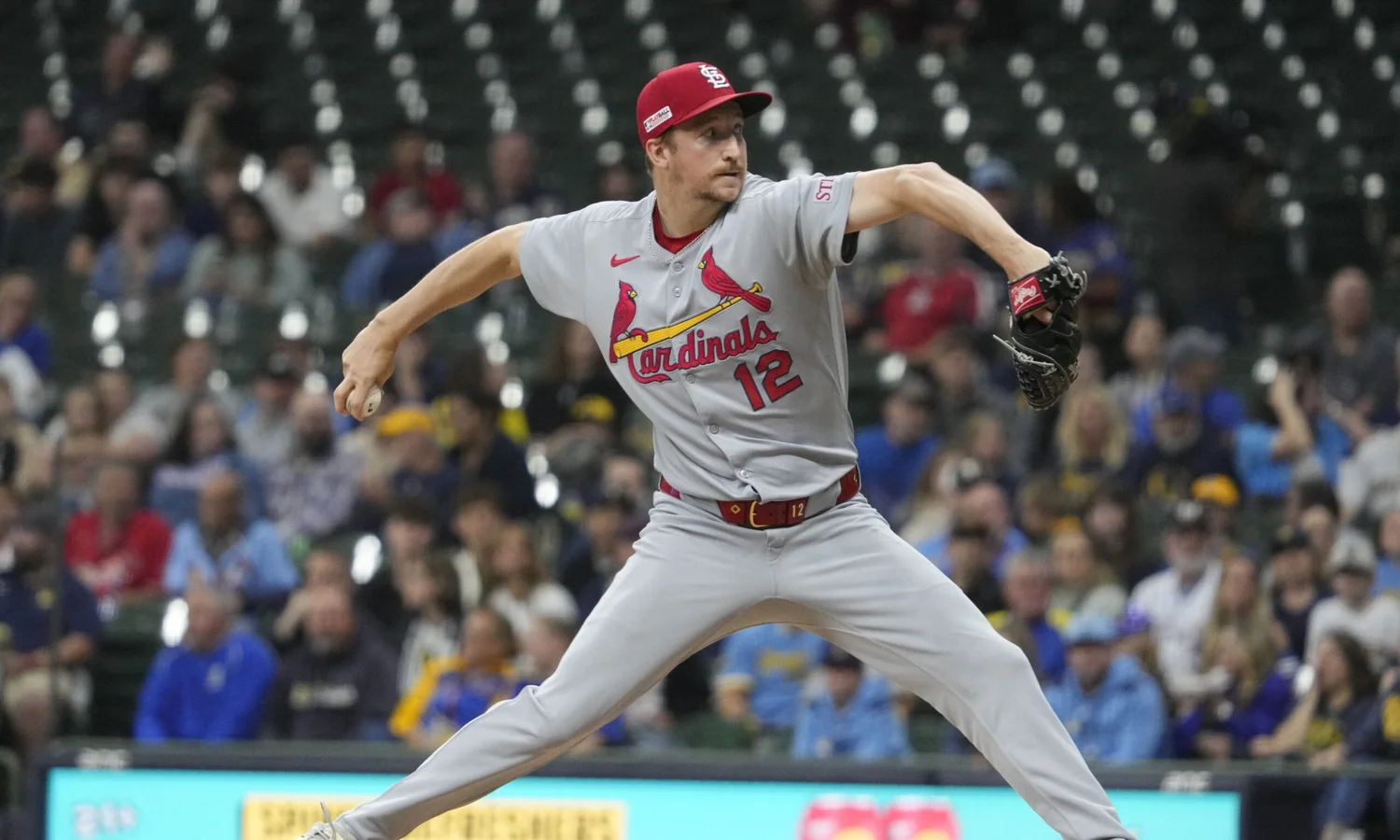

As the Major League Baseball trade deadline approaches, Erick Fedde has gained attention as a valuable starting pitcher option, particularly for the St. Louis Cardinals who may consider selling him. Fedde’s consistent track record over the past year and a half, combined with his expiring contract, makes him a tempting acquisition for teams in need of rotation depth. However, despite his appealing surface stats, there are underlying concerns that could affect his trade value and future performance, raising questions for potential buyers like the Boston Red Sox, Los Angeles Dodgers, and Cleveland Guardians.
Examining Fedde’s Performance Metrics in Detail
On the surface, Fedde’s statistics suggest he is a dependable starter. With a 3.54 ERA, he holds the second-best earned run average among Cardinals’ pitchers, while maintaining a respectable WHIP of 1.30. These numbers indicate a pitcher delivering steady results. Yet, more advanced analytics paint a contrasting picture. His expected ERA, a metric that factors in quality of contact and luck, stands at a troubling 5.28—substantially higher than his actual ERA. This gap indicates that Fedde’s current success may rely heavily on favorable balls in play outcomes, hinting that his overall performance could decline if these trends reverse.
Risk Versus Reward for Interested Teams
The dilemma facing the Red Sox, Guardians, and Dodgers lies in weighing Fedde’s apparent achievements against the statistical warning signs. While he offers dependable innings and could temporarily bolster a pitching staff, the risk of regression looms large. Without significant enhancements to his pitching repertoire, maintaining his current form long term seems uncertain. Consequently, front offices must prepare for the possibility that Fedde’s effectiveness might diminish after a trade, potentially limiting his value as more than a short-term option.

Cardinals Navigate a Challenging Market for Starters
For the St. Louis Cardinals, Fedde represents both an asset and a challenge. His market value is currently elevated thanks to traditional performance measures, yet advanced data tempers enthusiasm. Despite these concerns, the scarcity of reliable starting pitchers around the league bolsters the chance that the Cardinals will find interested trade partners. Nonetheless, franchises such as the Red Sox, Dodgers, and Guardians may decide that Fedde’s profile does not offer a substantial enough upgrade to justify taking on the risk of potential decline.
Implications for Player Evaluation and Team Strategies
The unfolding trade scenario involving Erick Fedde highlights the complexities of evaluating players in today’s game, where surface-level success must be balanced against deeper analytical insights. Teams are increasingly challenged to look beyond basic statistics and consider the sustainability of a player’s results. The next few weeks will be critical in determining whether Fedde’s value in the trade market holds firm or diminishes, significantly influencing the strategies of contenders in pursuit of pitching reinforcement. This situation exemplifies the delicate interplay between observable performance and underlying metrics that now define roster-building decisions in Major League Baseball.