Kyle Larson faces tough rain and altitude challenges in Mexico City, aiming to turn past misfortunes into opportunities.
Kyle Larson confronts significant obstacles as NASCAR launches its inaugural race at Autódromo Hermanos Rodríguez in Mexico City on Sunday. Facing unpredictable rain and the high altitude of the 7,350-foot track, Larson and other drivers must navigate unfamiliar conditions in the Viva Mexico 250, all while vying for victory on this international stage.
Weather and Unfamiliar Track Create Complex Race Conditions
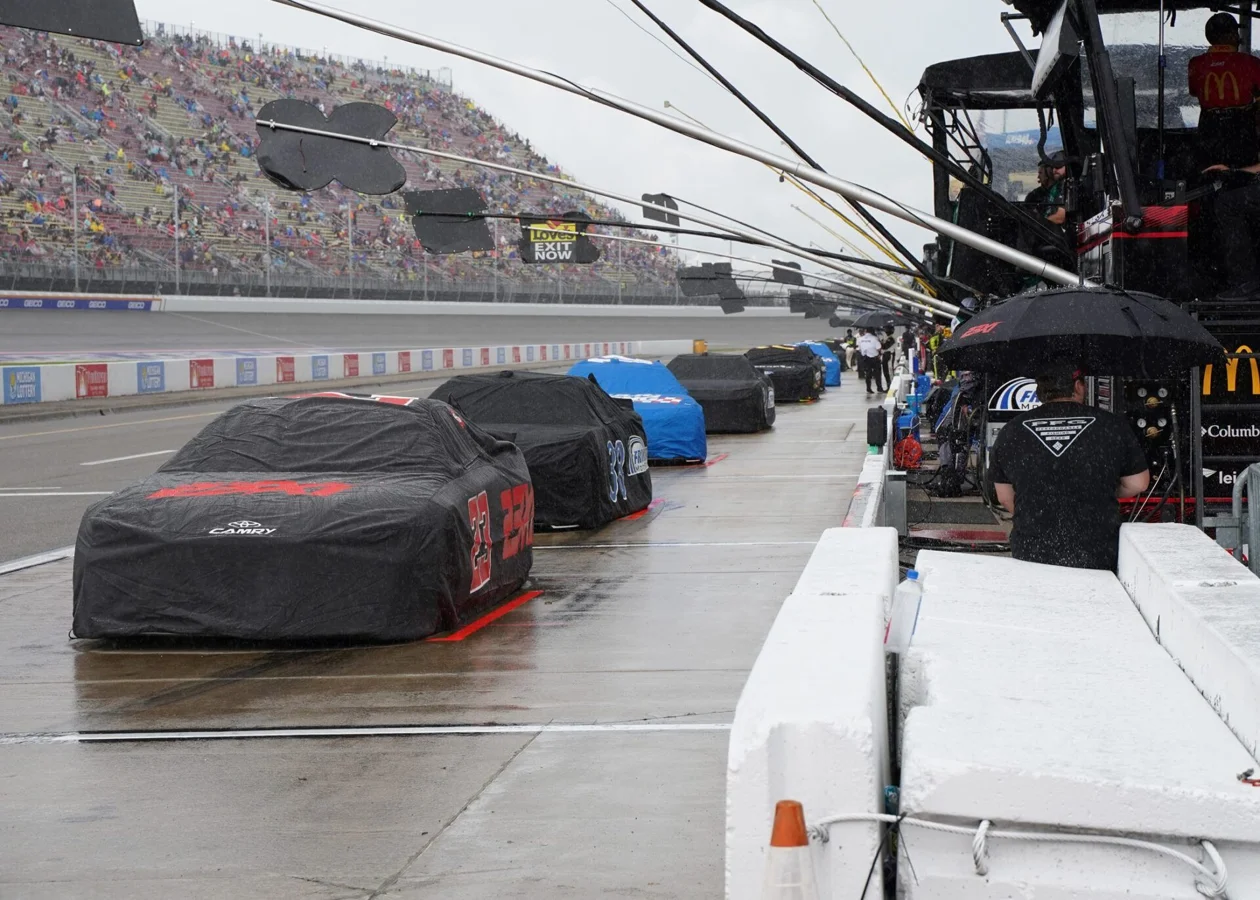
Last year, Larson’s hopes at the Chicago Street Race were dashed due to weather complications when rain forced a delay and ultimately caused a crash that ended his race prematurely. Intending to maintain his position while chasing Ty Gibbs, Larson locked up his brakes and hit the tire barrier, finishing with a DNF. This experience now colors his cautious approach to Sunday’s race in Mexico City, where wet conditions loom as a serious threat.
The challenge in Mexico City is twofold: rain and a track new to most drivers. NASCAR road courses are already complex, but the international venue adds a layer of uncertainty, with forecasts hinting at possible precipitation either during the race or beforehand. Such conditions often create a survival test, separating those willing to take risks from those who prefer caution.
Regarding the impact of rain on his race strategy, Larson candidly expressed in a media conference,
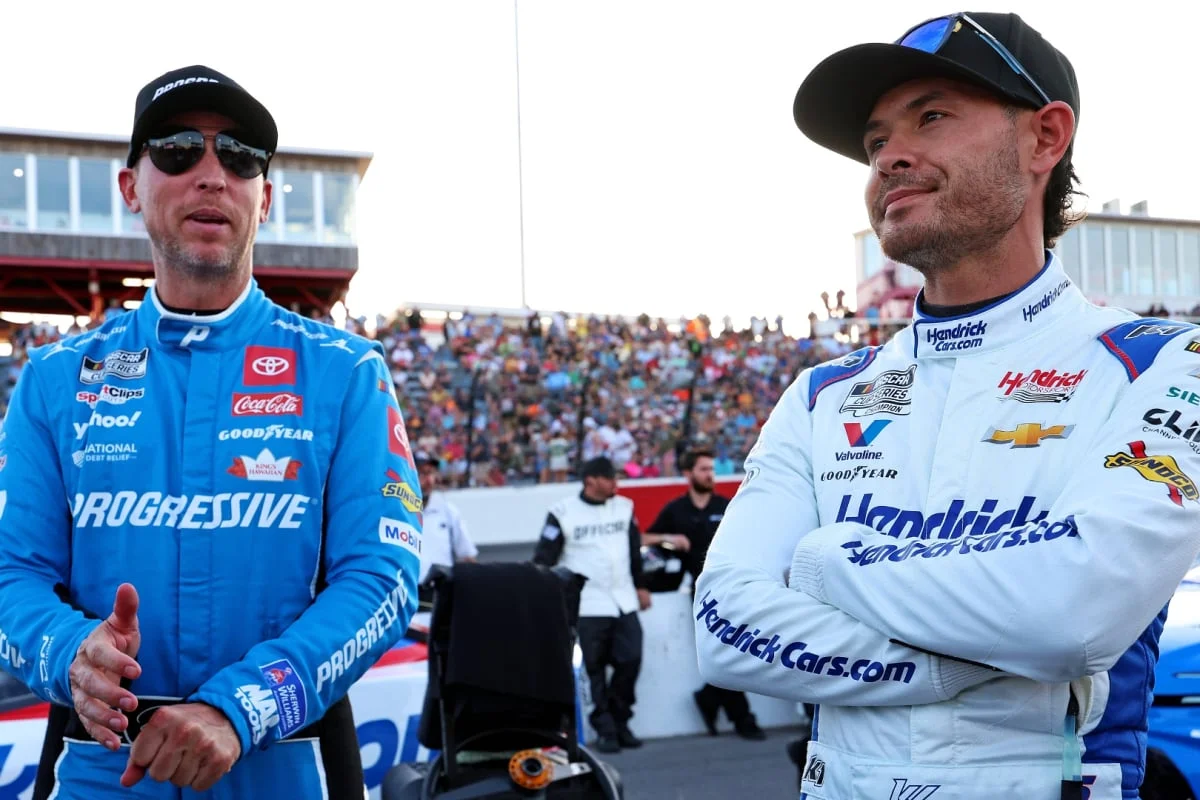
Image of: Kyle Larson
“Yeah, I don’t know. I mean, me being not that experienced on wet I would like for it to not rain or be wet but I think at the same point, you know, that that opens up an opportunity if you do hit on it or get comfortable, you know, you can make a big difference behind the wheel.”
—Kyle Larson, NASCAR Driver
He acknowledges both his lack of experience in wet conditions and the potential advantage that skilled adaptation could provide. Despite the risks, the Hendrick Motorsports driver has not shied away from pushing limits, recalling the previous year’s incident. Reflecting on his aggressive style, Larson said,
“You know I don’t know but I’m a pretty risky driver and and you know you’d see that at Chicago I crashed last year so uh I don’t know if I could take it or leave it. I would rather leave it but yeah, we’ll see we’ll just be ready for, you know whatever conditions come.”
—Kyle Larson, NASCAR Driver
The Unique Challenge of High Altitude Racing
The rain is only part of the difficulty awaiting drivers at Mexico City. The altitude of the Autódromo Hermanos Rodríguez circuit presents a rare and demanding challenge. Situated over 7,300 feet above sea level, the thin air affects every aspect of the car’s performance, including brake cooling and tire grip, making it tougher for vehicles to maintain usual handling and engine power.
Joey Logano, competing in the same event, highlighted the uncertainty ahead in a SiriusXM Radio interview. He noted,
“What lessons are we going to learn the hard way? I guess it’s like a question you have to ask yourself and try to be prepared for it the best you can. I think something is probably going to catch us off guard. You try to cover all your bases to where that doesn’t happen. But when something’s this new, you got to assume something is going to just sneak up.”
—Joey Logano, NASCAR Driver
The physical demands on the drivers increase in these conditions. Reduced traction, slower vehicle responses, and the strain on the drivers’ bodies turn this race into a challenge of endurance and adaptability as much as speed. Shane van Gisbergen has secured pole position, setting the bar high. Larson and Logano will need to combine skill with strategy to stay competitive on Sunday.
Larson Embraces New Traditions While Seeking More Recognition for Top Finishers
Alongside the physical and environmental challenges, NASCAR’s debut in Mexico City marks a cultural milestone for the sport. For the first time, the event will feature a podium ceremony recognizing the top three finishers, a practice common in international motorsports like Formula One but new to NASCAR’s modern Cup Series. Larson, coming from a dirt racing background where post-racepodium interviews are routine, has mixed feelings about this innovation.
He suggested the idea of reserved use for such ceremonies, noting,
“Maybe just your crown jewel events would be a good start. But I’m not sure. I come from dirt racing, where the top three have to stop on the frontstretch every night and do your interview, which we do interviews on pit road (in NASCAR) and stuff, so that’s not way different.”
—Kyle Larson, NASCAR Driver
Larson also sees value in traditions from worldwide racing series, like playing national anthems on the podium, to enhance the race-day atmosphere. However, he cautions against copying other series too rigidly, advocating for NASCAR to develop its distinct style.
Ross Chastain, another driver present, agrees with Larson’s view that more attention should be drawn to finishers beyond just the winner. He remarked,
“Second and third should be celebrated a little bit more than it is. Not only for yourself and your team, but your partners and whatnot. I think there’s ways that NASCAR can look at making it have their own kind of touch and feel,”
—Ross Chastain, NASCAR Driver
Although the podium celebrations in Mexico offer a fresh experience, traditional victory lane festivities are expected to remain the norm once NASCAR returns to its American venues.
What Lies Ahead for Larson and NASCAR in Mexico City
Kyle Larson’s battle against the unpredictable rain and the demanding altitude conditions at Mexico City encapsulates the broader challenges of NASCAR’s international expansion. This race serves not only as a test of driving skill and adaptability but also as a moment of evolution for the sport’s customs and fan engagement.
The outcome of the Viva Mexico 250 will show whether Larson can overcome the hurdles that proved costly in previous seasons and adapt quickly to new racing circumstances. As NASCAR pushes boundaries by entering new territories, how teams and drivers respond to these obstacles could set the tone for future events beyond traditional venues.
With Shane van Gisbergen holding the pole and top drivers like Joey Logano warning about unseen complications, the race promises to be a thrilling contest where experience, risk-taking, and resilience will determine success under unfamiliar skies.