

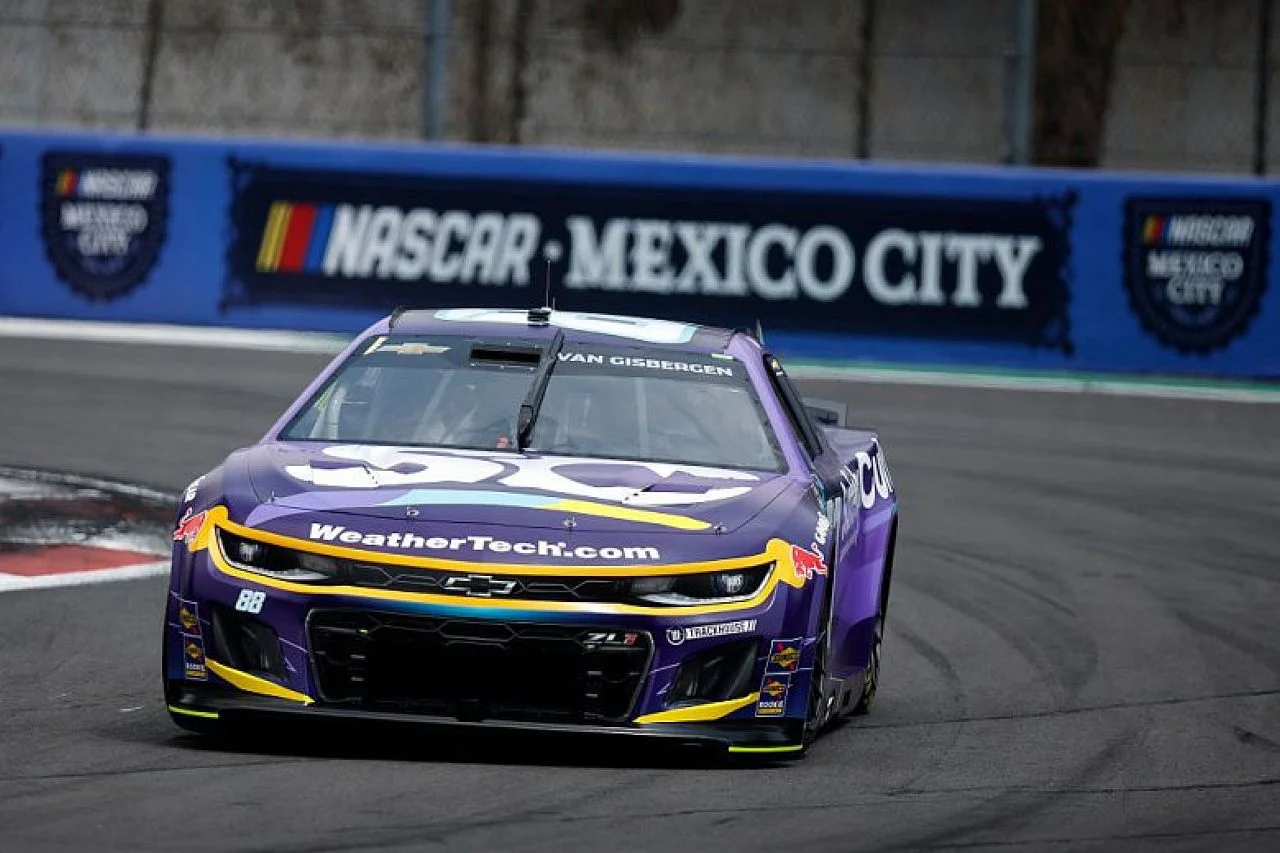
The NASCAR Cup Series made its debut at the Autódromo Hermanos Rodríguez in Mexico City this weekend, where pole sitter Shane van Gisbergen shared his positive views on how NASCAR managed track limits on the road course. Van Gisbergen highlighted the fair approach to enforcing track limits, balancing driver freedom with necessary control during the event.
Implementation of Tire Barriers and Enhanced Surveillance on the Track
On the 2.417-mile circuit, officials took an assertive stance following Friday’s practice session on July 13. They installed tire barriers in several locations and positioned surveillance cameras where placing physical barriers was impractical. Notably, an additional tire pack was placed at Turn 6 to prevent drivers from cutting excessively off the designated racing line, aiming to maintain fairness while allowing some flexibility.
Shane van Gisbergen, who earned the pole position with a lap averaging 93.904 mph, expressed approval of the system. During an interview with Fox Sports’ Bob Pockrass, he commended the tire packs and track limits enforcement as striking a good balance between allowing drivers room for error and preventing abuse of the track boundaries.
“They give us enough leeway to cut the track, but not abuse it. I think if you go four wheels over it’s kind of slower anyway, you bounce over the kerbs. So I think they’ve done a really good job with kerb or tire bundle placement here to allow you some wiggle room for mistakes, but also not to take the piss either,” Shane van Gisbergen said.
Shane van Gisbergen’s Transition and Performance in NASCAR
Originally a three-time Supercars champion, van Gisbergen started competing in the NASCAR Cup Series this season after spending last year in the Xfinity Series, where he earned three victories and finished 12th in the standings. Driving the No. 88 Chevrolet for Trackhouse Racing, he already has a Cup Series win from his debut at the Chicago road course earlier in 2023.
The Viva Mexico 250 race was scheduled to begin on Sunday, June 15, at 3 pm ET, drawing attention to the evolving presence of international drivers in NASCAR’s expanding road course events.
Driver Views on NASCAR’s Track Limits Enforcement from Practice Sessions
Kaulig Racing’s A.J. Allmendinger, who qualified eighth, offered similar praise for NASCAR’s method of controlling track limits. He explained that having visible tire bundles on the course was preferable because it reduced the need for subjective judgment calls by officials.
“Honestly, I wanted it there before we started more than anything, just to get away from NASCAR having to make a judgment call,” Allmendinger said after Friday’s practice.
“They’ve left it far enough off it that it still gives you a big racing line and all that, so yeah, I thought it was good that they did that,” he added.
Other drivers such as Bubba Wallace and Chase Elliott also expressed support for physical boundary markers. Multiple drivers favored these tangible deterrents over relying on painted lines, which require post-violation penalties and can lead to ambiguity.
NASCAR’s Adaptation from Previous Track Limit Challenges
NASCAR appears to have learned valuable lessons regarding track limits enforcement from the earlier Contingency of the Americas (COTA) race this spring. That event featured large concrete blocks installed to prevent cutting the esses, but those barriers were removed due to driver complaints. This experience influenced the use of more flexible and less intrusive tire bundles and cameras at Mexico City.
The balanced approach to track limits at Mexico City showed NASCAR’s effort to maintain fair racing conditions without excessively restricting driver input or creating conflict. This strategy may set a precedent for how NASCAR handles similar challenges on road courses going forward, supporting competitive yet controlled racing environments.