
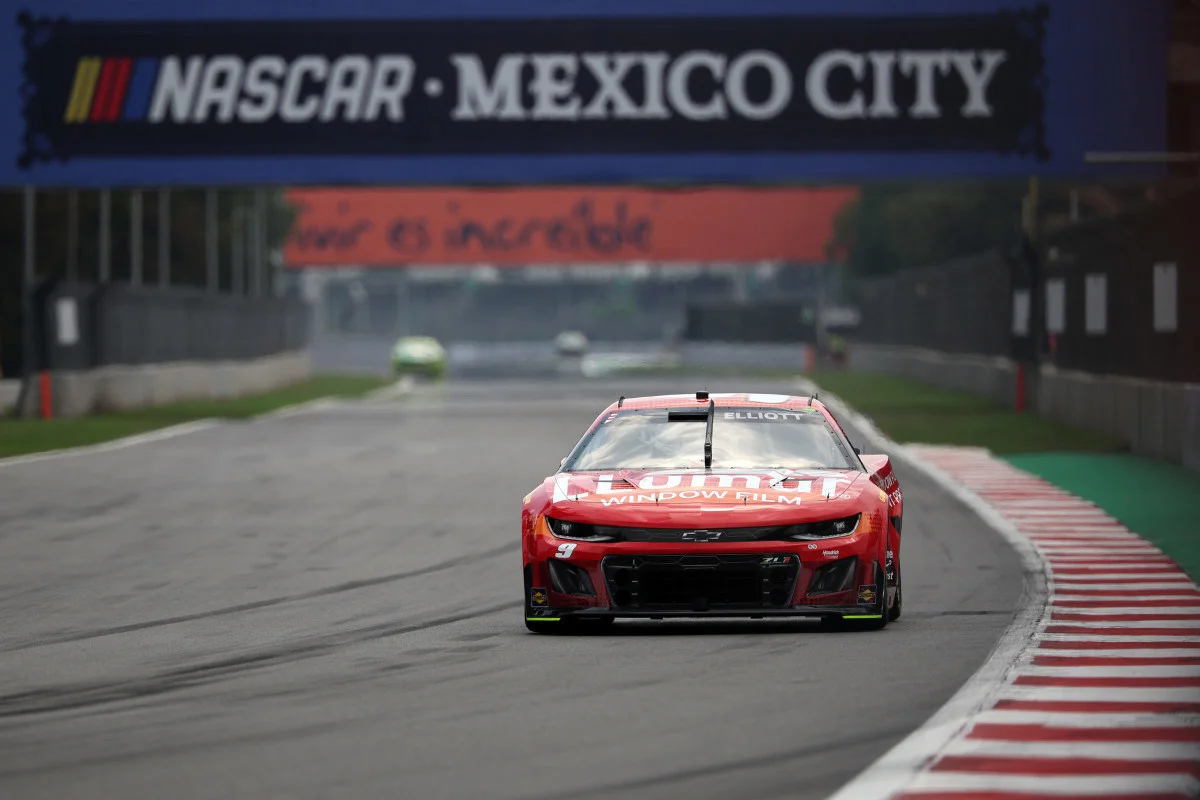

Chase Elliott, a leading figure in road course racing from Hendrick Motorsports, encountered significant difficulties during the Viva Mexico 250 at Autodromo Hermanos Rodriguez, as heavy rain complicated conditions and restarts became chaotic. Despite his reputation and competitive drive, Elliott was unable to secure a win in the Next-Gen era road course events, ultimately finishing behind Shane van Gisbergen, who claimed a commanding 16-plus second victory.
The unpredictable weather played a decisive role in the race dynamics. Elliott struggled particularly during restarts, where the congested racing environment and aggressive maneuvers proved difficult to manage. Although he was able to gain momentum once his No. 9 car escaped the restart pack, his hesitation to engage aggressively during these moments contributed to his challenges on track.
Reasons Behind Elliott’s Hesitation During Restarts
Elliott’s approach to restarts has been a noted factor affecting his performance throughout the Next-Gen era. He tends to avoid confrontational racing tactics, which can put him at a disadvantage when many drivers adopt a more assertive driving style during restarts. This strategic reluctance was evident as he navigated the tricky restarts amid the rain-soaked track, often opting to preserve position rather than risk incidents.
Reflecting on the experience, Elliott acknowledged the difficulty of these situations:
“Yeah. I mean, it was, it was a lot going on, for sure, certainly, you know, from the restarts. But once it singled out, it really became a normal road course, I thought, but the restarts were crazy. Just, you know, you get in those situations, and it’s just so tough, because it’s like, you don’t want to be the one to run in there and kind of gouge people out of the way.” —Chase Elliott, Hendrick Motorsports driver
He further detailed his discomfort with being involved in the physical wheel-to-wheel battles typical of restarts:
“And as soon as you don’t, you get gouged from, you know, from behind. So, it’s just, I don’t, I don’t love that, but, you know, that’s kind of what we got now. These bunkers are so strong, kind of just chaos there for a few laps, so we get single filed out. And then, then it gets pretty fun.” —Chase Elliott, Hendrick Motorsports driver
This mindset, while showing Elliott’s desire to avoid damage and incidents, is at odds with NASCAR’s fanbase, many of whom embrace the intense, chaotic restarts as a highlight of the sport. Elliott’s careful approach underscores a tension between driver safety and fan expectations for aggressive racing during these moments.
Shane van Gisbergen’s Dominant Win Highlights the Gap
Shane van Gisbergen’s performance at the Mexico City race was notable for its dominance, as the driver led by over 16 seconds by the finish. His ability to capitalize on the challenging restart conditions and the wet track set him apart from competitors including Elliott. This result further emphasizes the difficulty Elliott has had in converting strong road course form into race wins in the Next-Gen era.
Chase Elliott Praises Carl Edwards’ Role in NASCAR’s New Broadcast Team
Following the race, Elliott also shared positive remarks about Carl Edwards’ recent transition into broadcasting for NASCAR’s Amazon Prime streaming debut. Edwards, a Hall of Famer alongside Dale Earnhardt Jr. and part-time competitor Corey LaJoie, has joined the broadcast team, offering insight and storytelling for viewers in this new digital platform.
Elliott complimented Edwards’ professionalism and engaging presence on camera, highlighting how Edwards’ authentic personality adds quality to the broadcast:
“He is a great storyteller. He’s always been very professional and he does good in front of cameras. But he’s also a good guy away from that, too. I think he’s good choice for Amazon. I have not gone back and watched the races thus far.” —Chase Elliott, Hendrick Motorsports driver
The positive reception of the broadcast has been widely shared among Elliott’s peers and fans, who appreciate the fresh approach to NASCAR coverage. Reflecting this feedback, Elliott emphasized the valuable contribution Edwards has made:
“But I will say this, everyone that has come up to me – you know, friends or fans or whatever that have watched the races over the last few weeks – have had nothing but incredible things to say. And it seems like it’s been really well done, at least that’s kind of been the perception that’s out there that I’ve heard. So, I think Carl has a big role in that. I think he does a really good job.” —Chase Elliott, Hendrick Motorsports driver
The respect Elliott shows for Edwards serves to highlight the evolving nature of NASCAR’s media engagement, with veteran drivers recognizing broadcast talents who bring fresh enthusiasm and insight to the sport’s coverage.
Implications and Outlook for Elliott and NASCAR’s Future Broadcasts
Chase Elliott’s difficulties in managing the aggressive restarts in Mexico City underscore a broader challenge for road course specialists adapting to the Next-Gen car dynamics, especially under adverse weather conditions. Elliott’s reluctance to race aggressively during restarts might require adjustment if he hopes to convert his strong performances into more consistent victories.
At the same time, the enthusiastic responses to the Amazon Prime broadcast, bolstered by figures like Carl Edwards, suggest a promising future for NASCAR’s digital viewing experience. These changes reflect the sport’s efforts to engage fans through new platforms and fresh voices, maintaining momentum amid evolving viewer preferences.
As the season progresses, it will be crucial to monitor how Elliott adapts to the restart challenges that continue to define many of these races, as well as how NASCAR’s broadcast innovations impact fan engagement and viewership dynamics.