
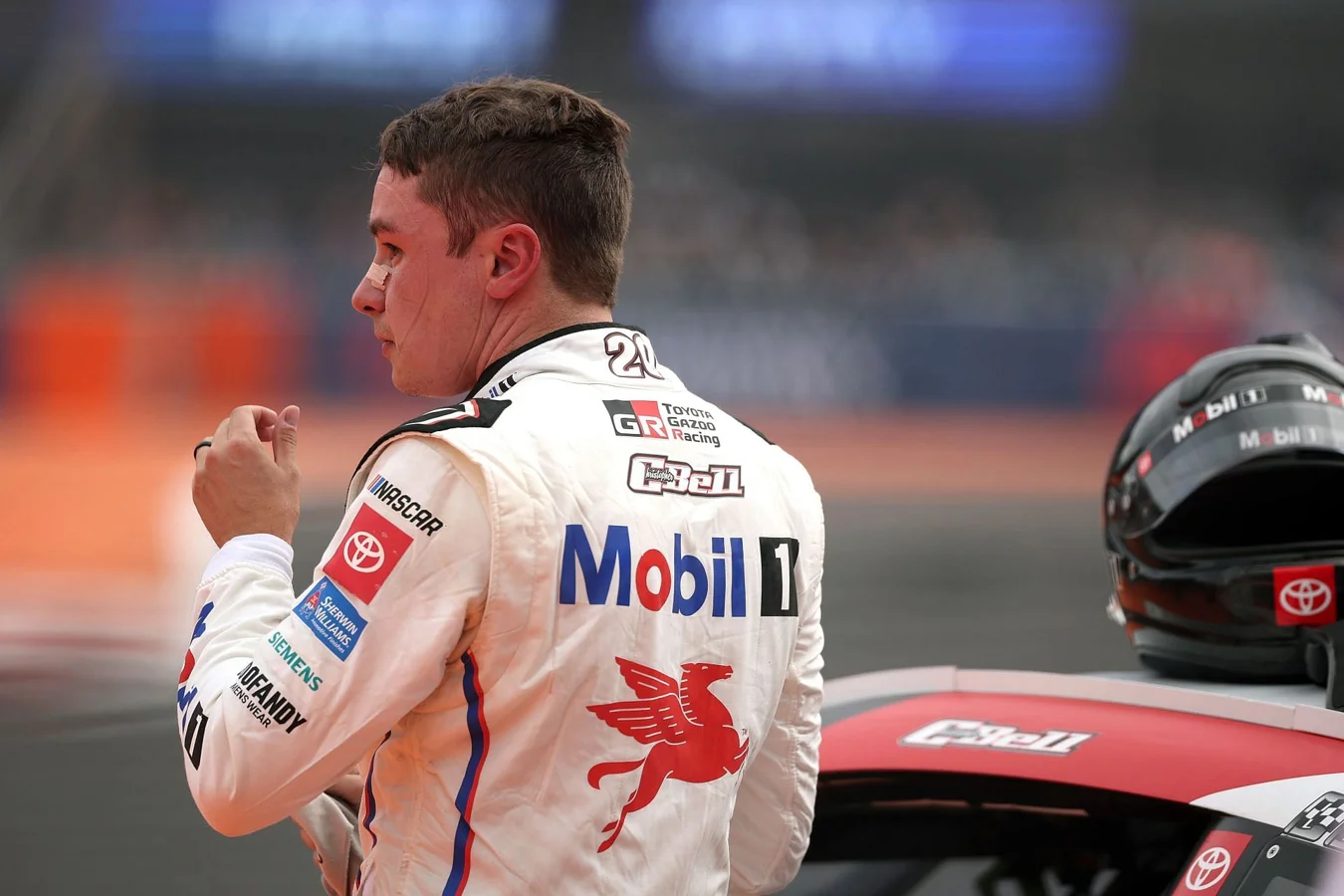

During the NASCAR Cup Series race weekend at the Autódromo Hermanos Rodríguez in Mexico City, Christopher Bell highlighted notable similarities between this track and the Indianapolis Motor Speedway Road Course. Bell’s observation emerged as he finished a remarkable second place in the Viva Mexico 250 after starting deep in the field.
When asked to capture his impression of the Mexico City circuit in a single word, Bell suggested it closely resembled the Indianapolis Road Course, especially in terms of grip and layout balance. Fellow competitor Chase Elliott agreed, noting that multiple sections of the Autódromo felt “very, very similar” to the Indy Road Course.
Bell emphasized how both the feel and flow of the Mexico track reflect what drivers experience at Indianapolis. He explained,
“Well, I don’t know about one word, but for me, it really reminds myself of Indianapolis, the Indie Road Course. It has a lot of similarities. I feel like the grip level um and and honestly the track layout is very similar.” [0:51 onwards]
A highlight specific to Autódromo Hermanos Rodríguez is the Foro Sol stadium section, where the course winds through a baseball stadium, requiring precise driving through tight, technical turns. This unique feature adds a distinct challenge compared to typical road courses.
Recognizing these similarities can benefit teams by allowing them to apply knowledge and experience gained at Indianapolis in their Mexico race strategies. Bell’s race performance reflected this advantage, as he advanced from 31st on the grid to nearly claim the win behind Shane van Gisbergen.
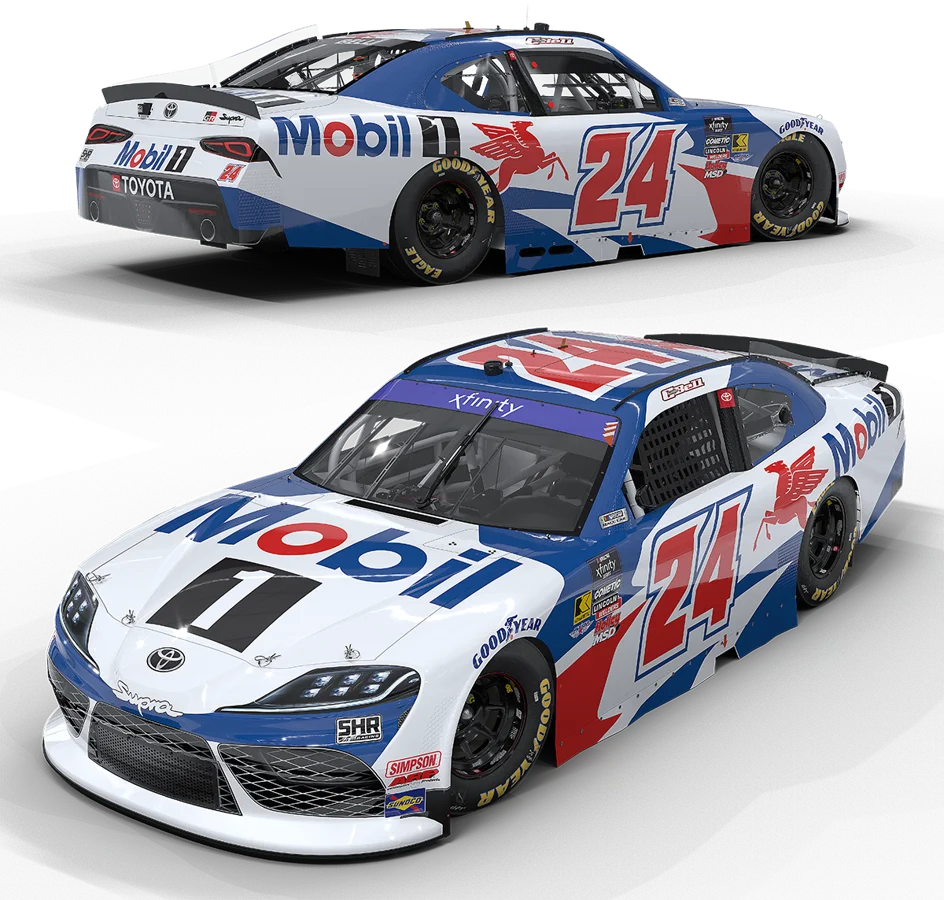
Overcoming Setbacks: Bell’s Recovery After Xfinity Series Engine Failure
Christopher Bell’s strong showing in the NASCAR Cup Series came just after a difficult outing in the Xfinity Series. During the Chilango 150, which took place the day before, Bell drove for Sam Hunt Racing but was forced to retire early because of engine trouble despite showing competitive speed.
Starting third, Bell initially performed well, maintaining a fast pace. However, he lost rear grip exiting the stadium section near the end of Stage 1, causing him to collide with the wall and lose positions. Displaying resilience, Bell fought back and even passed Joe Gibbs Racing teammate Ty Gibbs during the race’s middle stage.
Unfortunately, his No. 24 Toyota began emitting heavy smoke by the third stage, compelling him to pit and retire from the race. Explaining the mechanical failure, Bell stated,
“No, and let it be known, that I didn’t miss a shift with the h-pattern (laughter). I don’t know—it just let go getting into the stadium section, so it is a bummer.” —Christopher Bell
He added that the car had “some things it needed to be a little bit better” —Christopher Bell
Despite the disappointment in Xfinity, Bell demonstrated impressive composure and skill to bounce back in the Cup Series race. After starting last among 39 classified drivers, he maneuvered through the field to finish second, behind only dominant winner Shane van Gisbergen. Meanwhile, Daniel Suárez celebrated a historic victory in the Xfinity race on his home soil.
Implications of Bell’s Track Comparison and Performance
Christopher Bell’s comments on the likeness between Autódromo Hermanos Rodríguez and the Indianapolis Road Course are notable for teams and drivers preparing for future races. Understanding the track’s grip and layout can inform car setups and driving strategies, potentially improving overall performance.
Bell’s ability to recover from an Xfinity setback to secure a runner-up spot in the Cup Series underscores his adaptability and determination. His strong performance in Mexico City may influence team tactics for upcoming road course events, emphasizing learning from similar circuits like Indianapolis.
As NASCAR continues to expand its schedule to diverse venues, insights from drivers like Bell serve to enhance competitiveness and fan engagement. Observing how drivers leverage these track comparisons will be key in upcoming races and championships.