
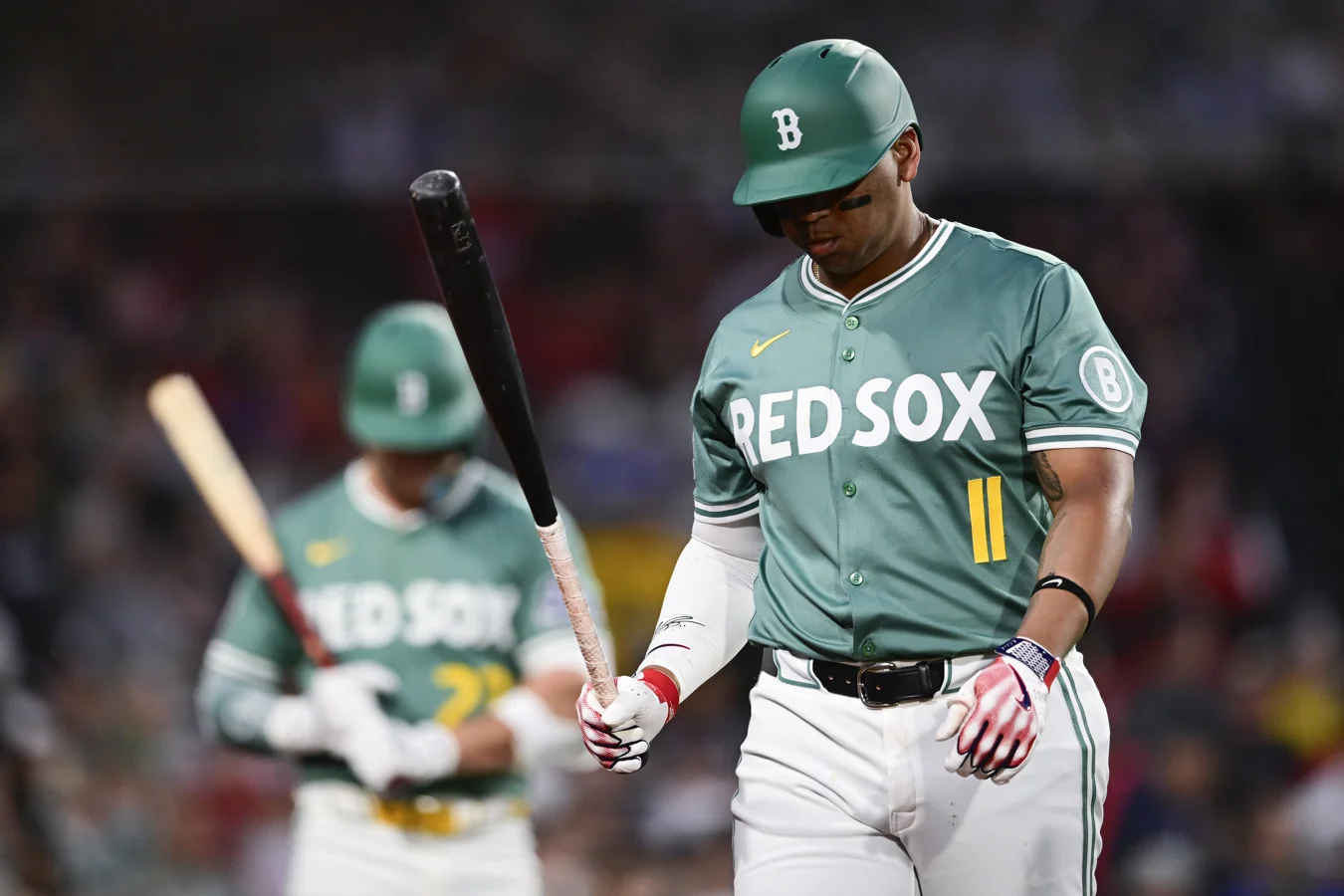

On the night of December 8, 2024, the Boston Red Sox surprised fans by trading designated hitter Rafael Devers to the San Francisco Giants. The unexpected move sparked widespread discussion until team leaders CEO and president Sam Kennedy and chief baseball officer Craig Breslow spoke to reporters in a nearly 40-minute Zoom call the following evening. Their comments offered new insight into the rationale behind the trade, focusing on more than the financial aspects, emphasizing issues of alignment and vision between the organization and Devers.
Leadership Cites Lack of Agreement Between Devers and Team’s Future Plan
Throughout the press conference, Kennedy and Breslow repeatedly used terms such as “alignment” and “vision” to describe the disconnect between Devers and the team. They explained that despite many months of effort, starting from the offseason and involving manager Alex Cora, the coaching staff, and senior ownership including John Henry, the club and Devers could not reach a consensus on his role or future with the Red Sox.
“In the end, I think it’s pretty clear that we couldn’t find alignment with Raffy – is the truth,”
Kennedy remarked.
“We all worked at it over the last several months, going back to the offseason, starting with [manager] Alex Cora and Craig and the staff, and then up to me and all the way up to [owner] John Henry. We worked at it. We had a different vision for him going forward than he had and we couldn’t get there. We couldn’t find alignment and we reached that inflection point and made the decision to make a big move.”
“In terms of what was missing, it just was that alignment in terms of what we felt we needed from him that would be in the absolute best interest of the ball club. That’s a non-starter for us. We have to have that. We couldn’t get there,”
Kennedy added.
“We didn’t get to the alignment that we needed in the best interest of the Boston Red Sox. So we made the decision that we made.”
Despite the repeated emphasis on a differing vision, Breslow refrained from detailing the exact nature of that vision. When pressed, he simply said,
“I think it’s best to just leave it at we just didn’t have the same shared vision for what was in the best interest of the team on the field,”
he stated.
Trade Motivated by More Than Financial Considerations
Many interpreted the trade as a cost-cutting move since the San Francisco Giants assumed the entirety of Devers’ 10-year, $313.5 million contract. However, Kennedy and Breslow denied that the decision was primarily financially driven. Instead, they emphasized the need to improve roster flexibility and to assemble a better-balanced team.
“There was no mandate. The mandate is to assemble the best team that we possibly could,”
Breslow explained.
“And in order to do that, we needed to create a more functional roster and give certain guys more playing time, be able to rotate through the DH spot, potentially match up there. And also, this is a roster that certainly has some needs and we can talk about starting pitching and bullpen help. And we think that we addressed some of those in the return that we had in this deal.”
On-Field Strategy and Roster Flexibility Influenced the Decision
Breslow specifically cited the need for more adaptability at the designated hitter position. This need conflicted with Devers’ unwillingness to play beyond the DH role, an issue that has lingered since spring training when the club initially moved Devers from third base. Devers’ vocal dissatisfaction with this decision and the team’s injury challenges, such as losing first baseman Triston Casas for the season, complicated matters further.
“Some more flexibility at the DH spot,”
Breslow noted, highlighting the desire to rotate through players at this position to open up at-bats.
Team Chemistry and Clubhouse Culture Played a Role
The mood and character within the clubhouse were also factors that the team considered important. When ESPN reporter Jeff Passan asked about the identity and culture the Red Sox wanted versus what was possible with Devers in the lineup, Breslow reflected on his championship experiences.
“I can talk about my experiences, you know, on championship-caliber teams,”
he said.
“And unfortunately I keep going back to this, but what it keeps coming to is this idea that the hole is greater than the sum of the parts. That each individual is contributing and finding a way to help a team win, whether that is in the batter’s box, on the pitcher’s mound, on the bases on defense, in the clubhouse, on the bench. It’s the willingness to step up and sacrifice at times of need and essentially kind of do whatever is necessary to help the team win. And I think that’s the identity, this relentless pursuit of winning, that we’re looking for. It’s the identity that the World Series Championship teams had had in the past.”
Although Breslow stopped short of specifying how Devers did not meet these standards, he reinforced the decision.
“I don’t think it makes sense at this point to kind of be overly pointed or critical,”
Breslow said.
“I think we failed to reach that alignment. It was a really strong fit here for a really long time, and then became evident that it had started to diverge. And so, I think best to identify it, own it and act decisively to fix it.”
New Players Added to Address Team Needs
As part of the trade, the Red Sox acquired pitcher Jordan Hicks and prospect Kyle Harrison. Breslow expressed optimism about these additions and their ability to strengthen the pitching staff.
“We’re absolutely excited about bringing in Jordan Hicks, a dominant late inning reliever into our mix, and Kyle Harrison, someone we think can pitch in the front half of a rotation,”
Breslow said.
Harrison, once considered among the top pitching prospects, is 23 years old and has shown mixed results, posting a 4.48 ERA in 39 Major League appearances over the past three seasons. Hicks has also experienced role changes, starting some games with the Giants while typically a reliever, and currently is on the injured list with a toe injury.
Trade Seen as Opportunity to Rebuild and Add Talent
The Red Sox framed the trade as part of a strategic plan that goes beyond salary concerns, focusing on roster construction and flexibility. There is anticipation that this could pave the way for further moves ahead of the MLB trade deadline, as the club seeks to bolster the team’s competitiveness.
According to reports from MassLive, the Red Sox remain intent on purchasing talent at the upcoming deadline, despite the upheaval caused by the Devers trade. Insider sources indicate the team aims to add a controllable and high-value player this summer, reflecting a buy-mode approach. As of Monday, the team held a 37-36 record after a recent sweep of the New York Yankees.
“The Devers deal opens the door for a major trade deadline addition of a controllable, high-dollar player and a high-ranking source indicated Sunday that the Red Sox, at 37-36 after a big weekend sweep of the Yankees, still wholeheartedly intend to buy at the trade deadline and shop aggressively,”
a report stated.
“That, obviously, could change with a bad few weeks in the wake of the Devers move. For now, though, the club’s eyes are on additions.”
Breslow underscored this outlook, stressing the potential benefit of new roster flexibility.
“I think when you consider the flexibility…the opportunity to maybe repackage some of the resources and fill some voids in the roster as early as – approaching this year’s deadline,”
Breslow said.
“I do think that there is a real chance that at the end of the season, we’re looking back and we’ve won more games than we otherwise would have,”
he added.
The Road Ahead for the Red Sox
If the Red Sox can follow through on these goals—making impactful deadline acquisitions and finishing the season stronger—it could validate the controversial Devers trade as a transformative move rather than another routine player departure. Fans remain skeptical due to recent roster upheavals and modest team results that have seen Boston record the 16th-best win percentage in MLB since 2019.
Whether this trade marks a turning point will depend on the team’s ability to use the new roster configuration effectively, shore up pitching weaknesses, and foster the culture that Breslow described as essential for championship-caliber success. Until then, the organization faces significant pressure to demonstrate that this bold decision was driven by a clear strategic vision aligned with long-term success.