
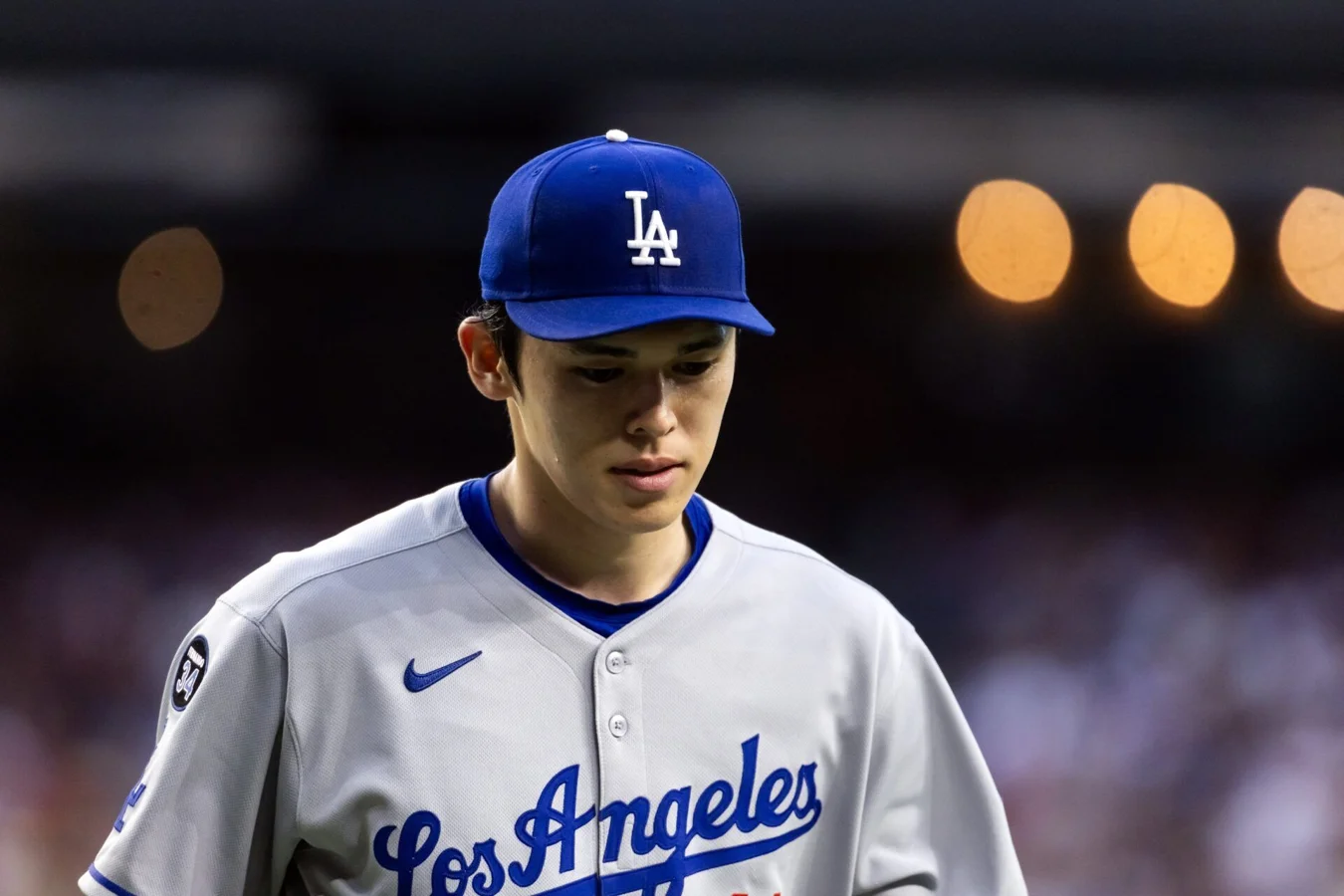

The Los Angeles Dodgers signed Roki Sasaki during the offseason with the understanding that he was a developing talent, but his rookie campaign has encountered a significant hurdle. After initial progress in his recovery, Sasaki’s throwing program was halted following a cortisone injection, casting doubt on his availability for the remainder of the 2024 season. This development has prompted concerns about the timeline for his return.
As early June began, Sasaki was able to participate in light throwing exercises without discomfort, but after receiving a cortisone shot, his throwing regimen stopped completely. Manager Dave Roberts, according to reporter Bill Plunkett of the Orange County Register, is preparing the team to potentially move forward without Sasaki for the rest of the season.
“Being thrust here, into this environment certainly was a big undertaking for him. And then now you layer in the health part of it, and then you layer he’s a starting pitcher, the buildup, what that entails – I think that that’s the prudent way to go about it. Whatever we get from him … I think, yeah, the mindset should be we got to plan on life without him, as far as this year. I think that’s a fair way to think about it.” —Dave Roberts, Dodgers Manager
Statistical struggles and challenges in Sasaki’s first MLB season
Sasaki’s debut season has been difficult, as reflected in his performance statistics. Over his first eight starts with the Dodgers, he recorded a 1-1 win-loss record with a 4.72 earned run average (ERA). Additionally, he struck out 24 batters but issued 22 walks across 34 1/3 innings, highlighting control issues as he adjusted to major league hitters. His experience underscored the challenges of transitioning from a promising prospect to a consistent contributor on the mound.
Andy Pages’ key contribution leads Dodgers to series victory
While Sasaki’s season has been uncertain, rookie outfielder Andy Pages played a pivotal role in the Dodgers’ recent success against the San Francisco Giants. Pages crushed a critical three-run homer that propelled the Dodgers to a 5-4 victory on Father’s Day, clinching the series win. His emotional dedication of the home run to his father, whom he has seen only once since defecting from Cuba, added a heartfelt element to the moment.
“It was a great series win. Good team over there. Great to come through in that moment,” Pages said through interpreter Juan Dorado. “But it was a home run I hit for my dad, who I haven’t seen in a long time… Hopefully I can talk to him and tell him I dedicated that home run to him.” —Andy Pages, Dodgers Outfielder
Cultural moments amid Dodgers-Giants series and community response
The Dodgers’ series against the Giants was marked not only by on-field action but also by significant off-field tensions reflecting broader social issues. Nationwide protests against ongoing mass deportations drew attention during the games. One notable incident involved Nezza, a singer of Dominican and Colombian heritage, who performed the U.S. national anthem in Spanish prior to Saturday’s game. Despite initial objections from a Dodgers employee who prohibited her from singing in Spanish, Nezza persisted, reflecting the complex cultural dynamics present in Los Angeles.
“I didn’t think I would be met with any sort of no, especially because we’re in LA and with everything happening,” she said. “But today out of all days, I just could not believe when she [the Dodgers employee] walked in and told me ‘no.’ But I just felt like I needed to do it. Para mi gente.” —Nezza, Singer
Implications for the Dodgers and expectations moving forward
Roki Sasaki’s injury setback leaves a major question mark over his contribution to the Dodgers’ season, forcing the team to adjust their plans as they potentially face the year without key pitching depth. Sasaki’s health and ability to recover fully will be closely monitored in the coming weeks. Meanwhile, emerging players like Andy Pages provide hope for continued competitive performance in the championship race.
The cultural moments surrounding the Dodgers-Giants series reveal the intersection of sports and social issues, particularly in a diverse city like Los Angeles. How the team and community navigate these challenges may influence future engagements with fans and local activism.