
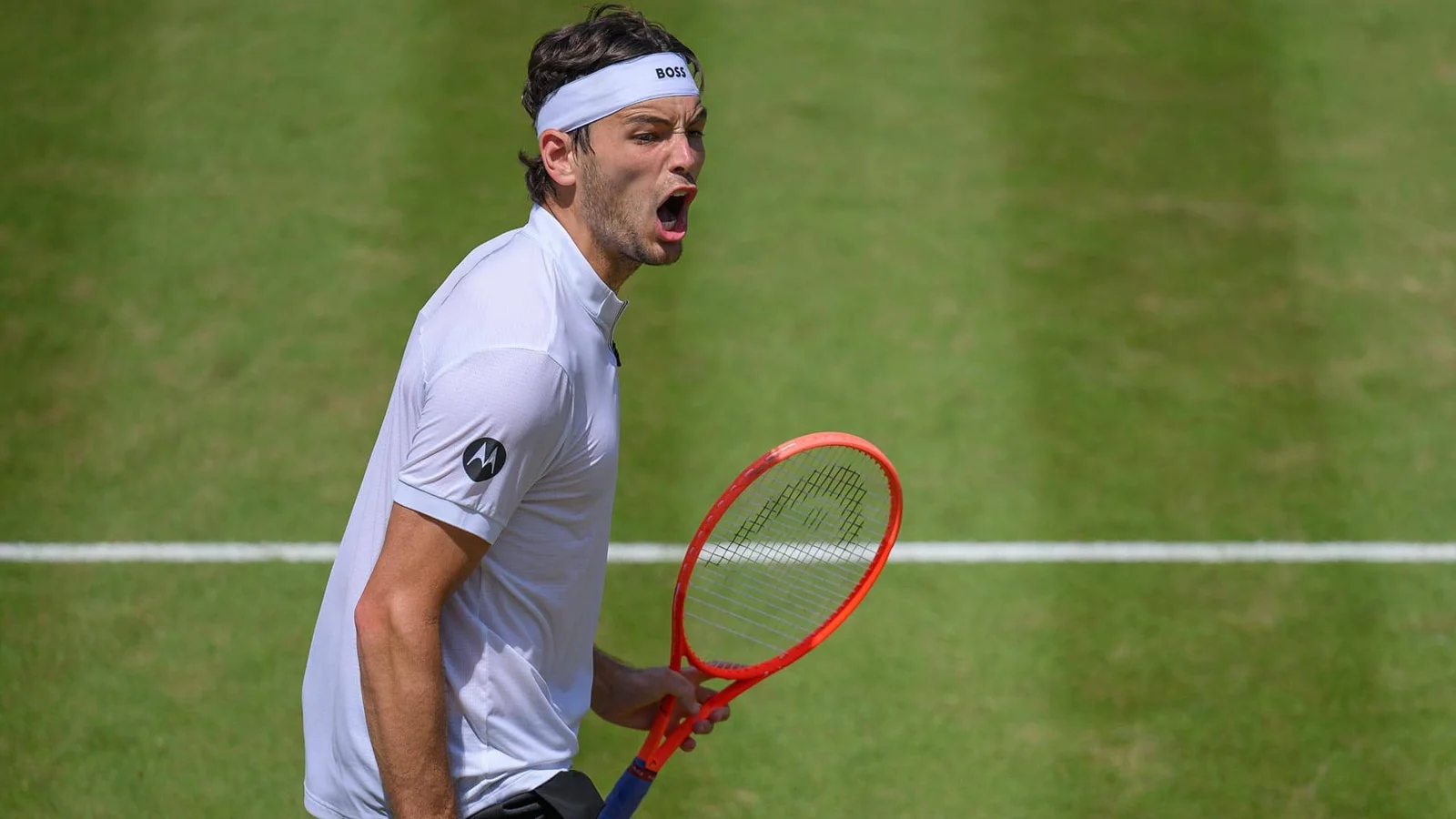

American tennis star Taylor Fritz has openly criticized the growing trend of on-court coaching in professional tennis, challenging its impact on the sport’s integrity and tradition. His remarks follow Novak Djokovic’s earlier endorsement of coaching pods introduced at the 2025 Australian Open, sparking a contentious debate about the future of tennis strategy and fan engagement.
This year, the Australian Open witnessed a significant change as coaching pods were officially introduced, allowing up to four team members to sit courtside and communicate with players during matches. This shift marks a departure from tennis’s long-standing convention that emphasized players’ independent problem-solving and mental fortitude without direct in-match guidance. Djokovic embraced this new format, even consulting with his former coach Andy Murray from the court, but Fritz vehemently opposes the idea, urging a return to the sport’s roots.
Transformation of In-Match Coaching Sparks Controversy
At the 2025 Australian Open, the game experienced a paradigm shift with the debut of coaching pods, where coaches sat courtside in designated areas to advise players throughout matches. This innovation gave players unprecedented access to their teams, blurring the historical line between player autonomy and external input. Novak Djokovic, the Serbian tennis champion widely regarded as one of the greatest players, welcomed the change, viewing it as a beneficial evolution.
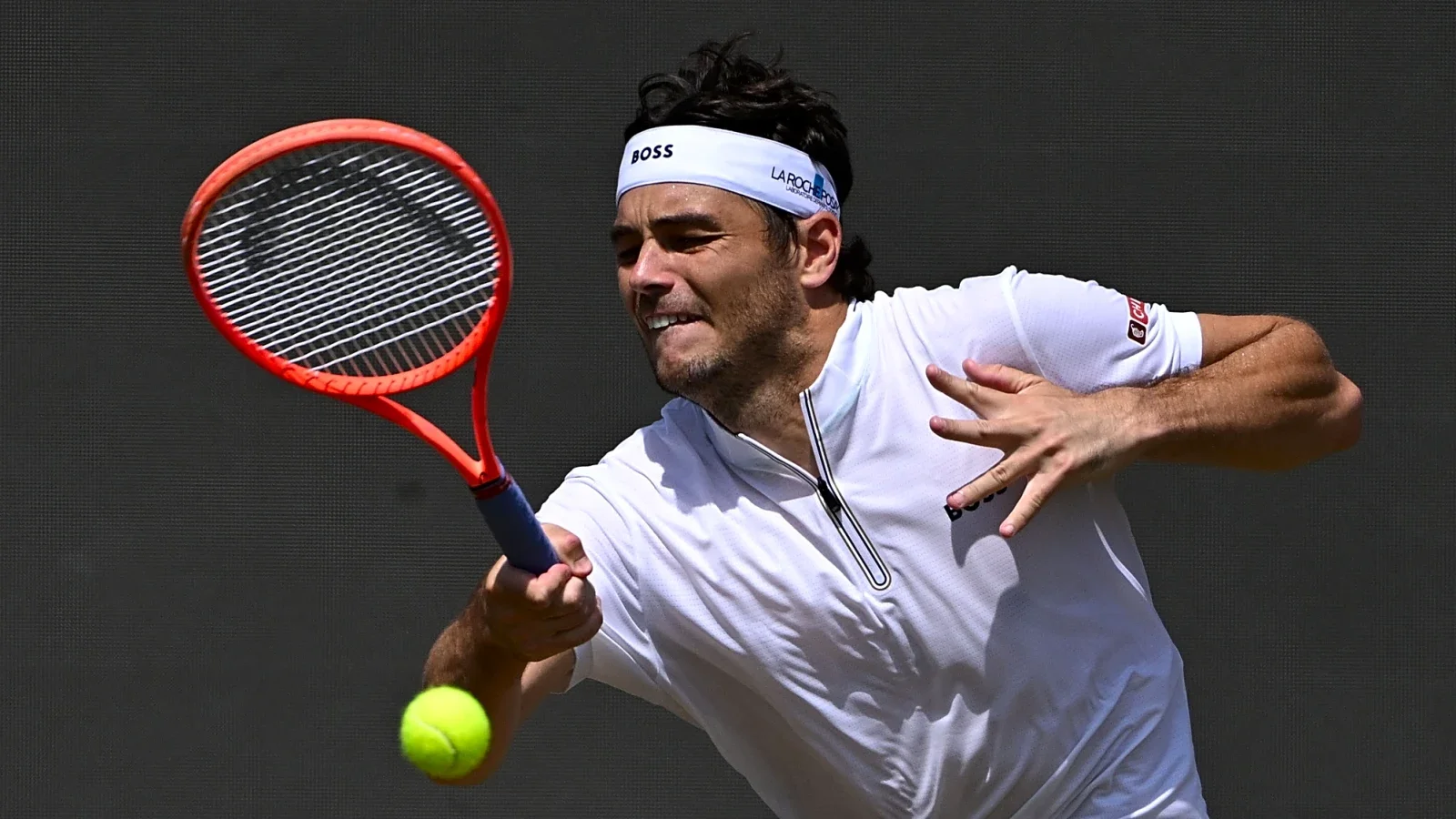
“I think it’s a great new introduction to the tournament,”
Djokovic said, highlighting how his team carefully selected the individuals allowed in the pods to ensure maximum contribution during the match. He further explained that while future enhancements like microphones could be introduced, he was content with the current setup at the moment.
However, the upcoming Wimbledon tournament posed a challenge to this evolving norm, as the All England Club insisted on maintaining the traditional player box without on-court coaching pods, preserving the sport’s historical atmosphere. This stance became the backdrop for Taylor Fritz’s pointed critique.
Taylor Fritz Articulates Strong Opposition to On-Court Coaching
In a candid discussion on the Tennis Insider podcast, Taylor Fritz expressed deep reservations about the presence of coaches actively directing players during matches. Describing the practice as “awful,” Fritz argued that on-court coaching undermines the essence of tennis as an individual sport where mental resilience and tactical self-awareness are paramount.
“I understand it. I think it’s bad for the game; the game of tennis, it’s definitely bad, but for, like, fans and stuff, if there’s a way to, like, hear what you’re saying to your coach, if fans could hear that stuff, maybe that’s more entertaining, but we don’t even do that anyways,”
Fritz stated, acknowledging the spectator perspective but emphasizing the detrimental impact on the sport itself.
He elaborated on the strategic dimension unique to tennis, noting that much of the game revolves around reading opponents, adjusting point construction, and making quick mental assessments without outside influence.
“So it’s like tennis is so much like a, this is an individual sport. Why, can someone else tell me what to do when? The strategy of tennis is like such a big part of the game, like understanding what my opponent’s doing, and maybe this is the pattern that they’re playing. Maybe I need to get out of this pattern. Maybe how I’m structuring the point isn’t. This isn’t the way that I am; this isn’t a winning point structure for me. I need to change something else.”
Fritz challenged the fairness of allowing coaching advice during live play, particularly when it offers tactical insights a player might have missed. His concern centered on preserving the mental complexity of tennis, where players engage in psychological battles and intuition-driven decisions.
“Maybe I’m doing something that’s beating them, how is it fair that someone, if they’re not smart enough to figure out that they need to change what they’re doing, it’s complete BS that someone can tell them what to do. I just think that the mind games that are going on during the match are a big part of tennis, and it’s like, why would we would we lose that when a coach can tell you?”
Despite his opposition to formal coaching interventions during rallies, Fritz acknowledged that he maintains communication with his coach, though in a different role.
“And obviously, I talk to my coach during matches, you can, but I don’t think I’m ever talking to him asking him, like, what do I do?”
he explained. For Fritz, this interaction serves as confirmation rather than direction.
“I’m telling him what I see and what I think. And then he’s almost just more so like giving me confirmation. It’s almost like a second opinion of I tell him what I see and he’s like, I agree and then I can feel more confident in kind of what I was already thinking.”
Ultimately, Fritz summed up his stance simply but forcefully:
“I don’t know. I think it’s bad.”
His remarks underscore the tension between preserving tennis’s tradition as a player-driven sport and embracing innovations aimed at modernizing fan experiences and team involvement.
Fritz Caps Off a Successful 2025 with a Title Win on Grass
Amid the debate over coaching, Taylor Fritz recently celebrated a major personal milestone by claiming his fourth grass-court title and ninth career trophy in Stuttgart. On a rain-affected Sunday, Fritz defeated Alexander Zverev, the tournament’s third seed, with a commanding 6-3, 7-6(0) victory, further enhancing his reputation as a formidable competitor on fast surfaces.
Fritz’s dominance was apparent as he delivered 11 aces and never faced a break point throughout the match, improving his head-to-head record against Zverev to 8-5. This performance signaled a strong return to form after a less impressive clay season and set the stage for his upcoming challenges at Wimbledon.
Reflecting on his triumph, Fritz remarked,
“It was not so great a clay season, so to come here and start the grass season off perfectly, I am super happy to get the title and to do it here,”
emphasizing the emotional and competitive significance of the win.
With Wimbledon approaching, Fritz enters the tournament as the fourth seed, carrying momentum from his grass-court success and a renewed sense of confidence. His powerful serve and aggressive baseline play position him as a serious contender on tennis’s most prestigious stage.
The Broader Debate: Tradition Versus Modernization in Tennis
The contrasting views of Novak Djokovic and Taylor Fritz encapsulate the broader struggle within the tennis world over on-court coaching’s role. Djokovic, having embraced coaching pods and the collaborative team environment they enable, presents the case for evolving the sport to enhance player performance and spectator engagement. In contrast, Fritz’s concerns highlight the importance of individual autonomy and the mental battle that has traditionally distinguished tennis from other sports.
This debate resonates deeply with fans and professionals alike, as tennis navigates how to balance heritage with innovation. The All England Club’s decision to prohibit on-court coaching at Wimbledon serves as a symbolic defense of the sport’s enduring values, while the Australian Open’s willingness to experiment indicates a desire to explore new directions.
As tennis continues to evolve, the controversy over coaching pods will likely shape tournament policies and player approaches, influencing how future generations experience the game. The tension between preserving the purity of competition and integrating team strategies reflects ongoing challenges faced across professional sports in adapting to modern expectations.
In this heated discourse, Taylor Fritz’s opinion on on-court coaching controversy draws attention to the fundamental question of whether tennis should remain a solitary mental duel or embrace collaborative tactics that could redefine its character and appeal.