
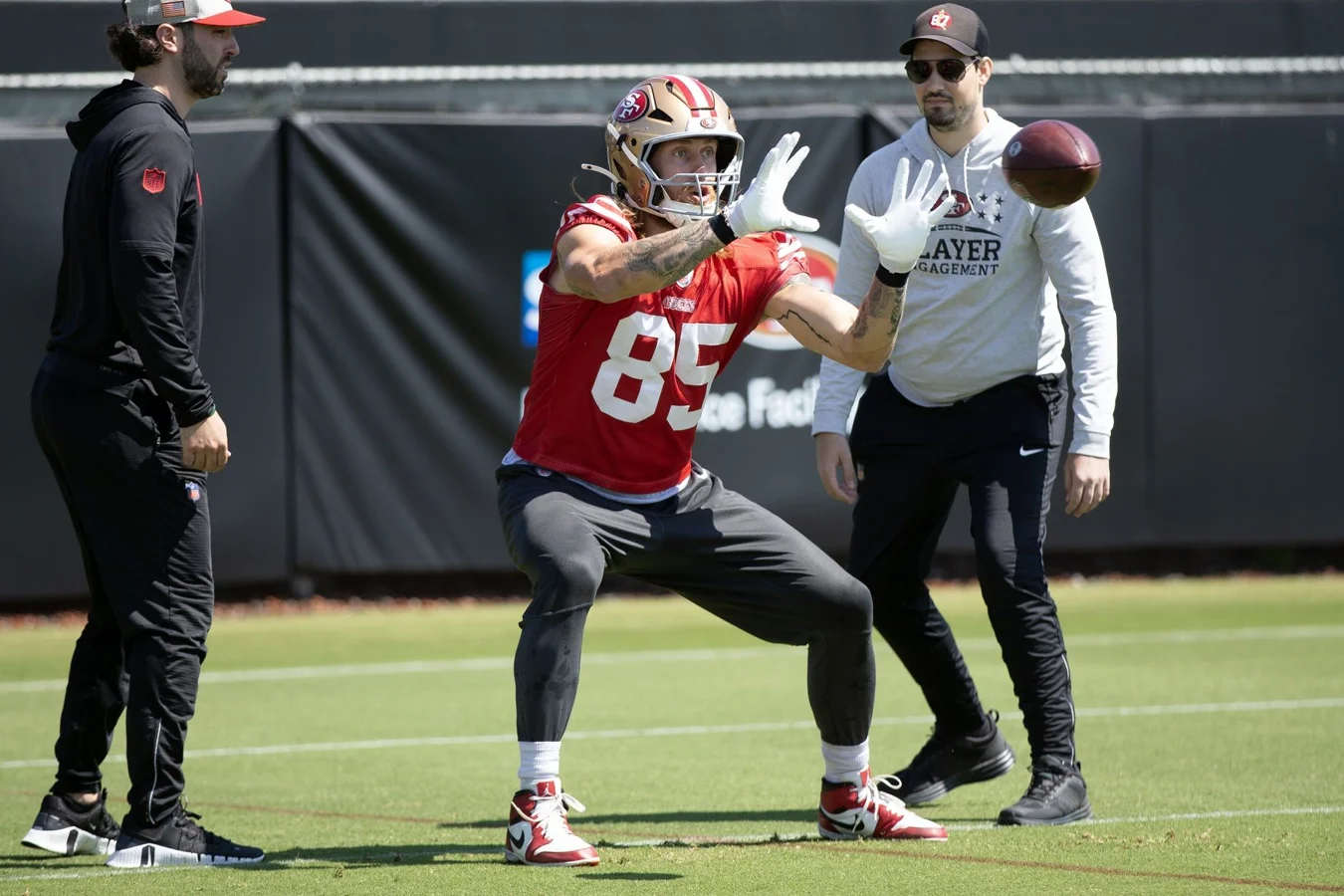

George Kittle, the San Francisco 49ers’ standout tight end, has called for a significant increase in the market value for his position. After signing his current four-year, $76.4 million contract this offseason, Kittle advocates for broader growth in tight end salaries, aiming to pave the way for rising stars like Raiders’ Brock Bowers to surpass existing pay thresholds.
Kittle’s contract extension, finalized earlier this year, made him the highest-paid tight end in the NFL with $40 million guaranteed. Despite this personal success, he emphasizes that the tight end market should not stagnate but continue to evolve so all players at the position can benefit financially over time.
Kittle Highlights the Need for Collective Growth Among Tight Ends
On a recent appearance on ‘The Dan Patrick Show,’ Kittle stressed that for the tight end market to expand, the entire group must see increased compensation rather than a single player securing a peak contract. He stated,
“The only way for the tight end market to continue to grow is if everybody’s getting paid,” Kittle said. “That’s the only way to do it. You can’t just have one guy do it and then it just sits for four years because then you’re stuck and it’s stagnant with no one’s getting paid.” —George Kittle, San Francisco 49ers Tight End
This perspective reflects Kittle’s desire to see more tight ends rewarded as their contributions to offenses become increasingly vital. He envisions a future where more skilled players elevate the financial standards for the position as a whole.
Forecasting Brock Bowers’ Contract Milestone
Kittle singled out Brock Bowers, a promising young talent drafted by the Raiders as the 13th overall pick last year, as the likely candidate to push tight end contract values further. Currently, Bowers is on a four-year rookie deal worth $18.1 million. Kittle envisions that within three years, Bowers will surpass $20 million annually.
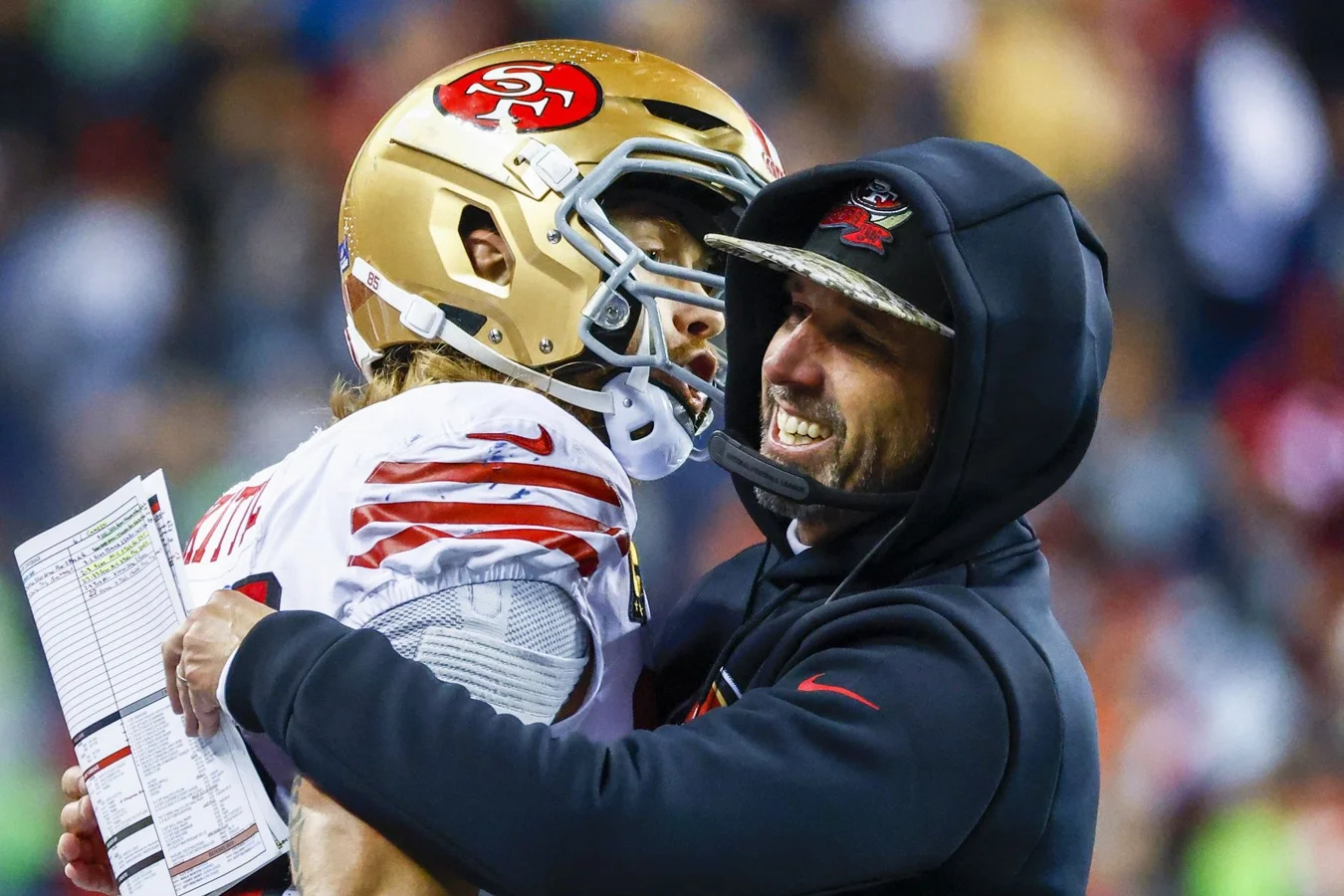
“We want everybody, I want everybody to have great games… Throughout the rest of the season, they can play as well as they want to because I want guys to get paid, to keep bumping up that market so that by the time that Brock Bowers is doing his contract in three years, he’s going for over $20 million, which he will.” —George Kittle, San Francisco 49ers Tight End
Kittle, who currently leads tight ends with an average salary of $19.1 million per year, is focused on ensuring that the position’s top players continue to command higher salaries, matching their increasing impact in the league.
Insight into Kittle’s Relationship with 49ers Head Coach Kyle Shanahan
George Kittle and Kyle Shanahan have worked together since both arrived at the 49ers in 2017, forming a close professional bond over eight seasons. Despite a difficult 6-11 campaign following their Super Bowl appearance in 2023, Kittle praised Coach Shanahan’s leadership and open communication style.
Speaking on ‘The Pat McAfee Show’ last Friday, Kittle shared candid thoughts about their ongoing connection by saying,
“One of my favorite things about Coach Shanahan is that he has a 24/7 open door policy,” Kittle said. “Me and Kyle have a great relationship. You know, I like to go golf with him down in Cabo in the off-season, and then I win football games with him in the fall. So there’s just, he hold us all accountable.” —George Kittle, San Francisco 49ers Tight End
Their strong relationship helps foster a culture of accountability and teamwork that has contributed to the 49ers‘ recent successes and will likely influence future improvements.
Recent Contract Developments Among Key 49ers Players
In addition to Kittle’s latest deal, the 49ers solidified their core by extending quarterback Brock Purdy’s contract in May. Purdy’s agreement, valued at $265 million over five years, reflects the franchise’s commitment to maintaining a competitive roster. These contract decisions underscore the team’s intent to sustain long-term success despite last season’s setbacks.
Kittle’s calls for a tight end market revolution come amid this backdrop of strategic contract signings for key players. His push for higher salaries at the position signals a potential shift in how tight ends are valued across the NFL.