
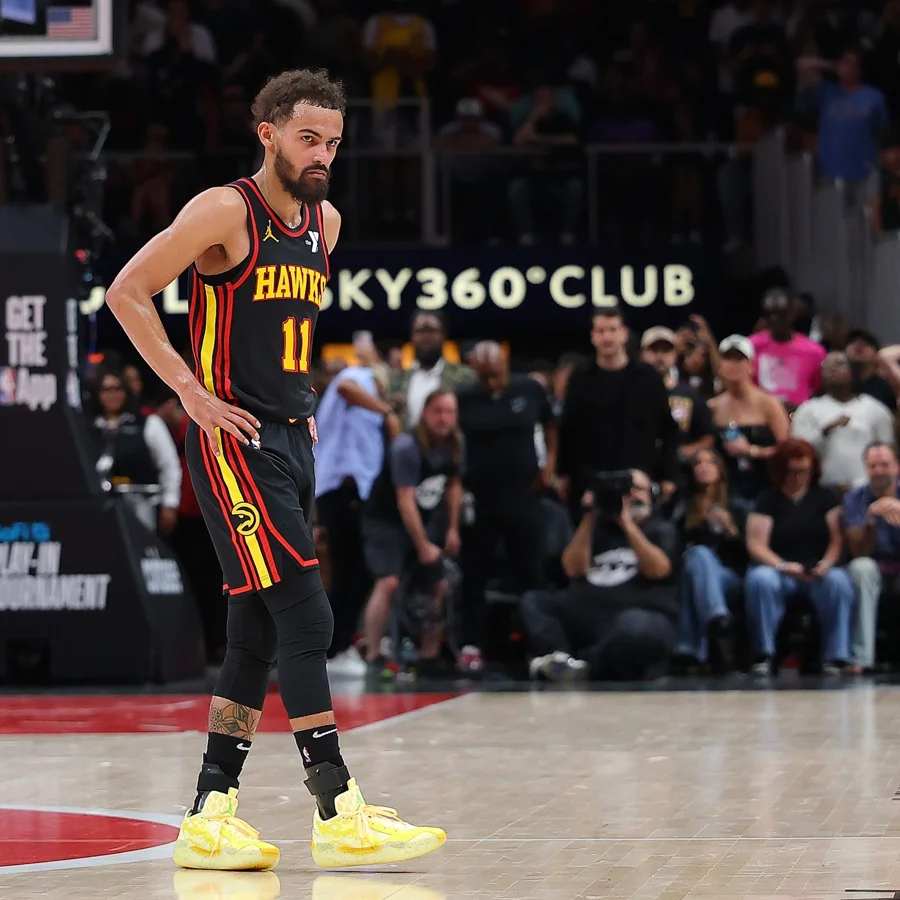

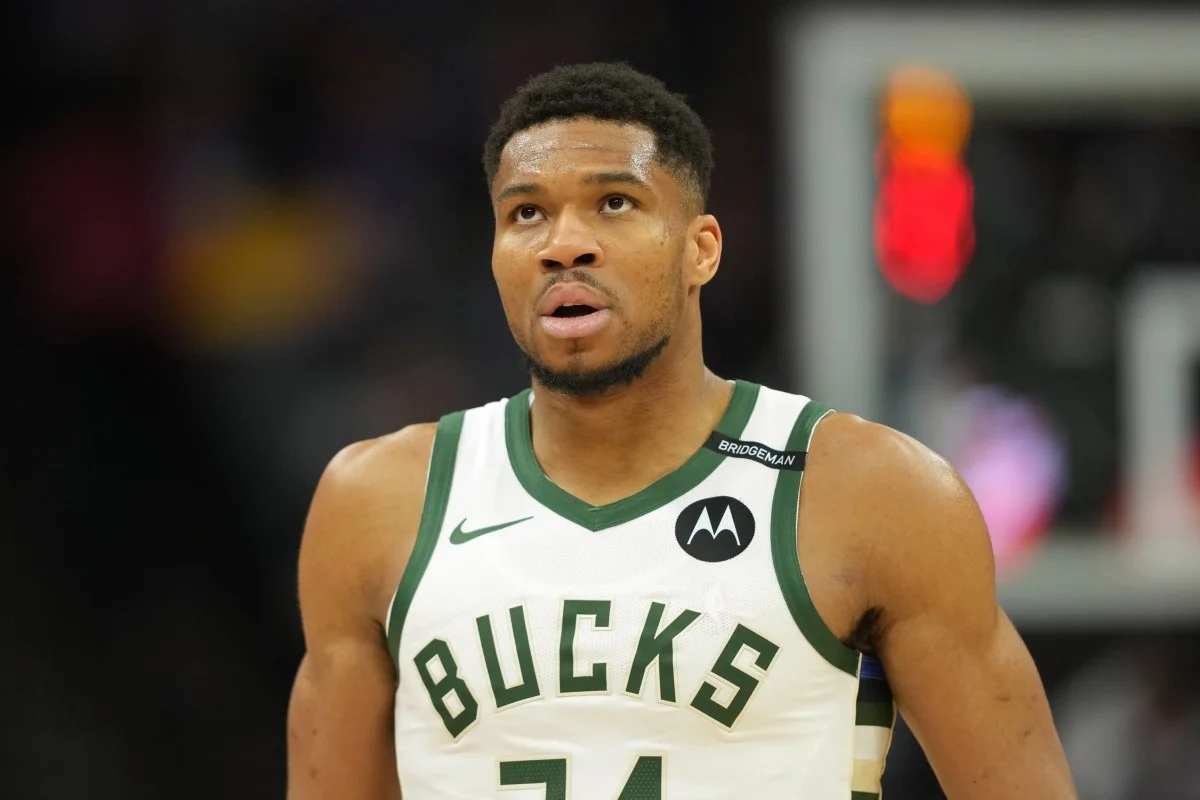
The Milwaukee Bucks face intense pressure entering the 2025 offseason as they seek solutions to keep two-time MVP Giannis Antetokounmpo satisfied and competitive in Milwaukee. Compounding the challenge is Damian Lillard‘s torn Achilles injury, which is expected to sideline him for the 2025-26 season, and the Bucks’ limited assets to immediately upgrade their roster. Despite these difficulties, rival teams are likely to inquire about Antetokounmpo’s availability, as he remains one of the NBA’s top three players.
Although the Bucks lack the necessary assets to acquire a superstar outright, they may have just enough leverage to pursue an All-Star like Trae Young, especially considering Young’s contract situation. A three-team trade involving the Bucks, Atlanta Hawks, and Washington Wizards could make it possible for Milwaukee to acquire Young while providing the Hawks with a mix of players and valuable draft picks and giving the Wizards a role in facilitating the deal.
Details of the Three-Team Trade Proposal
The proposed trade envisions the following exchanges:
Milwaukee Bucks Receive:
- Point Guard Trae Young
Atlanta Hawks Receive:
- Guard Jordan Poole
- Guard Marcus Smart
- Guard Andre Jackson Jr.
- Forward Tyler Smith
- Unprotected 2031 first-round pick (from Bucks)
- 2026 first-round pick swap rights (via Bucks/Pelicans)
- 2030 first-round pick swap rights (via Bucks/Trail Blazers)
Washington Wizards Receive:
- Point Guard Damian Lillard
- 2025 second-round pick (No. 47 overall, via Bucks)
- 2031 second-round pick (via Bucks)
In this arrangement, the Wizards act as a third-party facilitator. Although Lillard’s recovery from injury implies he won’t contribute significantly in the upcoming season, Washington can afford to be patient as they remain in rebuilding mode. The timeline and objectives align with Lillard’s two years left on his contract, allowing him to rehabilitate while mentoring the young Wizards roster.
The draft pick swap rights included for Atlanta are valuable, offering the Hawks upward mobility in the 2026 and 2030 drafts. These swap rights are considered some of the most favorable between Milwaukee and the Pelicans in 2026, and Milwaukee and Portland in 2030. The Hawks have previously agreed to similar swap conditions in other trades, such as the one involving De’Andre Hunter and Cleveland.
Why Milwaukee Bucks Would Pursue This Trade
The Bucks urgently need a dependable partner for Antetokounmpo, especially with Lillard expected to miss the entire 2025-26 season. Acquiring Trae Young addresses this need as Young is entering his prime at 26 years old and can significantly contribute on the offensive end. Young recently led the league with 11.6 assists per game while averaging 24.2 points, 3.1 rebounds, and 1.2 steals.
Young’s shooting range closely mirrors Lillard’s, averaging about 17.3 feet on shots compared to Lillard’s 18.5 feet. This similarity ensures floor spacing remains effective, crucial to complement Antetokounmpo’s aggressive drives to the rim. Additionally, Young is a superior passer, capable of setting up Giannis with lobs and precise pocket passes to exploit defenses.
Defensively, Milwaukee ranked 12th last season and could compensate for Young’s known defensive limitations, especially if the team re-signs veteran center Brook Lopez. Financially, this trade saves the Bucks approximately $12.3 million, positioning them around $41 million below the first tax apron. This provides flexibility to retain key players like Lopez and Bobby Portis, should Portis decline his $13.4 million player option.
Furthermore, the Bucks would retain access to a $14.1 million non-taxpayer mid-level exception and a $5.1 million biannual exception to continue strengthening their roster around stars such as Antetokounmpo, Young, Kyle Kuzma, Lopez, Portis, Pat Connaughton, Kevin Porter Jr., and AJ Green. This strategy keeps Milwaukee competitive in a relatively soft Eastern Conference and may give Giannis a strong incentive to remain in Milwaukee beyond 2025.
Atlanta Hawks’ Motivations for Trading Trae Young
Assessing Trae Young’s trade value involves complexities. At 26, Young is about to enter the final guaranteed year of his contract, under which he earns just under $46 million. He has the option to become an unrestricted free agent next summer unless he signs a contract extension this offseason, which could adversely affect his trade value.
The Hawks could extend Young for as much as $229 million over four years this offseason but may hesitate given that Young has earned All-NBA honors only once in seven seasons and that the extension average exceeds $57 million per year. Atlanta also faces decisions about extending young talent like Dyson Daniels, who is entering the final year of his rookie deal.
“Unless Young is willing to compromise on his next contract (at three years, $120 million, for example), it is hard to see the Hawks writing a $229 million check to the 26-year-old All-Star.” —Bobby Marks, ESPN Analyst
In exchange for Young, the Hawks would receive players who can contribute immediately and provide salary flexibility. Jordan Poole averaged a solid 20.5 points in the last season, along with 4.5 assists, 3.0 rebounds, and 1.3 steals while playing under 30 minutes per game and shooting nearly 38 percent from three-point range. Poole’s contract totals under $66 million across two seasons, which is comparable to Young’s potential max salary.
Marcus Smart, the 2021-22 Defensive Player of the Year, offers veteran leadership and defensive prowess while being on an expiring $21.6 million contract. He would serve well as a mentor to Dyson Daniels and as a second-unit point guard.
Young prospects Andre Jackson Jr. and Tyler Smith add defensive strength and shooting ability, respectively. Smith shot over 43 percent from three on his rookie season. The inclusion of an unprotected 2031 first-round pick from Milwaukee is valuable to the Hawks, especially as Antetokounmpo ages out of his prime. Additionally, the draft pick swap rights offer Atlanta potential to improve their draft standing in 2026 and 2030.
For the Hawks, this trade offers a balanced return of talent and draft assets while avoiding the commitment to a long-term, high-cost contract for Young.
Washington Wizards’ Role and Long-Term Outlook
The Wizards can view the potential trade as an opportunity to build for the future while contributing to the deal’s success. Acquiring Damian Lillard is not expected to elevate the team‘s immediate competitiveness, as his focus will likely be on recovery from his Achilles injury during the 2025-26 season.
Instead, Lillard’s veteran presence could function as a mentor and quasi-coaching figure for Washington’s young players, accelerating their development and enhancing the team culture during this rebuilding phase.
Next summer presents the Wizards with significant flexibility related to Lillard’s contract status. With a $58.5 million expiring contract, Lillard could:
- Opt in and remain with Washington as the team aims to contend.
- Opt in but be traded to contenders seeking a veteran point guard on an expiring salary.
- Opt out, granting the Wizards approximately $60 million in salary cap space.
- Opt out and re-sign for a lower-cost, multi-year deal.
As compensation for facilitating the three-team trade, the Wizards receive two second-round picks: one in 2025 (No. 47 overall, originally from the Bucks) and another in 2031. Washington may also negotiate for one or both of the prospects Andre Jackson Jr. and Tyler Smith instead of draft picks, depending on their preference for young talent development.
Patience will be key for Washington, but this arrangement has the potential to pay dividends, offering valuable assets and flexibility for future roster construction.