
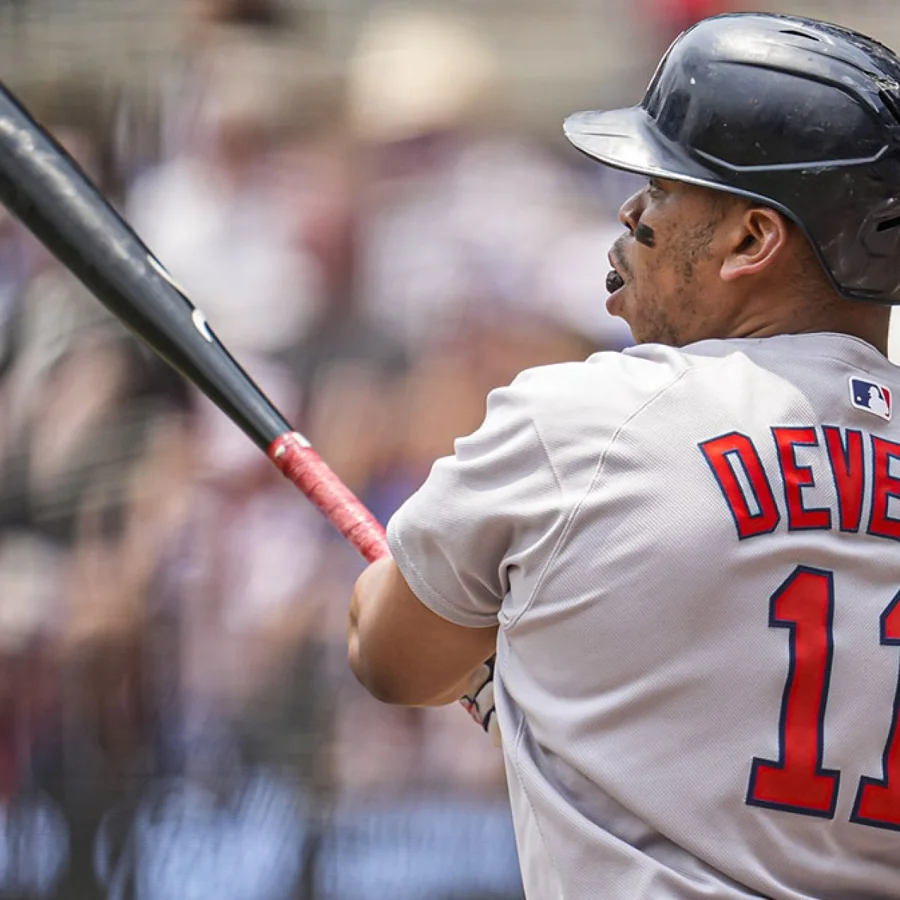

The Major League Baseball world was rocked on Sunday when the Boston Red Sox made the unexpected decision to trade their star third baseman Rafael Devers to the San Francisco Giants. This surprising move sent shockwaves across the league, especially considering Devers’ status as a key offensive player for Boston. In the wake of the trade, Red Sox legend David Ortiz weighed in with a strong message to current players, emphasizing that “nobody is indispensable” in professional baseball.
Rafael Devers had been one of the most prominent figures in the Red Sox clubhouse over the past few seasons. The Dominican-born slugger, however, reportedly experienced friction with the team management this year, which contributed to the decision to part ways. Throughout spring training, the Red Sox asked Devers to move from his regular position at third base to designated hitter (DH), enabling Alex Bregman to take over the infield spot. Devers declined the change and made his displeasure public. Later, after first baseman Triston Casas suffered an injury, the team again requested Devers to adjust positions and shift to first base, but he refused once more.
Despite the interpersonal challenges off the field, Devers maintained a high level of performance at the plate. On Sunday, he hit a crucial home run against the New York Yankees, contributing to a 2-0 victory and completing a series sweep over the team’s rivals. Mere hours after that game, the Red Sox officially announced the blockbuster trade sending Devers to the Giants.
David Ortiz Cautions Players About the Reality of Being Traded Following Devers’ Move
The San Francisco Giants’ acquisition of Rafael Devers came as a complete surprise to many industry insiders. Confirmed by multiple sources, including ESPN and baseball reporter Jeff Passan, the deal involved Boston receiving right-handed pitcher Jordan Hicks along with prospects Kyle Harrison, Jose Bello, and James Tibbs III in return. Devers, still in the second year of a $313.5 million contract extension he signed in 2023, will have that contract fully covered by San Francisco going forward.
In response to the upheaval, David Ortiz spoke with baseball content creator Yancen Pujols about the broader implications for players across the league. Ortiz stressed the importance of humility and situational awareness, warning athletes against letting their egos damage their careers.
“Players need to take this as an example. Nobody is indispensable. … You need to be smart and you need to understand the situation. Your worst enemy is your ego.” —David Ortiz, Red Sox legend
Ortiz Criticizes Devers for Communication Shortcomings After Trade
Following the deal, Ortiz did not shy away from critiquing aspects of Devers’ personal conduct. Speaking with Hector Gomez, Ortiz revealed he had tried multiple times to contact Devers to offer guidance but received little response. This lack of communication, Ortiz implied, might have hindered Devers’ ability to navigate his recent challenges within the team.
“You can’t imagine how many times I wrote to Devers trying to give him advice, but unfortunately, he has communication problems. He almost never returned my messages, but I don’t blame him. He’s a good guy, but he definitely needs to improve his communication. He should find an advisor to help him with that.” —David Ortiz, MLB Hall of Famer
Ortiz’s career with the Red Sox, spanning 14 seasons, included three World Series titles and established him as one of the franchise’s all-time greats. His perspective carries weight for younger players facing the pressures and uncertainties of professional baseball.
Upcoming Clash to Bring Devers Back Against Former Team in Oracle Park
The timing of Rafael Devers’ trade means fans will witness an immediate reunion. After completing a three-game series against the Cleveland Guardians at Oracle Park, the San Francisco Giants will host the Boston Red Sox in a three-game series shortly thereafter. This matchup offers Devers a prompt opportunity to face the team that traded him away less than a week earlier.
Before the trade, Devers had regained his batting rhythm following a slow start to the season, boasting a .272 average with 15 home runs and 58 RBIs in 73 games. His ability to bounce back offensively contributed to ongoing speculation about how he would adapt to his new environment in San Francisco.
Details of the Trade Deal and Contract Considerations
Devers’ transfer was notable not only for the unexpected nature of the trade but also because of his significant financial commitment to Boston. His $313.5 million extension, signed in 2023, was assumed entirely by the Giants, underlining the team’s confidence in his future contributions. The return package to Boston included a mix of promising prospects and a major league pitcher, signaling a possible shift toward rebuilding for the Red Sox.
The players sent to Boston alongside Jordan Hicks are all regarded as strong prospects. Kyle Harrison, Jose Bello, and James Tibbs III represent a young core who could play important roles in the Red Sox’s strategy moving forward, particularly as the team re-evaluates its roster composition and long-term priorities.
Significance of the Trade and Its Impact on MLB
The Rafael Devers shock trade to the San Francisco Giants marks one of the most dramatic roster moves of the 2025 MLB season. It highlights how even star players with sizable contracts and established track records are not immune to being moved if team dynamics or strategies shift. Ortiz’s warning to players reflects a growing awareness that professional sports careers are subject to complex business decisions beyond individual talent and effort.
Devers’ upcoming games against the Red Sox will be closely watched, as they may signal how quickly the player can settle into a new role with San Francisco. For the Red Sox, the trade represents a significant change in clubhouse leadership and offensive production, while the Giants clearly demonstrate their ambition by acquiring a Premier slugger who could bolster their championship aspirations.
This trade serves as a critical reminder of the volatility in MLB and the need for players to maintain adaptability and professionalism regardless of contract status or reputation.