
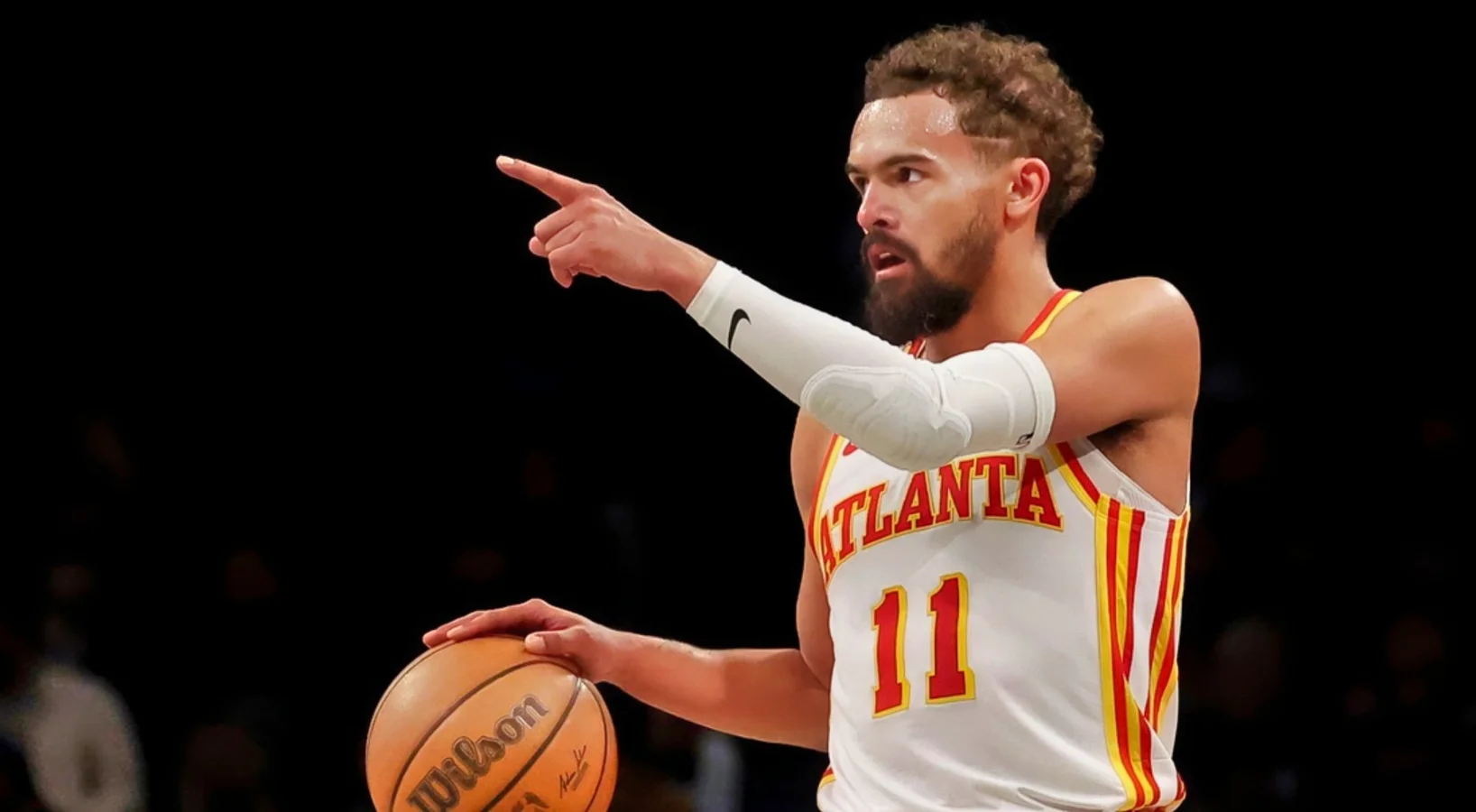

The 2025 NBA offseason brings critical decisions surrounding Trae Young contract extension negotiation 2025, revealing pressing challenges for both the Atlanta Hawks and their star guard. As Young and several notable veterans face contract extensions under a constrained salary cap environment, teams must balance player value, financial limits, and future flexibility to maintain competitiveness.
Evolution of NBA Player Movement and Its Impact on Contract Negotiations
Once dominated by blockbuster free agency moves involving top stars like LeBron James and Kevin Durant, the NBA’s landscape has shifted drastically. Since 2019, no reigning All-NBA player has switched teams via free agency. Several factors have contributed to this change, including the COVID-19 pandemic, which froze the salary cap for three years, creating uncertainty that dissuaded players from entering the market.
Teams initially preserved cap space aiming for marquee free agents, such as Giannis Antetokounmpo in 2021, but when he re-signed with Milwaukee, there were no major star openings. Instead, mid-tier players like Kyle Lowry became the focal points of bidding wars, prompting a reassessment of cap space value. This shifted the league’s dynamics: teams saved less cap space, players extended contracts earlier to avoid limited free agency opportunities, and a cycle emerged that weakened the free agent pool and changed negotiating strategies.
Heading into 2025, only the Brooklyn Nets hold substantial cap space. The prevailing approach is to negotiate extensions close to fair market value, with trades becoming the preferred route for player movement. As a result, extension talks—especially for those under standard veteran rules—are the centerpiece of offseason discussions, affecting many key players.
Understanding the Veteran Extension Rules Governing Most Contracts
The majority of extension candidates in 2025 are governed by standard veteran extension parameters, which set specific salary cap constraints. Key elements include:
- Eligibility: Players on three- or four-year contracts can extend on the second anniversary of their deal; longer contracts require three years.
- Salary Caps: The first year of a veteran extension can be up to 140% of the last year’s salary or the player’s max salary, whichever is lower.
- Minimum Salary: Extensions can also be as high as 140% of the NBA’s estimated average salary in the first year, regardless of prior pay.
- Annual Raises: Contracts can feature raises of up to 8% each year.
- Duration Limits: Total contract length, combining prior years and extensions, cannot exceed five years.
While these rules set boundaries, some individual player situations involve additional complexities in structuring deals. The following analysis highlights the most compelling 2025 extension scenarios, focusing on those with tough choices or financial tension rather than straightforward max deals.
Memphis Grizzlies Face Difficult Decisions with Jaren Jackson Jr.
Jaren Jackson Jr.’s contract situation typifies the challenges imposed by the 140% salary limitation. His current deal, which declines annually, sets his 2025-26 salary at just $23.6 million—well below what his performance merits. This restriction hampers Memphis’s ability to reward Jackson properly under standard extension rules.
To circumvent this, the Grizzlies are pursuing a multi-step strategy to free up cap space that would allow them to effectively boost his contract using available cap room before adding a veteran extension. This approach led to trading Marcus Smart and may require an additional move involving John Konchar to create an estimated $14 million in space, bridging the gap between Jackson’s current and market value.
If the cap-clearing plan falters, Jackson could enter free agency, becoming one of the league’s most attractive trade assets because of his low 2025-26 cap hit. Memphis prefers to avoid rebuilding after the Desmond Bane trade and aims to build around Jackson and Ja Morant, making his extension a top priority.
Trae Young’s Extension: A Test of New NBA Financial Realities for the Hawks
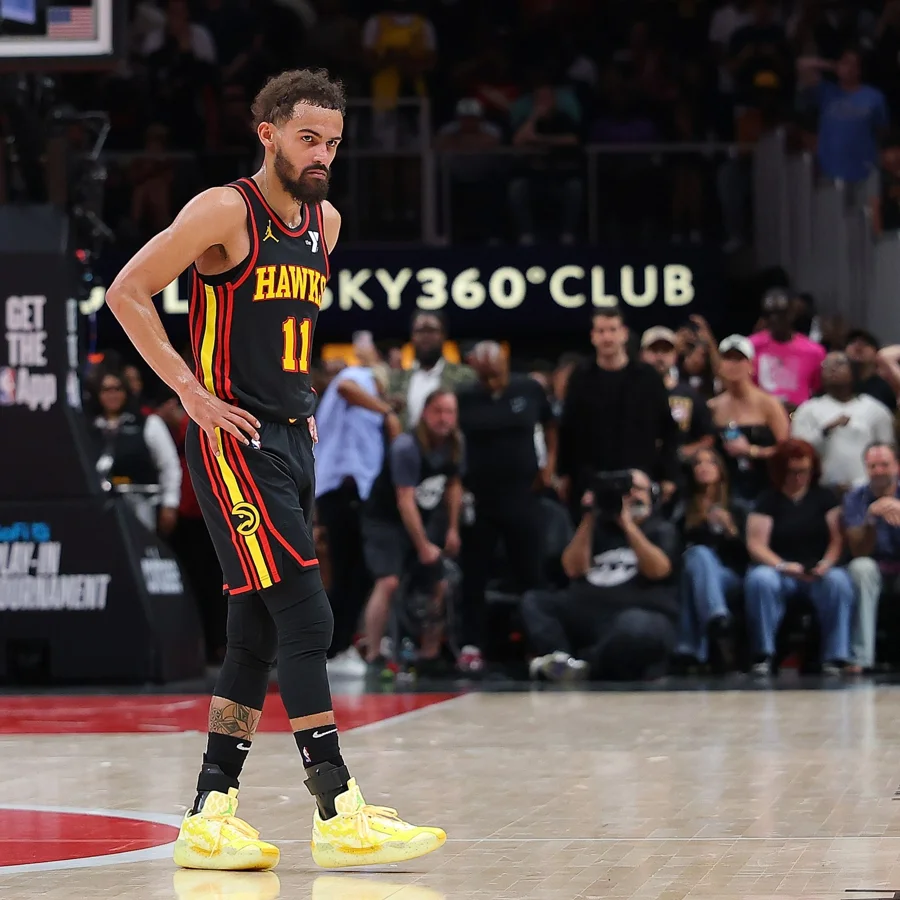
At 26 years old with four All-Star appearances and a career average of 25 points per game, Trae Young would have been an automatic max-contract recipient under previous collective bargaining environments. However, the current salary cap constraints and financial prudence required by teams complicate the Hawk’s ability to offer Young his full max deal, valued at $229 million over four years.
Young’s elite offensive production contrasts sharply with his persistent defensive shortcomings, presenting a dilemma. Although he has improved off-ball areas, his defense remains a liability. His overall standing as roughly the 20th to 30th best player in the league raises doubts about warranting a max salary in today’s cap ecosystem.
Atlanta’s front office seeks to reduce Young’s potential max by $30 to $40 million, potentially structuring his deal with flat or descending salaries as younger teammates’ costs rise. Young may counter by considering testing free agency in 2026, leveraging his market value. The Hawks have historically explored trade possibilities but have not found suitable deals given Young’s niche fit as a high-usage offensive leader with defensive weaknesses.
The extent to which Atlanta and Young can reach a compromise will be a key indicator of how this new cap reality defines what it means to be a “max player.”
Houston Rockets Must Reconcile Financial Complexity with Fred VanVleet
The Rockets recently re-signed Steven Adams for three years and $39 million, a deal structured with descending annual payments to offset rising costs for younger players. However, this deal pushes Houston well over the second apron threshold, creating costly luxury tax implications.
Fred VanVleet, holding a $44.9 million team option for 2025-26, sits at the center of the Rockets’ financial maneuvering. Declining his option would lower immediate expenditures but requires negotiating a new multi-year agreement, which could take various forms. The Rockets might aim to pay VanVleet less initially while extending the deal, or front-load his salary to free cap space in later seasons.
Such structuring could aid in managing potential extensions for players like Jabari Smith or Tari Eason or facilitate midseason star trades, but the accompanying luxury tax costs may be steep. Houston must decide how best to balance financial risk and roster flexibility with VanVleet’s retention.
Dallas Mavericks Navigate Kyrie Irving’s Contract with Limited Flexibility
The Mavericks find themselves in a similar predicament managing Kyrie Irving’s contract amidst payroll pressures, especially after drafting Cooper Flagg, which tightened their cap space considerably. Dallas is near the luxury tax apron and must carefully engineer contracts to maintain roster depth and competitiveness during Irving’s recovery from a torn ACL.
Unlike VanVleet’s team option, Irving holds a player option for his 2025-26 salary, granting him greater control and complicating negotiations. His controversial history, including declining a partially guaranteed Nets extension, and his proven max-caliber talent intensify the complexity.
The Mavericks cannot afford to alienate Irving after fan backlash surrounding the Luka Dončić trade, and if Irving opts into his contract, Dallas must accept his terms or lose short-term roster viability. If he opts out, both sides will likely negotiate a new deal, but the contract’s shape remains uncertain, underscoring the fragility of securing stability while navigating a star player’s preferences.
Devin Booker’s Supermax Extension Signals Commitment Amid Rebuild Concerns
Devin Booker, eligible for a two-year, $150 million supermax extension with the Phoenix Suns, appears poised to accept the team’s offer. The Suns want Booker to remain a core figure during their ongoing rebuild, while Booker seems committed to helping the franchise improve despite its challenges.
Yet, concerns linger over the wisdom of offering such a costly extension during Booker’s early 30s. His production waned somewhat at age 28, and while still an elite mid-range shooter, his decreasing three-point consistency poses questions about his ability to maintain superstar status. Metrics place him closer to a top-20 or top-25 player, similar to Trae Young, rather than elite-level.
This extension, while securing continuity, could reduce Booker’s trade value and pose risks if injuries occur. Nevertheless, it is expected to proceed smoothly but warrants future monitoring as it could complicate Phoenix’s roster flexibility moving forward.
New Orleans Pelicans and Zion Williamson Face High-Risk Contract Calculations
Zion Williamson’s potential two-year, $128 million extension seems improbable given his ongoing health struggles and off-court issues, including a legal case. A unique factor complicates negotiations: $7.9 million of his next season’s salary is guaranteed, while the remainder depends on health benchmarks. Signing an extension would guarantee the entire existing contract, exposing the Pelicans to substantial financial risk.
New Orleans may attempt to use contract guarantees as leverage, enticing Williamson to accept a lower-dollar extension that still guarantees his current deal, or to agree to a non-guaranteed extension to maintain flexibility. Both scenarios pose significant trade-offs: guaranteed contracts increase short-term risk but could stabilize the roster if Williamson returns to form.
The Pelicans are unlikely to waive Williamson outright but remain cautious about risking guaranteed money. This situation exemplifies the difficult balance between risk and reward in managing star players with health and legal uncertainties.
Miami Heat’s Tyler Herro Faces a Crucial Decision Amid Defensive Shortcomings
Tyler Herro, eligible for a three-year, $150 million extension, represents a younger, offensive-focused lead guard similar to Trae Young but without a consistent All-Star pedigree. Miami might aim to retain him at around $120 million over three years reflecting about 20% of the salary cap.
Despite reaching an All-Star appearance once, Herro’s defensive weaknesses are glaring, with opponents exploiting him aggressively, as seen during Miami’s 2023 playoff run absent Herro’s presence. The league increasingly values guards who contribute reliably on both ends, favoring players like Tyrese Haliburton or Damian Lillard.
With minimal trade interest reported in past attempts, Herro must determine whether to solidify his status through an extension or take the risk of testing free agency in 2027. Miami’s evaluation of his fit and willingness to invest will significantly influence his career trajectory.
Boston Celtics Weigh Cost and Risk with Kristaps Porziņģis
The Celtics confront significant payroll challenges, with a projected $493 million salary next season. Shedding around $23 million is necessary to avoid severe luxury tax penalties and maintain roster-building flexibility. Kristaps Porziņģis, whose availability for trade or extension is debated, is a likely candidate to aid those cuts.
Porziņģis’s value is diminished by frequent injuries and a mysterious illness that hampered his recent postseason. His medical history casts doubt on committing to long-term deals. Still, if he desires stability and questions his free agency prospects in 2026, a protected, mid-level extension could appeal to both parties.
The Celtics face a difficult calculus balancing financial prudence, Porziņģis’s availability, and the need to construct a competitive core around Jayson Tatum’s recovery and long-term health.
Indiana Pacers Look to Extend Aaron Nesmith on Market-Defying Terms
Role players on below-market rookie contracts like Aaron Nesmith offer teams leverage for affordable extensions. Indiana acted wisely by signing Nesmith to a three-year, $33 million deal before he fully proved his starting-caliber ability. Since then, his defensive growth and shooting efficiency have markedly improved his value.
Despite being worth more on the open market, veteran extension rules limit Nesmith to about $64 million for three years. With two years remaining on his current deal and injury concerns due to ankle issues, Nesmith may prefer the security of an extension rather than reaching unrestricted free agency.
Indications suggest both sides could benefit from a new contract that extends Nesmith at under market value, continuing Indiana’s strategic roster building approach utilizing smart cap management.
New York Knicks Plan Extension Talks with Mitchell Robinson Amid Salary Challenges
Mitchell Robinson’s situation mirrors some aspects of Porziņģis’s, balancing exceptional on-court impact with frequent absences. However, Robinson’s lower current salary of around $13 million and limited career earnings provide him greater leverage to seek a more player-friendly deal.
The Knicks’ salary roster teeters near the luxury tax apron with plans to spend aggressively while eventually reducing payroll. Extending Robinson for approximately $89 million over four years aligns with market expectations for a starting center but raises the team’s financial outlay substantially.
New York’s front office likely seeks assurances or concessions to keep Robinson’s contract tradable, maintaining flexibility for future roster moves. His playoff contributions underscore his value, making his retention a priority despite the increased cost and tax implications.