
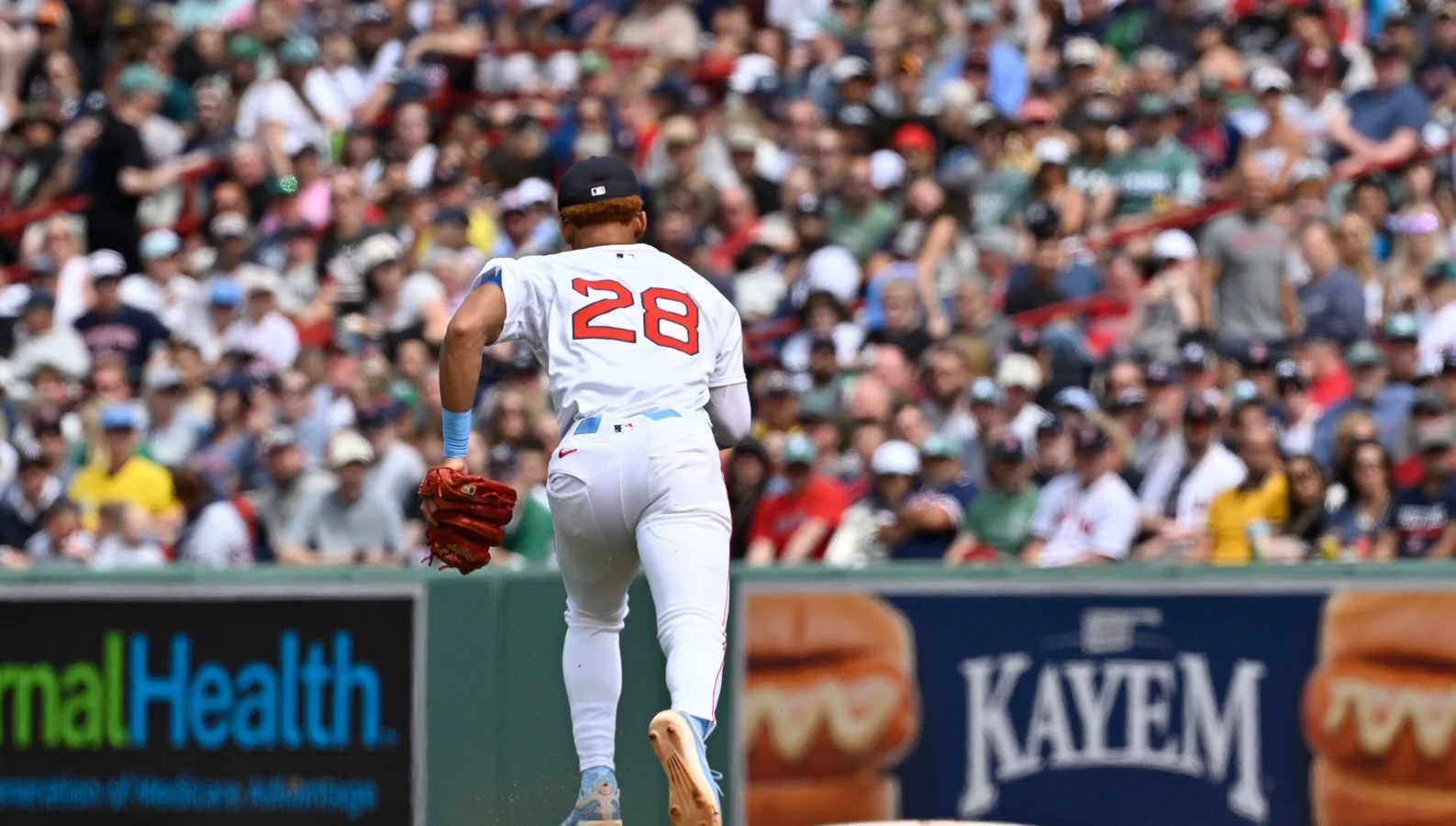

BOSTON – Kristian Campbell, once hailed as a promising talent by the Boston Red Sox, has faced a stunning setback after being demoted to Triple-A just two months following his celebrated major league arrival. This abrupt fall sparks serious questions about how the Red Sox have managed the young infielder, raising concerns over whether the team has shouldered any responsibility for his decline. The handling of Campbell’s development has drawn sharp criticism for prioritizing organizational acclaim over what was best for the player’s growth and well-being.
From Praised Prospect to Struggling Major Leaguer
Campbell, soon to turn 23, was once portrayed as a symbol of the Red Sox’s scouting and player development success. Upon signing an eight-year, $60-million contract shortly after his major league debut, the team’s chief baseball officer declared,
“Kristian was not drafted in the first round. He wasn’t a top prospect upon entering the organization. What he was was a good player who made himself a great player because of his work ethic and diligence and open mindedness and attitude,”
and
“he is a prime example of what’s possible when great scouting meets great development around a player who prioritizes maximizing his potential over everything else.”
These glowing remarks painted a picture of a player transformed by hard work and supportive coaching.
Yet despite this praise, Campbell’s performance nosedived. After an impressive first month, his batting average dropped to .154 over the subsequent 39 games, and defensively, he ranked as the weakest second baseman in the league by traditional error counts and modern runs saved metrics. This prolonged decline culminated in the team sending him back to the minors, a stark contrast to the estimated trajectory that had been projected for him.

The Unrealistic Expectations and Organizational Missteps
Campbell’s rapid promotion to the majors was driven in part by the Red Sox’s desperation to reclaim success after years of underperformance between 2019 and 2024. Their minor league talent pool was viewed almost as a cure-all, with Campbell emerging as a standout pick, chosen in the fourth round but advancing through the minors at an astonishing pace. However, it is crucial to recognize that Campbell’s professional experience before the majors was limited—he had played only 137 minor league games and 45 at the collegiate level, raising legitimate doubts about his immediate readiness for major league competition.
While some players adapt quickly to the majors or bypass the minors entirely, the Red Sox themselves acknowledged Campbell was not that rare “unicorn” talent. Their own statements confirmed he was a hard worker who earned his place, not a prodigy who arrived fully formed. Despite this, the organization appeared to exaggerate his readiness, publicly celebrating his rise as if he were a top-tier prospect, which intensified pressure on Campbell and may have contributed to his struggles.
The Cost of Rushed Development on Campbell’s Career
The Red Sox’s handling of Campbell highlights the pitfalls of rushing young players into spotlight roles before they have fully matured. Now back in Triple-A, Campbell faces the challenge of regaining confidence and refining his skills, particularly defensively where his deficiencies were most exposed. Ideally, he will receive the patient, supportive environment needed to rebuild his game without excessive external pressure.
The organization’s past approach failed to protect Campbell, placing him directly
“in both the middle of the diamond and the middle of the batting order,”
and thrusting him under intense scrutiny early in his career. This mismanagement reflects a troubling pattern where the team’s desire for quick results and credit has overshadowed the foundational developmental needs of its players.
Implications for the Red Sox and Future Young Players
This controversy serves as a cautionary tale not only for the Red Sox but for any team managing emerging talent. The disservice done to Campbell will resonate as an example of why rushing young athletes—and prioritizing organizational prestige over their growth—can ultimately be self-defeating. Players like Campbell need measured development, clear communication, and protection from premature exposure to the pressures of the major leagues.
Going forward, the Red Sox must reconsider their developmental strategies and commit to nurturing prospects with the patience they deserve. Campbell’s situation is far from irreversible, but only time will tell if the team can right this course and whether Campbell can fulfill his potential with proper support. Until then, Kristian Campbell’s fall remains a stark indicator of what happens when a franchise puts its own interests before the best path for its young players.