
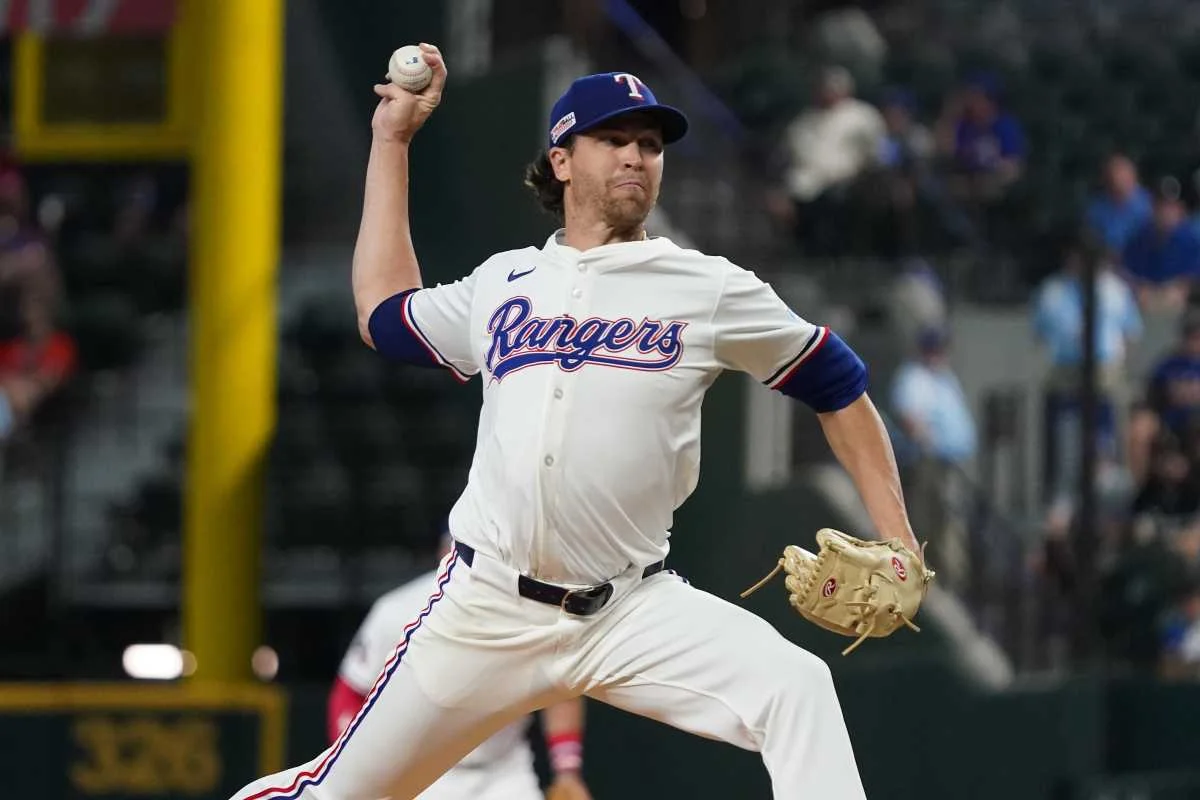

In Major League Baseball, players typically establish themselves by age 24 and reach peak performance around 27. Yet, many athletes develop at a different pace, breaking out later than expected. Among these, Jacob deGrom stands out as a notable late-blooming pitcher who rose to stardom in his mid-20s.
This article highlights the 25 most remarkable late-bloomers since 2000, players who defied the usual progression and achieved breakthrough success in their late 20s or early 30s, overcoming early struggles or overlooked potential.
Considerations for Inclusion and Honorable Mentions
To qualify for this list, players had to have their breakthrough seasons in 2000 or later. Narrowing down this extensive group was challenging, especially with several significant contributors just missing the main roster. Noteworthy honorable mentions include Bronson Arroyo, Matt Carpenter, Carlos Carrasco, Mike Clevinger, Carlos Guillen, Merrill Kelly, Dallas Keuchel, Michael King, Paul Lo Duca, Esteban Loaiza, Derek Lowe, Ryan Ludwick, Seth Lugo, J.D. Martinez, Jeff McNeil, Melvin Mora, Charlie Morton, Daniel Murphy, Phil Nevin, Carl Pavano, Fernando Rodney, Jason Schmidt, and Dan Uggla.
Additionally, some players had breakthrough seasons before 2000 but remain noteworthy, such as Randy Johnson in 1996, Jamie Moyer in 1997, and Brian Giles in 1999.
Jake Arrieta’s Transformation at 28
Right-handed pitcher Jake Arrieta showed promise as a Top 100 prospect but struggled with the Baltimore Orioles, posting a 5.46 ERA over four inconsistent seasons. After a midseason trade in 2013 to the Chicago Cubs, Arrieta’s performance improved drastically, finishing with a 3.66 ERA in nine starts. The following year marked his true breakout, as he went 10-5 with a 2.53 ERA and 167 strikeouts in 156.2 innings, earning ninth place in the National League Cy Young voting. Arrieta’s surge paved the way for his 2015 Cy Young Award and a key role in the Cubs’ 2016 World Series victory.
José Bautista’s Power Surge at 29
José Bautista’s early MLB career was unremarkable, covering spells with multiple teams as a utility player and accumulating a negative WAR over 441 games. After being traded to the Toronto Blue Jays in August 2008, he hit 13 home runs the following year but truly exploded in 2010, leading the American League with 54 home runs, an outstanding 164 OPS+, and 124 RBIs. Bautista earned six consecutive All-Star selections, led the AL again with 43 homers in 2011, and consistently produced strong offensive numbers, totaling 288 home runs and 38.4 WAR during his decade-long Toronto tenure.
Lorenzo Cain Emerges at 28
Initially overshadowed in a trade that sent Zack Greinke to the Brewers, Lorenzo Cain became the prize player for the Kansas City Royals. After a modest start to his career, Cain’s breakout season came in 2014 with a 4.4 WAR, followed by a career-high 6.9 WAR in 2015 as the Royals captured the World Series title. Over six seasons, Cain totaled 29.2 WAR, earned two All-Star nods, and won a Gold Glove, emerging as a foundational player in Kansas City’s success.
Chris Carpenter’s Late Peak at 29
Drafted by the Blue Jays in 1993, Chris Carpenter debuted at 22 but played below average through his Toronto years. After shoulder surgery and signing with the St. Louis Cardinals, Carpenter rebounded in 2004 with a 15-5 record and a 3.46 ERA, earning the NL Comeback Player of the Year award. He followed with an NL Cy Young in 2005 and enjoyed a strong career in St. Louis, posting a 3.07 ERA and 133 ERA+ over 1,348.2 innings.
Nelson Cruz’s Journeyman Rise at 28
Nelson Cruz’s path exemplifies persistence, experiencing multiple trades and teams before breaking out with the Texas Rangers in 2009. Although previously a journeyman with modest production, his 33 home runs and All-Star selection in 2009 marked a major leap. Cruz became a key contributor in the Rangers’ back-to-back AL pennants in 2010 and 2011 and amassed 464 career home runs, starting with just 22 before age 28.
Jacob deGrom’s Exceptional Emergence at 26
Jacob deGrom’s MLB debut in May 2014 came just before his 26th birthday, and he quickly won the NL Rookie of the Year award with impressive stats including a 2.69 ERA and 144 strikeouts in 140.1 innings. Though younger than many on this list, deGrom was not a widely recognized prospect prior to his breakout, ranked only tenth within the Mets system. His rookie success was the start of a dominant career, earning back-to-back NL Cy Young Awards in 2018 and 2019 and multiple top-10 finishes in Cy Young voting throughout his peak years.
R.A. Dickey Finds Success at 35
Selected 18th overall in 1996, R.A. Dickey’s early years were marred by poor performance and many team changes. After a rough start with the Rangers and brief stints with other teams, he signed a minor league deal with the Mets in late 2009. Dickey’s 2010 season marked a breakthrough, as he leveraged his knuckleball to post an 11-9 record and 2.84 ERA, followed by the 2012 NL Cy Young Award thanks to a 20-6 record and 2.73 ERA. Afterward, he was traded to Toronto as the Mets capitalized on his value.
Josh Donaldson’s Late Development at 27
Initially drafted as a catcher, Josh Donaldson transitioned to third base and had an unremarkable start with the Oakland Athletics. His breakthrough season arrived in 2013 when he posted a 145 OPS+, with notable offensive numbers including 24 home runs and 93 RBIs, earning 7.2 WAR. Donaldson’s peak included four straight 6-WAR seasons, an AL MVP award in 2015 with the Toronto Blue Jays, and sustained offensive production through his prime years.
Edwin Encarnación’s Power Surge at 29
Edwin Encarnación debuted with the Reds as a promising prospect, recording solid power numbers early but limited overall impact. The 2009 trade to the Blue Jays marked a turning point, culminating in a breakout 2012 season with a 153 OPS+ and 42 home runs. This kickstarted eight consecutive seasons with at least 30 homers, with a career featuring far greater power output in his 30s compared to his 20s.
Alex Gordon’s Fundamental Shift at 27
After being a top draft pick, Alex Gordon’s early career at third base was underwhelming, leading to a career-low 95 OPS+ over four seasons. Switching to left field in 2011 sparked his breakout, earning his first Gold Glove and posting a .303/.376/.502 slash line with 23 home runs. Gordon became a Kansas City cornerstone, contributing to a World Series title and compiling the seventh-highest WAR in franchise history.
Travis Hafner’s Brief Peak at 27
Travis Hafner’s peak performance window was brief but exceptional, featuring elite slugging from 2004 through 2006. During this period, he delivered OPS+ ratings exceeding 160, consistent power, and a high WAR. Hafner arrived via trade early in his career and, although his dominance was short-lived, he was a feared offensive force alongside teammates like Grady Sizemore during that stretch.
Josh Hamilton Overcomes Adversity at 27
Josh Hamilton’s journey to success was marked by overcoming addiction issues that derailed his early career. After resurfacing in 2007 with the Reds and then being traded to the Rangers, Hamilton quickly emerged as a formidable hitter, winning the AL MVP in 2010 and posting 142 home runs over five years, along with five All-Star appearances and three Silver Slugger Awards. His transformation was as much personal as it was professional.
Rich Hill’s Revival at 36
Rich Hill’s 2007 season hinted at early promise, but injuries and inconsistent play led to reduced playing time for years, including a stint in independent league baseball. His resurgence in 2016 with the Oakland Athletics, featuring a 2.25 ERA and 90 strikeouts in 76 innings, earned a trade to the Dodgers, where Hill excelled. He secured a lucrative free-agent contract and remarkably continued pitching into his mid-40s.
Raúl Ibañez Breaks Out at 30
Raúl Ibañez’s early years featured limited playing time until he joined the Royals and logged 300 plate appearances for the first time in 2001. His true breakout came in 2002 at age 30, with a strong batting line and solid power numbers. He maintained consistent production over the following decade, earning MVP consideration multiple times and an All-Star nod at age 37 with the Phillies.
Corey Kluber’s Stellar Peak at 28
Corey Kluber began his career as a trade asset before emerging as a frontline starter for the Cleveland Indians. His breakout came in 2014 with an AL Cy Young Award after posting a 2.13 ERA and a dominant strikeout rate. Over the next several seasons, Kluber maintained elite performance, winning a second Cy Young in 2017 and establishing himself among the league’s best pitchers before an eventual decline.
Whit Merrifield: From Underdog to All-Star at 28
Whit Merrifield was a modest ninth-round draft pick who never ranked as a top prospect in the Royals system. After making a mark as a utility player in 2016, he excelled in full-time action starting in 2017 with strong hitting and speed. Merrifield became a three-time All-Star and led the league in multiple offensive categories, serving as a key figure for Kansas City between their 2015 World Series championship and the rise of younger stars.
Andrew Miller’s Bullpen Transformation at 29
Andrew Miller began his career as a starting pitcher before struggling with several teams. His career turnaround came after transitioning to the bullpen in 2012, where he quickly became dominant. Miller’s best season came in 2016, boasting a 1.45 ERA and exceptional strikeout rates while helping lead the Cleveland Indians to the World Series.
Max Muncy’s Unexpected Surge at 27
After underwhelming offensive production and being released by the Athletics in 2017, Max Muncy revived his career with the Dodgers. His breakout in 2018 included 35 home runs and significant WAR contribution. Muncy’s versatility in playing both first and third base, particularly after the Dodgers signed Freddie Freeman, has made him a valuable long-term player.
Joe Nathan’s Rise as a Closer at 29
Joe Nathan transitioned from starter to reliever and finally to closer late in his career. After limited success with the Giants, he moved to the Minnesota Twins in 2004 and immediately excelled in the closer role, collecting 44 saves and finishing high in Cy Young consideration. Nathan’s 377 career saves rank him among MLB’s all–time leaders, with four All-Star selections highlighting his peak years.
David Ortiz’s Breakout with the Red Sox at 27
David Ortiz spent six seasons with the Twins with modest success before being released rather than receiving a salary increase. Signing with Boston reignited his talent, as Ortiz immediately became a powerful offensive force for the Red Sox. He finished fifth in AL MVP voting in his first season, helped clinch the 2004 World Series, and over his 14-year Red Sox career compiled Hall of Fame-worthy statistics and multiple championships.
Brent Rooker’s Late Emergence at 28
Drafted in 2017 by the Twins, Brent Rooker struggled initially in the majors and was later traded to several teams before being claimed off waivers by the Athletics in late 2022. Rooker’s breakout in 2023 and 2024, marked by strong power numbers and run production, earned him a five-year, $60 million contract extension, establishing him as a premier offensive player entering his 30s.
Justin Turner’s MLB Breakthrough at 29
Justin Turner experienced a slow start with brief time as a utility player before being non-tendered in 2013. Signing with the Dodgers, he gradually earned a regular role and surpassed expectations in 2014 with a .340 batting average and strong WAR. Turner became a core member of the Dodgers, known for clutch hitting and steady production across several seasons.
Jayson Werth’s Philadelphia Renaissance at 28
After stints with multiple teams and limited success, Jayson Werth rejuvenated his career upon joining the Philadelphia Phillies in 2006. Initially a bench player, he became a starter the following year and was a key contributor to the Phillies’ World Series win. Werth’s performance in Philadelphia earned him a lucrative contract and solidified his status as an impact player.
Kevin Youkilis’s On-Base Prowess at 27
Kevin Youkilis was known in the minors for his exceptional plate discipline though little power, earning the nickname “The Greek God of Walks.” At 27, he secured a full-time role with the Red Sox and produced a strong campaign with a high on-base percentage and consistent doubles and home runs. Youkilis maintained a high level of play over six seasons, earning multiple All-Star selections and MVP consideration before becoming a fan favorite.
Ben Zobrist’s Super-Utility Role at 28
Ben Zobrist began his major league career with limited success but broke out at age 28 with a league-leading 8.6 WAR. His versatility allowed him to excel at multiple positions, becoming a daily lineup fixture despite lacking a primary position. Zobrist’s career spanned 14 years, including three All-Star appearances and two World Series titles, one earned as World Series MVP with the 2016 Chicago Cubs.