
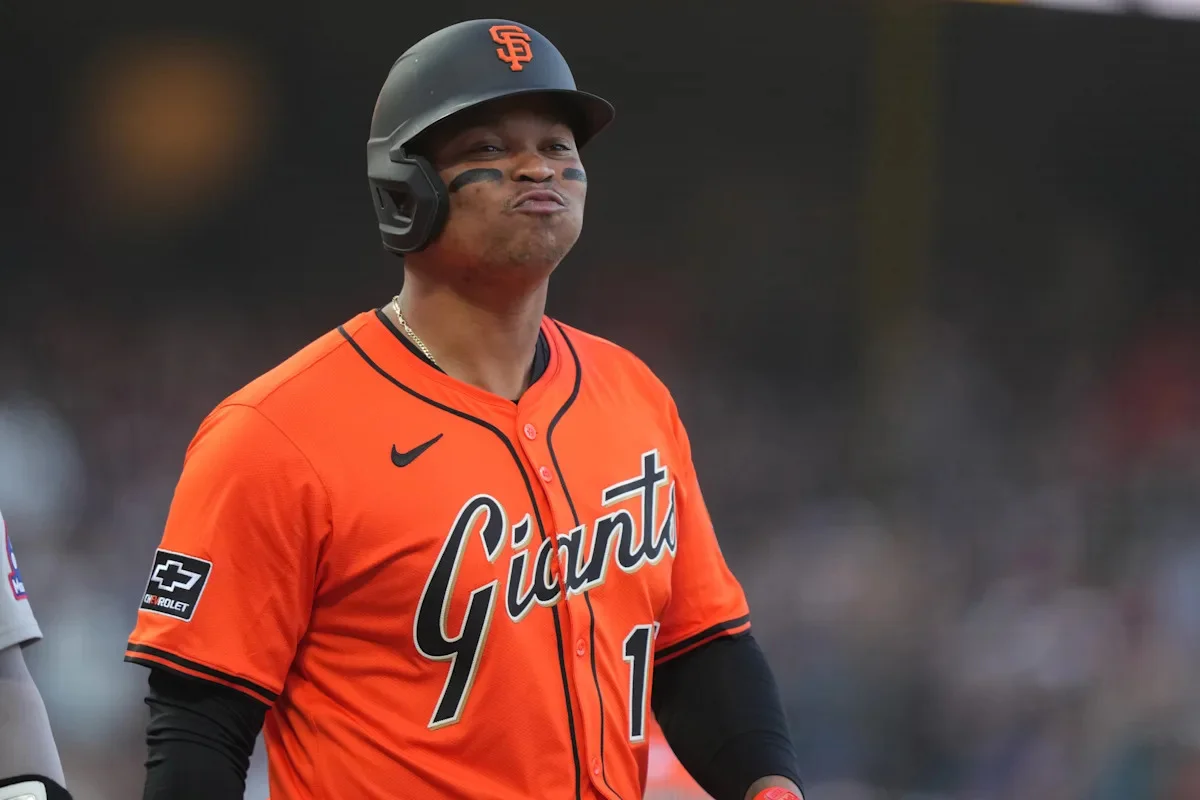

The long-standing connection between Rafael Devers and the Boston Red Sox is nearing an end as the team prepares to face Devers’ new club, the San Francisco Giants, in a three-game series this weekend. The trade that sent Devers to the Giants on Sunday evening has left a complicated and personal rift, exposing a fracture in relationships that once seemed unbreakable. This unexpected division between Devers and the Red Sox developed rapidly, fueled by both on-field and off-field tensions.
Central to the dispute was Devers’ refusal to move from his longtime position at third base to first base, instead facing a designated hitter spot after the Red Sox acquired star infielder Alex Bregman in free agency. The team never communicated its intentions about signing Bregman directly to Devers, which further strained their relationship and created distrust. This lack of transparency turned what could have been a strategic realignment into a deeply personal issue.
Manager Alex Cora’s role in the conflict and fractured communication
During spring training, Red Sox manager Alex Cora was questioned about possibly bringing back former Red Sox players like David Ortiz to help mend fences with Devers. Cora responded negatively and insisted on managing the situation personally.
I’m going to talk to Raffy. We’re going to keep working. And, you know, like I said, we’re going to make decisions based on what we need to win the division. That’s the most important thing. And me and Raffy, we have a great relationship. That’s something that I make sure I say, ‘Hey, man, this is the baseball side of it. We’re still Raffy and Alex. I’ve been with this kid since November 2017.
—Alex Cora, Red Sox manager
Despite Cora’s confidence and long-standing history with Devers, the relationship has now degraded. Devers reportedly felt betrayed not only by the front office but also by Cora, who is known for his ability to connect well with players. His promise to handle Devers’ situation internally without involving others backfired, intensifying the division and eventually leading to the team’s decision to trade one of its premier hitters.
Cora later acknowledged the difficulties openly during a press conference before the team’s series against the Seattle Mariners.
He’s a special hitter and we all know that. But this is an opportunity for other guys to get at-bats and contribute. There are some reasons it didn’t work out. I don’t want to pinpoint stuff, but the last few months haven’t been easy. We made decisions in the offseason. Circumstances have changed the last month. It’s a decision we made as an organization. Raffy is going to be with the Giants.
—Alex Cora, Red Sox manager
New environment for Devers under Giants’ leadership
With the Giants, Devers enters a team environment where he may find greater respect from leadership than he did in Boston. Giants’ president of baseball operations, Buster Posey, shares a player-first perspective, balancing analytics with traditional scouting—an approach that contrasts with Devers’ experience under Red Sox chief baseball officer Craig Breslow.
Posey’s decorated career, including three World Series championships and a National League MVP Award, adds credibility and a strong presence in the Giants’ front office. Alongside Posey, manager Bob Melvin brings decades of experience guiding teams and managing diverse personalities. Melvin’s past success, demonstrated by his ability to get the best from players like Yoenis Cespedes during their time in Oakland, suggests that Devers will be joining a veteran-led team that values player development and consistency.
Devers is now seen as San Francisco’s most potent hitter since Barry Bonds, and the Giants hope his bat will propel them toward a stronger postseason push.
The emotional toll on Boston and reflections on homegrown talent lost
Although the Red Sox have positioned the trade as a strategic choice for the organization’s future, the departure of Devers, who joined Boston’s system at just 16 years old, represents another painful loss of homegrown talent. This pattern of rising stars leaving the team has become all too familiar for Boston fans and management alike, underscoring ongoing challenges in balancing organizational decisions with player loyalty.
Wrangling with positional changes and the fallout with former teammates
Further fueling the tension, Devers’ public willingness to play first base for the Giants has added salt to old wounds for his former teammates and the Red Sox franchise. It would not be surprising to see him take the field at first base during the Friday game against Boston at Oracle Park, a symbol of the divergent paths between Devers and his former club.
Additional MLB updates and player performance notes
Meanwhile, other notable MLB developments continue to unfold across the league. Mookie Betts, another former Red Sox star, is enduring a challenging season batting .256/.342/.395 with a .737 OPS and nine home runs so far, possibly hindered by the physical demands of playing shortstop and a significant offseason illness. Despite this slow start, Betts is known for midseason surges and could regain momentum soon.
Oakland Athletics rookie Nick Kurtz has made an impressive start, launching his second walk-off home run in a week and posting a slash line of .252/.308/.511 with a .820 OPS and nine home runs across 37 games. Despite the A’s ongoing struggles, their talent scouting and drafting remain highly effective.
On the Red Sox side, infielder Kristian Campbell has been sent back to Triple-A Worcester as Wilyer Abreu returns from injury. Campbell’s recent struggles at the plate, hitting just .159/.243/.222 during May and June, have prompted the demotion to allow him time to rebound. Still, at only two years removed from high school, Campbell’s rapid rise through the system and big-league debut this season mark him as a player with significant potential.
Elsewhere, the Atlanta Braves appear to be finding stability after sweeping the New York Mets, a marked improvement after a lackluster start to their season despite a talented roster.
The New York Yankees and their star Aaron Judge face criticism despite his reputation, due in part to a recent cold streak that resulted in 15 strikeouts over 29 plate appearances and a 1-6 team record during that period. While Judge remains a formidable hitter, some voices caution against labeling him the greatest right-handed hitter ever, citing inconsistency and recent performance slumps. The Yankees’ missed opportunity to re-sign Juan Soto last offseason is seen as a factor in the team’s struggles to avoid prolonged offensive downturns.