
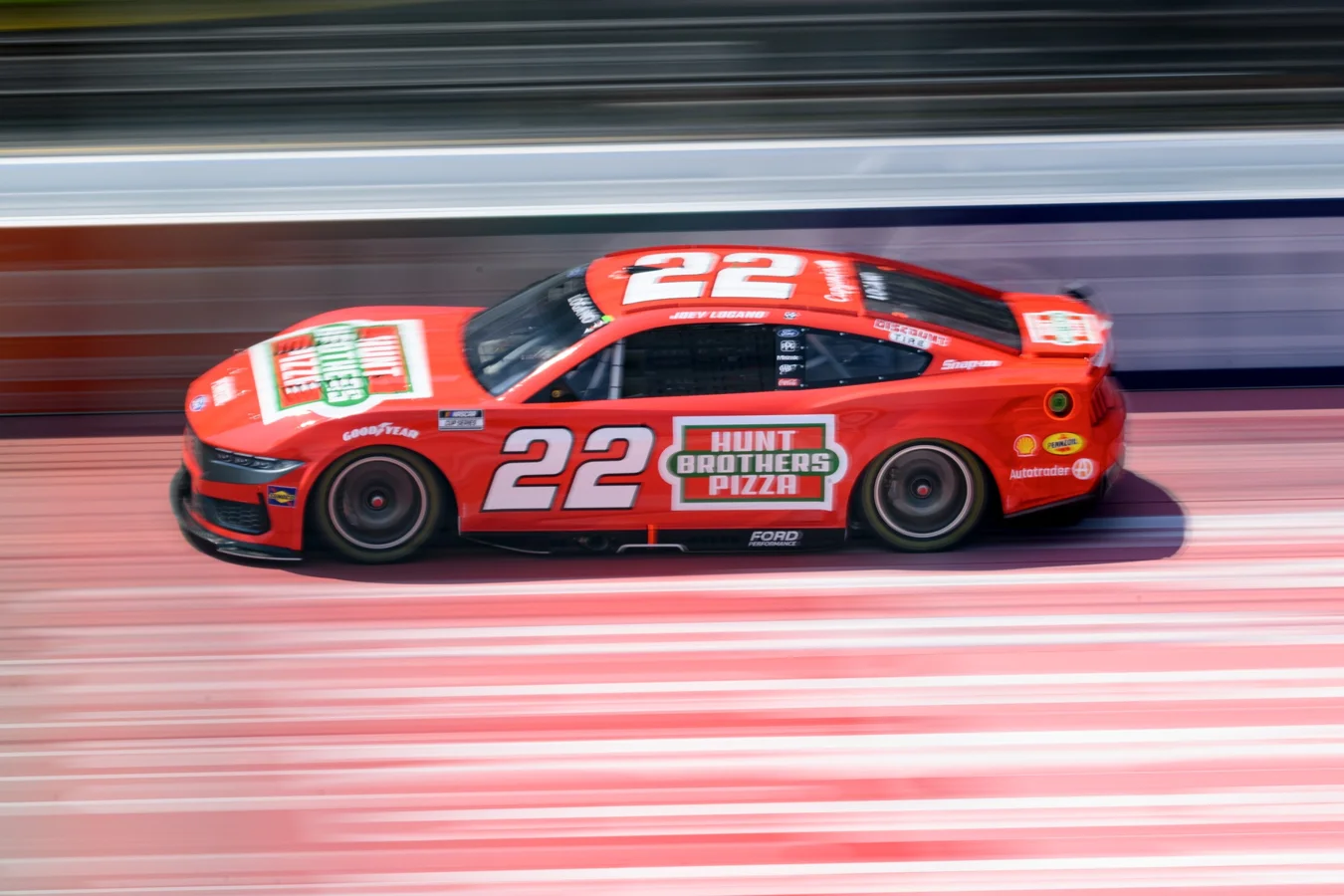

At the final NASCAR race of the 2016 season held at Homestead-Miami Speedway, a dramatic duel between Carl Edwards and Joey Logano captured the attention of racing fans worldwide. With only 10 laps remaining, Edwards was in an ideal position to claim victory, standing second in the restart and eager to redeem himself after narrowly missing the championship years earlier. However, a daring defensive move by Edwards against Logano resulted in both drivers crashing, abruptly ending their championship hopes and leaving the racing community stunned.
The incident saw Edwards collide with the wall while Logano spun out, an intense confrontation fueled by the high stakes of the championship battle. Emotions ran high as Edwards, typically composed, appeared blank-faced after the wreck, marking the end of his racing career that season. Logano later expressed empathy for Edwards’ decision to block him aggressively, recognizing the pressure they were both under. This rare moment of mutual understanding revealed unexpected similarities beneath the surface of their fierce rivalry.
Joey Logano opens up on shared struggles with Carl Edwards
In more recent reflections, Joey Logano has candidly spoken about how he relates to Carl Edwards beyond their on-track confrontations. Despite their reputations as tough competitors, both drivers have faced misunderstandings from fans and peers regarding their personalities off the track. Logano acknowledged that many people viewed Edwards as inauthentic, an image he himself had contended with during his own career.

“I feel like we can relate a lot to that,”
Logano remarked before a race at Pocono, discussing how both were often misjudged. He continued,
“Because I feel like when you were racing, everyone looked at you like, Carl is fake and he’s not authentic. He’s not real, right? And you went through the same thing.”
Both drivers maintained polite and clean public images that clashed sharply with their aggressive driving styles. Edwards earned the nickname The Enforcer through memorable incidents, including his notorious retaliation against Brad Keselowski in 2010, where Edwards intentionally wrecked Keselowski’s car, and his altercation with Dale Earnhardt Jr. in 2006, which resulted in fines and probation. Logano’s racing history is similarly marked by intense rivalries, such as his confrontations with Kyle Busch and a pivotal collision that affected Matt Kenseth’s championship chances in 2015.
Reflecting on the demands of competition, Logano articulated the need to compartmentalize:
“I think it’s hard for competitors to understand that there can be a switch that you turn on and off. It’s really healthy to have that because if not, if you lived, if you were the type of person, you were on track, off the track, you’d be a real jerk.”
Edwards admitted his attempt at balancing this duality was difficult, saying,
“I tried that. It didn’t work really well.”
Over time, Edwards evolved from a driver who kept most peers at arms’ length to one who valued friendship outside racing as much as competition on it.
The transformation and deeper self-awareness of Carl Edwards
When Carl Edwards was inducted into the NASCAR Hall of Fame in 2025, he took the opportunity to reflect deeply on his racing career and personal growth. He described how the pressure to appear tough and successful weighed heavily on him, fueling a sometimes difficult public image. Edwards candidly shared his regrets in prioritizing perceptions over genuine relationships with fellow drivers during his career.
“I cared more than I should’ve about what I look like, what people thought of me, whether I was tough enough, whether I made enough money. And you guys found the cracks in that facade of reputation… ‘These people don’t know me. Why are they treating me this way?’ And I realized: ‘It’s because you’re kind of becoming an a—-le
”
This self-realization led Edwards to wish he had pursued friendships more wholeheartedly. He expressed,
“If I had to do it over again, I’d go back. I’d be best friends with these guys off the track. And we’d still race like crazy, but I could have done that better.”
Although Edwards cannot change the past, his reflections provide insight into the complexities behind the fierce competitiveness that defined his time on the circuit.
Joey Logano’s recent challenges at Pocono highlight the highs and lows of racing life
Joey Logano arrived at the 2025 NASCAR Cup Series race at Pocono Raceway aiming to build on his season’s progress. Despite qualifying 12th, his race performance was a mixed experience. Early in the race, Logano showed promise with a solid seventh-place finish in the opening stage, holding competitive positions among the leaders during a relatively calm phase.
However, as pit stop strategies reshuffled the race order, maintaining a top position became challenging. Although Logano briefly led the race during a pit cycle in the second stage, he was swiftly overtaken by Alex Bowman. From there, Logano’s performance gradually declined, and by the race’s conclusion, he finished 16th.
Logano’s track record at Pocono has been uneven throughout his career. His sole victory at the ‘Tricky Triangle’ came in 2012, with some top finishes such as a 5th place in 2024, but his recent results have often fluctuated. The 2025 race added another inconsistent finish to his history at this Pennsylvania superspeedway, raising questions about whether he can regain top form as the playoffs approach.
Racing personas: Villains, heroes, and misunderstood competitors
The relationship between Joey Logano and Carl Edwards exemplifies the blurred line between heroism and villainy in NASCAR. Both drivers have been viewed through lenses tinted by rivalry, personality, and moments of heat on the track. Their shift from intense adversaries to having mutual respect signals a deeper understanding of what it means to compete at the highest level under immense pressure.
Throughout their careers, Edwards and Logano faced scrutiny from fans and fellow drivers alike, often misunderstood despite their fierce dedication to winning. Their ability to separate on-track aggression from off-track character reveals the complexities that define modern racing personalities.
As this rivalry softened into a rare alliance of mutual respect, it underscores the emotional turbulence and personal growth experienced by drivers navigating both the chaotic and celebratory moments of NASCAR competition.