
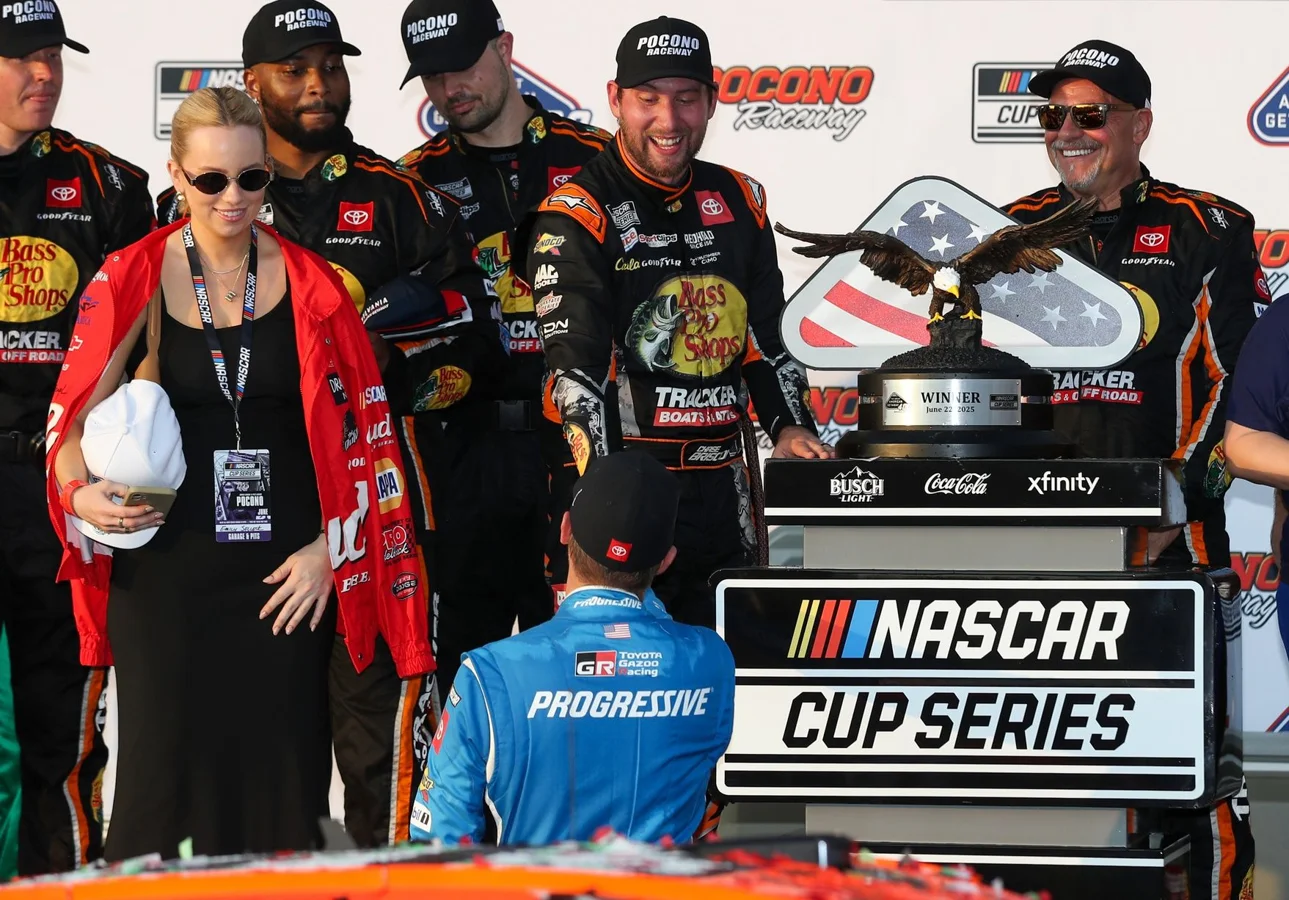

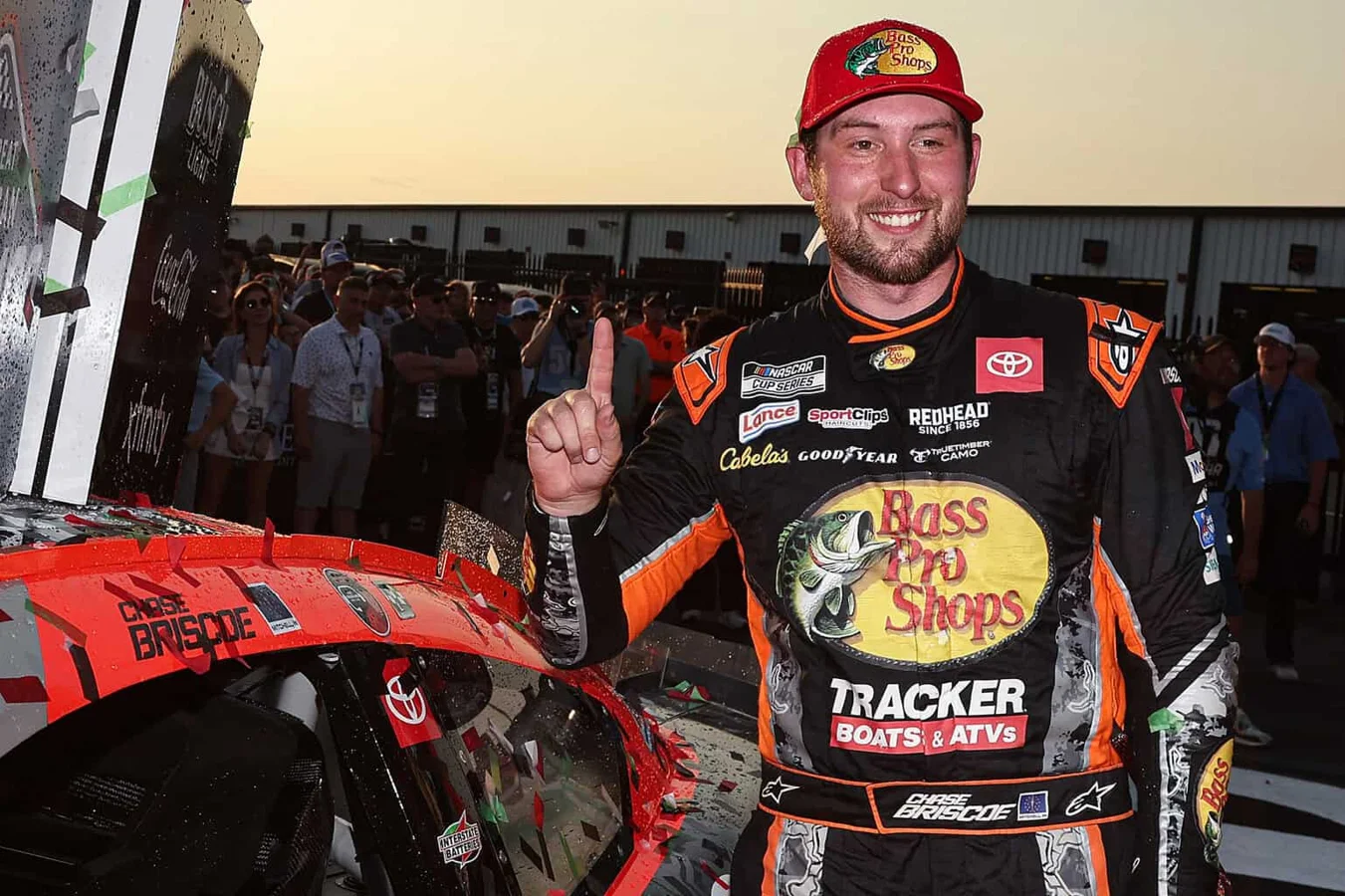
Chase Briscoe secured a remarkable victory at Pocono Raceway on Sunday with a fuel-saving strategy that many did not expect to succeed. Despite a poorly timed pit stop mistake, Briscoe managed to conserve enough fuel to cross the finish line ahead of formidable competitors, including seven-time Pocono winner Denny Hamlin.
This Chase Briscoe fuel saving win stands out in a season where fuel mileage races have been rare, especially under green flag conditions. The victory raised questions among fans and analysts alike about whether luck, skill, or a combination of both enabled Briscoe to pull off this outcome.
Unprecedented Fuel Management Without Caution Assistance
Fuel mileage has been a critical factor in recent NASCAR races, with Joey Logano’s win at Nashville earlier in 2024 often cited as a prime example of successful fuel conservation. However, Logano’s case involved several caution laps that helped extend fuel mileage. Briscoe’s win was different because he faced nothing but continuous green flag racing, making his ability to save fuel even more impressive.
During the race, Briscoe encountered pressure from Denny Hamlin, who was rapidly closing in from second place. Although Briscoe made an error by leaving his pit box prematurely—in opposition to his crew chief James Small’s instructions—this did not ultimately cost him the race.
Expert Analysis Highlights the Unlikelihood of Briscoe’s Victory
Following the race, NASCAR journalists Jeff Gluck and Jordan Bianchi discussed Briscoe’s unpredictable win on The Teardown podcast. Gluck pointed out how Joshua Hocevar’s fuel struggles in Michigan closely resembled Briscoe’s situation but with a different result.
“With another fuel mileage race, the second time in three weeks, where we have had a fuel mileage race. Similar to Michigan,”
Gluck remarked.
“He ultimately cedes to Denny Hamlin, who ends up winning the race. This time we hear that, you know, James Small says afterwards, they came out nine laps short. Nine laps short on fuel. So, really, no chance, especially at a place like Pocono, right? So, with 30 to go, Chase Briscoe is managing, managing, managing, right? Somehow, he’s coached enough to save his fuel, makes it happen, makes it work. Really, against all odds, seemingly.”
—Jeff Gluck, NASCAR Journalist
Bianchi expressed astonishment at how Briscoe overcame the error during his final pit stop and still managed to hold onto the lead by adjusting his fuel consumption with no caution laps to assist.
“It was interesting because it was a mistake by Briscoe,”
Bianchi explained.
“Pulls in [to the pit box] and he went when the jack dropped, which is what you normally do, but James Small, his crew chief had told him, ‘You go on my command,’ and Briscoe left early and it was like, ‘Oh, he just choked it away, this is going to cost them they’re going to need a lot of help here.’ I am dumbfounded how you go from ‘We’re nine laps in the hole,’ to ‘We’re okay on fuel,’ without a caution. Like, you don’t hear that. I don’t remember the last time that’s happened.”
—Jordan Bianchi, NASCAR Analyst
The Struggle to Maintain Speed While Saving Fuel
Fuel saving is often achieved by drivers easing off the throttle or cycling laps where they lift off the gas early. However, Briscoe faced an unusual challenge: he not only had to preserve fuel but also maintain the race lead against strong competitors. Usually, drivers might save a lap here or there, but managing nine laps on limited fuel while keeping the lead is exceptional.
“Usually, you can see guys like, ‘Hey, a couple of laps here or there, whatever, and we’re going to save, save, save.’ This wasn’t the case. And not only did he have to save, he had to maintain the lead, and he did that. It was odd, it was a very peculiar sequence over the last 30 laps of, you have nine laps you’ve gotta figure out how to make good on, you’re doing that, and you gotta hold the lead, and all of everything else. It was very strange.”
Implications for Next Gen Cars and JGR’s Strategy Moving Forward
Briscoe’s win is the first for him under the Joe Gibbs Racing (JGR) banner and comes at a time when the Next Gen car has been both praised for exciting racing and criticized for fuel strategy reliance. Races often hinge on where and when caution flags appear, which can frustrate fans and complicate tactics for drivers and teams.
Denny Hamlin’s charge demonstrated the threat Briscoe faced in the final laps, but Briscoe’s resourceful driving to stretch his fuel supply without caution assistance will likely be a learning moment for others at JGR and beyond. Crew chief James Small’s guidance and Briscoe’s on-track execution combined to produce a rare and impressive feat.
The Broader Impact of Briscoe’s Pocono Victory
This unusual fuel-saving victory at Pocono could influence how teams approach fuel strategy in future races, especially when green flag runs dominate. While fuel mileage races are typically unpredictable and reliant on external factors like cautions, Briscoe’s performance suggests that precise fuel management and driver patience can still turn the tide, even under pressure.
For Chase Briscoe, this win not only solidifies his position as a skilled competitor in the NASCAR Cup Series but also boosts confidence for himself and the JGR organization, which will study this strategy closely for upcoming events to replicate success despite the ongoing challenges posed by the Next Gen car.